
Note: Most Thursdays, I take readers on a deep dive into a topic I hope you'll find interesting, important, or at least amusing. These essays are made possible by — and are exclusive to — our VIP supporters. If you'd like to join us, take advantage of our 60% off promotion.
"As far as Virginia-class submarines, it is the best thing we have. It is the best thing we have. I cannot get enough of them, and I cannot get enough of them fast enough." —Adm. Harry Harris
In a Navy whose shipbuilding record over the last 30 years mostly ranges from disappointing (the service can't decide on a design for a new frigate, destroyer, or cruiser) to "OH DEAR GOD IN HEAVEN WHAT WERE THEY THINKING" (looking at you, Zumwalt-class), the Virginia-class attack subs stand out as an unambiguous win in a sea of you-know-what.
Wait a minute... did I just call the Virginia an attack sub? Because sailing forward, that's not what the Navy will call its newest boats.
This is kind of a big deal.
Before we go there, I need to nerd out a little on the Navy's plan for the Virginias.
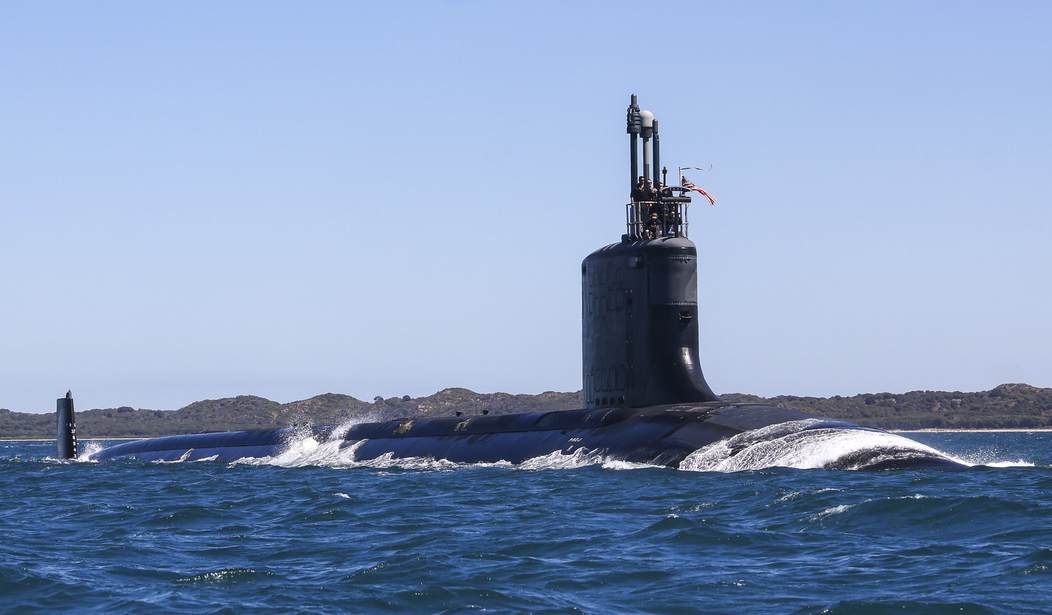
For those not in the know, Virginia SSNs (the Navy designation for attack subs) are quickly becoming the workhorse of our undersea service, replacing the storied Los Angeles-class SSNs that patrolled the sea lanes in the closing two decades of the Cold War — and for probably too long after that.
The Navy had plans for a small fleet of huge Seawolf-class subs, but victory in the Cold War left the service without the Soviet undersea threat they’d been designed primarily to counter. So the Navy wanted something slightly smaller and less expensive to build, operate, and maintain.
Smartly — there's a word I don't get to use often about Navy procurement these days — the Navy leveraged technologies developed for the Seawolfs, an easier-to-upgrade open architecture, and even commercial off-the-shelf (COTS) parts to design a sub we could afford under post-Cold War budget constraints.
That's the Virginia.
Twenty-six of them have entered service since 2004, with 15 more already procured and plans for even more.
The latest and greatest upgrade will come with the Block V series of Virginias, starting probably in 2028 with the future USS Arizona (SSN 803). The upgrade comes in the form of a new 84-foot-long section added smack-dab to the middle of the Block V boats. Well, most of them — the first boat in the block, the future USS Oklahoma, won't get one.
If you'll show me just a little patience, further down I'll show you why the Navy decided to take the Virginia in a new direction. But first, the cool stuff.
Shipbuilder General Dynamics Electric Boat calls it the Virginia Payload Module because nobody has any fun with names anymore. I like to call it Uncle Sam's Big-Ass Missile Hut. Because that's what it is: a section containing four large-diameter payload tubes, each capable of carrying (and launching, natch) seven Tomahawk land-attack missiles. Blocks I-IV Virginias carry just 12 Tomahawks, but with the additional 28 in the Big-Ass Missile Hut, Block V will carry a total of 40.
Attack submarines primarily attack other submarines or surface ships. Block V Virginias will attack any damn thing they like. It's the same old boat, except for that addition in the middle, with a brand-new mission.
That's why the USS Arizona won't be SSN-803, after all.
The Navy now says she and the following Block V boats will be SSGNs, and the Navy being the Navy, that single letter G — it stands for Guided Missile — is a very big deal. But don't trust me on this one; let me show you, instead, with one of my favorite stories about the sometimes absurd measures the Navy takes when it comes to labels.
And Another Thing: As Longtime Sharp VodkaPundit Readers™ know, every now and then I like to totally nerd out on a news item that is probably cooler than it is newsworthy. ["Every now and then," Steve, really? We have the links. —Editor] This is one of those times. But fear not, because next week the Thursday Essay will return to discussing weightier matters like war or puppies.
Going back more than a century, battlecruisers were all the rage. In Europe, that is.
Before aircraft carriers became a thing, battleships were supposed to be the kings of the sea, with battlecruisers playing a vital supporting role in the great fleet actions that big navies expected to fight against one another. The only time that really happened was at the 1916 Battle of Jutland during World War I, when the Royal Navy and the Imperial German High Seas Fleet finally clashed in the North Sea.
Battlecruisers sounded great in theory. They had guns almost as big as battleships, but they traded heavy armor for greater speed. While most battleships could travel at a max of 21 or so knots, battlecruisers could move at speeds of 25 or even 28 knots.
Besides, the name battlecruiser is undeniably cool. "Cruiser" is a cool word on its own, made even cooler when you stick "battle" in front of it. Battlecruiser sounds like the kind of ship the Fonz would ride.
Prewar naval theory held that mighty battleships with their long-range guns would trade blows against one another, while quicker battlecruisers waited on the flanks for targets of opportunity, darting in and out before the comparatively laggard battleships could react. They might not have guns big enough to sink a battleship, but they could certainly inflict some damage.
How did they work in practice? They didn't.
"Speed is armor" was the theory. But at Jutland, German shells had no trouble finding British battlecruisers, and three — Indefatigable, Queen Mary, and Invincible — blew up with catastrophic loss of life. Poor British ammunition-handling practices made matters worse, but the larger lesson was hard to miss: speed might help you dodge a few punches, but once one or two landed, there was no substitute for being able to take hit after hit like Rocky Balboa.
Still, nobody was willing to give up on the battlecruiser concept, and the U.S. Navy belatedly took a stab at them right after WWI with plans for six massive Lexington-class battlecruisers. Forget the puny 12-inch guns — the Lexes would carry eight battleship-sized 16-inch guns, and enjoy a top speed of about 33 knots.
The 1922 Washington Naval Treaty scuttled those plans, and the Navy ended up converting two hulls into our first two full fleet-sized aircraft carriers, the Lexington and the Saratoga. Those gals proved far more useful against the Japanese two decades later than a couple of battlecruisers would have.
And Another Thing: The irony is that before WWII ended, the Navy had four battleships — the Iowa class — with nine 16-inch guns, full battleship armor, and yet matched the Lex's planned top speed of 33 knots. Did we know how to build 'em back then or what?
By the time the interwar naval treaties were sunk and World War II lit up, American ship types were basically standardized. Destroyers were loaded up with five-inch guns, light cruisers had six-inchers, cruisers had eight-inch guns, and battleships were armed with either 14- or 16-inch.
Mind the gap, as our British friends say, between cruisers and battleships. It sure does look like there's room in there for ships with 12-inch guns like World War I-era battlecruisers.
At first blush, the U.S. Navy thought so, too, at least for a brief while, and in 1940 ordered a new class of ships with light armor, high speeds, and 12-inch guns. They were the Alaska-class, and the six ships (only two were built and commissioned as the Navy shifted focus to carrier production) were all supposed to bear the names of U.S. territories or possessions at the time: Alaska, Guam, Hawaii, Philippines, Puerto Rico, and Samoa.
Battleships were named after states. Cruisers were named after cities. The Alaska-class got names in between. I mean, come on, just call them battlecruisers already. But no, because the Navy has its ways.
The way the USN sees it, the very name "battlecruiser" indicates a mission that the Alaskas weren't meant to take on. Their job was to hunt down other cruisers — particularly the large cruisers we feared Japan was building — protect the fast carriers, and, when called upon, pound enemy positions on land with their battlecr… er, biggish guns. Their job was not to speed around a battle line that no longer existed in the age of aircraft carriers.
The name is the job, as far as the Navy is concerned, so "battlecruiser" was right out.
But what to call them?
The Navy already had light cruisers with the designation CL (Cruiser, Light) and heavy cruisers (CA, an anachronism inherited from the older “Cruiser, Armored” designation), so what to call these ships with 12-inch guns that the Navy swears aren't battlecruisers?
Large Cruisers. CB. The B didn’t officially stand for "Big," although you’d certainly be forgiven for thinking it did. And then the Navy might as well have added, "We swear it isn't for Cruiser, Battle."
But "Large cruiser," really?
The Fonz turns from the camera to shed a single, manly tear.
But the point of all this is that when the Navy decides that the next batch of Virginia-class SSNs are actually SSGNs, it's a very big deal. The name change indicates not just a new role, but a new way of thinking about our submarine fleet going forward.
And those new boats will replace a capability most people probably never knew the Navy was losing — or even had to begin with.
Related: Trump's Big, Beautiful Battleships Are... What, Exactly?
The Navy commissioned 18 Ohio-class nuclear missile submarines (SSBN, where the B stands for Ballistic Missile) for making sure the Russians had the appropriate Fear of God in them 24/7/365. The Ohios are exceptionally quiet — quieter than even the surrounding water, Navy guys like to claim — and originally carried 24 Trident I/II sea-launched ballistic missiles (SLBMs), each armed with multiple independently targetable nuclear warheads. A single Ohio could ruin your whole country, and we had 18 of them. (Obama's New START agreement required each SSBN to deactivate four launch tubes.)
In anticipation of complying with the 1993 START II nuclear forces reduction agreement (never ratified), the Clinton administration decided the Navy needed only 14 Ohios for nuclear deterrence. What to do with the other four? How does "Uncle Sam's Big-Ass Missile Warehouse" sound? The Trident tubes were modified to carry Tomahawks — up to 154 in a single Ohio. That's land-attack firepower roughly equivalent to an entire Navy surface battlegroup, all in one virtually undetectable sub.
An Ohio SSGN might not be able to ruin your whole country, but it could do a lot worse than ruin your whole day. And since the four converted subs re-entered service between 2006 and 2008, they've done their country proud. For just one example, in 2011, the USS Florida fired 93 Tomahawks at Libya at the start of Operation Odyssey Dawn — nearly two-thirds of all the missiles fired during the opening barrage.
But they're old boats. One, the USS Georgia, was just retired last month. The other three will follow suit over the next two years. Each one is (or was) a major strategic asset.
A Virginia SSN with 40 Tomahawks is hardly a one-for-one replacement for an Ohio with 154 of those bad boys. "But the US Navy intends to acquire a whopping 19 of its new SSGNs," James Holmes reported for National Interest earlier this week. "Each Virginia-class SSGN will pack less heat than its predecessors. But combined, the new contingent will sport a whopping 760 virtual launchers — outmatching the Ohios in aggregate."
It's all part of the Navy's "distributed maritime operations" doctrine that basically means spreading out the firepower while leveraging modern communications to make every ship, sub, and jet fight as a team no matter how far apart they might be.
Lose a single Ohio SSGN to enemy action, and it's the same as losing a surface battlegroup. With just three backups. When the Virginia SSGN program is complete, if China manages to destroy one, there will be 18 more looking for payback.
The Navy and General Dynamics took one of the best attack submarines in the world and added a new section and a new letter. Together, they mean much more than just additional firepower. Uncle Sam’s Big-Ass Missile Huts give the Navy more (and more flexible) options for deterrence — while greatly complicating Beijing’s wartime strategies.
Holmes calls it "The feel-good story of the summer," and I couldn't agree more.
Last Thursday: Fat Amy Gets No Respect