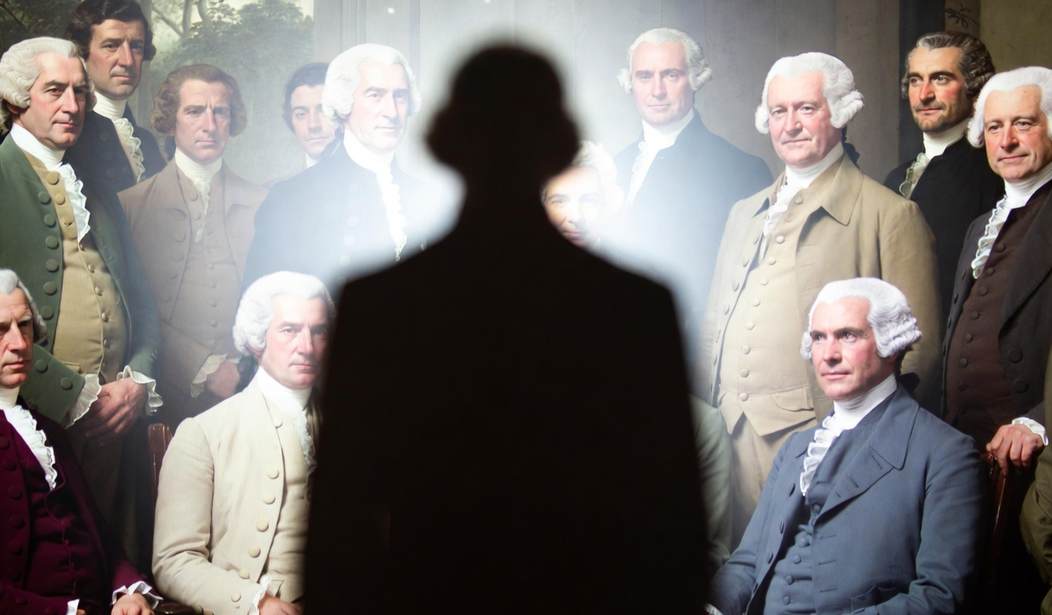

Author’s Note: Courage rarely announces itself. It forms through risk, resistance, and consequence long before history chooses names to remember. The Courage They Didn’t Teach moves decade by decade from the mid-1700s onward, setting aside hero worship to focus on moments when retreat looked safer but resolve demanded sacrifice. Please note that, since these people weren't readily celebrated, historical information may be light at times.
Each entry follows one life that faced danger, opposition, or erasure and stood firm without promise of reward. Some endured violence in the open. Others absorbed pressure in silence. Together, these stories show courage as a skill shaped by striving and refined long before applause, if applause comes at all.
A house can burn faster than a memory fades. Flames eat wood and fabric in minutes, yet meaning lingers, stubborn and fragile, waiting for someone to decide whether it’s worth saving.
Dolley Madison: 1768-1849
Washington in August 1814 didn't feel like a capital ready for history. British forces moved with purpose after victories along the Chesapeake. Government officials scattered; President James Madison rode out to assess troop positions, leaving the President's House exposed, uncertain, and dangerously close to becoming a symbol of collapse.
Dolley Madison stayed.
She received reports as the British approached, and each update tightened the window.
As thousands of Washingtonians packed their belongings and left town, First Lady Dolley Madison resolved to stay with her husband and, if necessary, oversee the evacuation of the White House.
By midday on Wednesday, August 24, 1814, British troops marching from Bladensburg stood poised to attack Washington. Convinced by friends that it was time to flee, the First Lady pointed to Gilbert Stuart’s full-length portrait of President George Washington. 'Save that picture, if possible,' she instructed Paul Jennings, a 15-year-old enslaved African-American. 'If not possible, destroy it: under no circumstance allow it to fall into the hands of the British.'Madison initially ordered Jennings to help remove the entire portrait, frame and all, from the White House wall. But with the British approaching and time running short, she ordered Jennings to break the frame apart so the canvas could be removed with a knife. Two friends of the Madison family then carted the portrait away, storing it in a farmhouse outside Washington for safekeeping.
Staff urged her to leave, and carriages stood ready. The safe choice sat right in front of her, plain and obvious. Yet she delayed, moving through rooms not like a guest fleeing danger but like a caretaker deciding what must endure.
She gathered state papers first, recognizing their legal weight. She then turned to something harder to measure and easier to overlook: a full-length portrait of George Washington painted by Gilbert Stuart. That image carried more than paint and canvas; it held continuity, identity, and the fragile idea that the new republic belonged to something larger than any one crisis.
President George Washington posed for artist Gilbert Stuart for the famous Lansdowne portrait that became the basis for two portraits of Washington in the U.S. Capitol. Stuart was the foremost portrait painter in the United States at the time, and Washington posed for him for four separate portraits. The resulting paintings became the standard images of Washington. Stuart’s Lansdowne likeness was successful, but not flawless. Washington’s grandson, George Washington Parke Custis claimed that the face “is incomparably the best likeness of the Chief in his latter days, but in the person, that great Master of Portrait Painting failed entirely.”
Removing Washington's portrait didn't come easy; the frame stood large and secured to the wall. Time ran thin, while Dolley Madison ordered servants to break the frame if necessary. They cut the canvas free rather than losing it altogether.
She didn't stop there; silver, documents, and other items left the house in stages. Each decision balanced weight against time and value against survival. She worked through those choices while knowing British troops could arrive at any moment.
Her final departure only came when delay no longer made sense.
Moments later, British forces entered Washington and set the President's House on fire. Flames consumed the building, smoke marked the skyline, and what remained turned black and hollow.
After torching the Capitol about 100 British soldiers and sailors headed west down Pennsylvania Avenue with four officers, including Major General Robert Ross and Rear Admiral Sir George Cockburn in ceremonial bicorne hats, riding behind them. At the deserted White House, the hot and exhausted invaders found the table set for 40-50 dinner guests and they took to the food and drink with a will.
The president, first lady and Secretary of War John Armstrong were the subjects of ribald mockery, and the British began assembling wooden tools, tables and sofa and bedding for a bonfire. Lieutenant George Pratt, a veteran of the Duke of Wellington's campaign against Napoleon in Spain, and "an expert in pyrotechnics," ordered 50 men to surround the Executive Mansion and hurl poles with fiery oil-soaked rags at the end like javelins through the broken windows. Before long the heaps of furniture, bedding, and curtains were on fire. The interior collapsed within the shell, a burning mass of wood flooring, lath, and everything else that was combustible.
Yet, Washington's portrait survived; so did the documents she saved. Pieces of a young nation slipped through destruction because one person refused to reduce the moment to escape alone.
Dolley Madison didn't command troops or deliver speeches that changed battle lines. Her role didn't fit the usual outline of wartime courage. No musket, no charge, no field command. Instead, she worked inside a quiet kind of pressure that asks a different question: what matters enough to protect when everything else demands retreat?
That kind of courage rarely draws attention in the moment; it doesn't announce itself. It shows up in choices made under pressure, often without applause, sometimes without witnesses who understand what's at stake.
She understood that symbols matter, especially when institutions wobble; a government can rebuild walls, but it struggles to rebuild meaning once it slips away. Saving that portrait kept a thread intact between past leadership and future stability.
Her actions preserved more than simple objects; they guarded a sense of continuity during a moment when the country could've felt temporary, even disposable.
The President's House didn't remain in ruins; workers rebuilt it, leadership returned, and the government continued, bruised but intact. The survival of key documents and national symbols helped steady public confidence during recovery.
Dolley Madison never framed her actions as heroic; she acted with a sense of responsibility that didn't need recognition to justify itself. History caught up with her later, assigning meaning to decisions made in real time, under pressure, without certainty.
That pattern often shows up when people who hold a line during chaos rarely know how their choices will look years later. They only know what stands in front of them and what they're willing to risk preserving it.
Next up in the series: Tecumseh
Tecumseh didn’t wait for history to close in around him. He saw what was coming and chose to push back with something stronger than scattered resistance. He traveled from tribe to tribe, setting aside old rivalries to build a united front against relentless expansion, arguing that no single group had the right to sell land that belonged to all. His fight carried into the War of 1812, where strategy, not sentiment, shaped his alliances. His story isn’t about a last stand; it’s about a man who tried to redraw the map before it erased his people.
Other columns in this series
- Franklin Before the Break
- The Woman Who Printed the Names
- The Man Who Refused to Stay Quiet
- Measured by the Stars
- Courage Measured in Seconds
- Margaret Corbin’s Stand Under Fire
- Hidden in Plain Sight—Deborah Sampson
- The Man Who Listened
- A 16-Year-Old Against an Army
- The Shot That Steadied a Revolution
- Mum Bett and the Law
- Phillis Wheatley and the Cost of Freedom
- Ona Judge Chose Freedom Over Comfort
- Richard Allen, A Faith That Wouldn’t Sit in the Balcony
- John Fitch: Steam Before the Spotlight