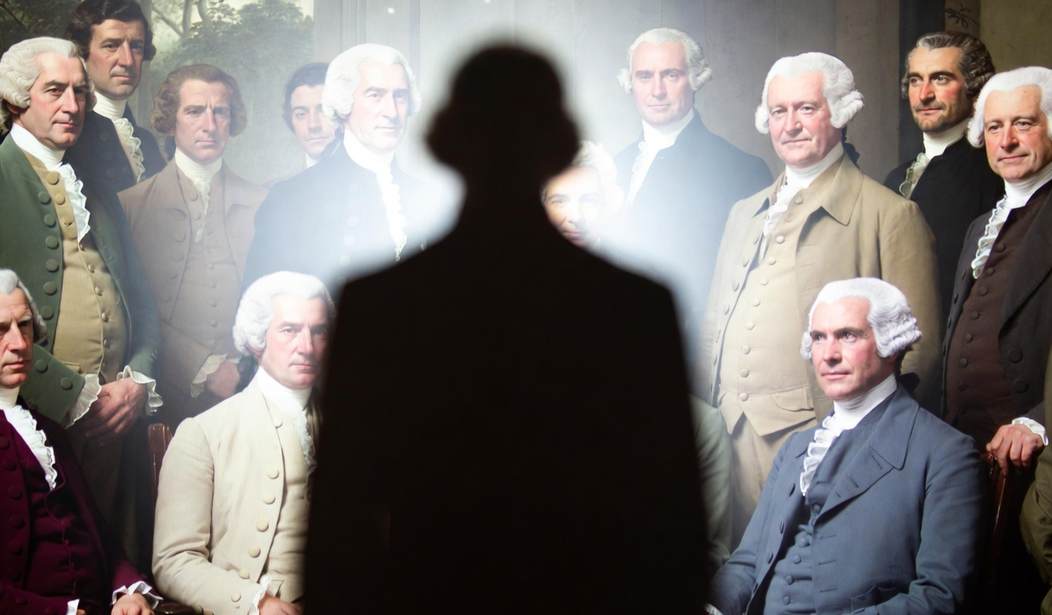

Author's Note: Courage rarely announces itself when it matters most: It forms quietly, shaped by risk, resistance, and consequence, long before history decides who deserves credit or remembrance.
The Courage They Didn’t Teach tells those stories one life at a time, moving decade by decade from the mid-eighteenth century forward, not to crown heroes, but to examine the moments when retreat felt reasonable, and endurance carried a real cost.
Each column in this series centers on a single figure who faced danger, opposition, or erasure and chose to hold ground without certainty of reward. Some acted in public view, absorbing punishment, exile, or violence. Others endured through restraint, patience, silence, or refusal to surrender inwardly when pressure mounted.
Taken together, the series challenges the comfortable idea that courage belongs only to the loud, the victorious, or the celebrated. Instead, courage appears as a discipline learned under weight, shaped by consequence, and practiced long before recognition arrived.
If it arrived at all.
A dockworker never learns a harbor from diagrams pinned to a wall. Knowledge comes through repetition and consequence: Crates feel heavier when rain slicks the boards, rope fibers cut more deeply when cold stiffens the hands, and some planks bow under loads that looked harmless minutes earlier, while others hold without complaint.
Over time, the body learns what the eye can't predict, and judgment develops not from instruction but from pressure applied again and again.
The 1750s placed Benjamin Franklin in a similar apprenticeship, one that demanded constant attention without offering clarity upfront. Drawing rooms replaced docks, and corridors replaced piers, yet the work required the same balance and patience.
Every conversation carried weight; every pause mattered, and each decision risked either forfeiting access or surrendering dignity.
Franklin entered the decade believing loyalty still carried value within the British Empire. Britain had risen by absorbing talent from across its holdings, and Franklin believed that reason, patience, and goodwill still counted as currency.
Partnership felt possible, mutual respect appeared achievable, even if imperfect.
Carrying the Weight
Franklin went to London in 1757 on business that looked small at first glance, especially to people outside Pennsylvania, yet carried the same kind of tension that would later tear apart British and American relations.
The Provincial Assembly of Pennsylvania sent him as its agent, which in practical terms meant advocate and negotiator, to push back against the Penn brothers, the sons of the colony’s founder. The brothers believed the original 1681 charter made them the rightful and absolute owners of Pennsylvania, along with every privilege that status implied. One privilege mattered most. They argued their vast lands should not be taxed like everyone else’s property.
The assembly rejected that claim, finding it unfair and dangerous, since ordinary people bore the burden while the largest landowners escaped it. Franklin’s task in London was straightforward and complex at the same time: He needed to convince British officials that the elected assembly spoke for fairness and stability, and that inherited privilege should not outweigh shared responsibility.
Experience eroded that belief slowly rather than dramatically. Invitations arrived often and warmly, yet decisions didn't. The courtesy softened refusal so well that denial rarely appeared outright. Optimism faded without a single decisive moment, replaced instead by accumulation.
Franklin kept returning, listening, and watching. Each step revealed another weak board, while each delay taught him where pressure collected and where it vanished without effect.
A Colonial With Unusual Access
Franklin arrived in London without noble birth, inherited title, or official authority that demanded attention. Curiosity opened doors instead: Experiments with electricity fascinated elite circles where colonial politics rarely intruded. His intellectual novelty created invitations when political relevance could not.
Ben had a hard societal door to open:
His departure in 1757 was announced with some alarm by the Penns’ provincial secretary in Philadelphia in a letter to Proprietor Thomas Penn in London: “Certain it is that Benjamin Franklin’s view is to effect a change of Government, and considering the popularity of his character and the reputation gained by his Electrical Discoveries which will introduce him into all sorts of Company he may prove a Dangerous Enemy. Dr. Fothergill and Mr. Collinson can introduce him to the Men of most influence at Court and he may underhand give impressions to your prejudice. In short Heaven and Earth will be moved against the Proprietors.”
Access brought comfort and illusion in equal measure. Warm receptions made Franklin feel heard, yet influence proved harder to find. Listening earned patience, praise came easily, yet action rarely followed. Franklin quickly learned that being welcomed into a room didn't mean carrying any societal weight inside it.
When they began, meetings started with politeness and ended without resolution. Any colonial concerns were shared late in meetings, if at all, often when people's energy was drained from discussions.
Conversations tended to drift to safer ground, illustrating how complex topics were utterly exhausting to consider rather than providing answers.
Social gatherings blurred the line between concentration and dismissal, while laughter filled the rooms where wine freely flowed, yet policy remained fixed.
Franklin learned that charm created tolerance rather than leverage; speaking louder didn't change a thing, yet still being in attendance offered something better: an education.
If he kept raising objections, it led to isolation, while staying seated and quiet promised a kind of understanding.
Learning the Machinery of Empire
Principles alone don't run empires. Franklin patiently studied patterns, watching how influence moved through family ties, financial interests, and long-standing alliances. Once already in motion, moral arguments rarely slowed their momentum.
The distance across the Atlantic Ocean softened colonial needs. Silence worked as policy without signatures or confrontation; it allowed decisions to stall without blame.
Letters slowly crossed the ocean, and replies arrived even slower. Any urgency required was lost during transit, and by the time subsequent responses arrived, many questions had lost force and relevance.
Eventually, Franklin stopped mistaking courtesy for cooperation. Because of this lesson, he replaced assumptions with observation, and any requests that stalled needed structure to be clarified, while power revealed priorities quietly and consistently.
It took time, but Franklin began to understand how the machine worked through repetition instead of debate.
London Between the Meetings
Franklin wandered the streets of London to absorb the city beyond all the official rooms. He saw bustling shops, thriving markets, and how confidently wealth moved. The empire seemed secure, even while events across the ocean began straining its edges.
While at dinner, conversations with Franklin drifted toward philosophy, fashion, and commerce. Colonial hardships were rarely spoken of, yet Franklin listened carefully and noted which topics never came up in conversation.
Without being aware of the costs, London functioned comfortably, a realization that carried more weight than any argument he delivered across a nicely polished table.
War Becomes a Teacher
The Seven Years' War suddenly changed priorities. Britain needed colonial strength because defense required cooperation rather than hierarchy. Franklin stepped into logistics driven by necessity instead of ideology.
Supplies moved under immense pressure, while communications tightened, and militias organized across rugged terrain. That local knowledge proved decisive where prestigious titles failed.
When they were trusted, colonial forces did well. Successes came from preparation rather than pedigree. Confidence grew among men who learned they could coordinate, endure, and prevail without "adult" supervision.
It was an immediate lesson for Franklin: Partnership was possible only when survival demanded it.
Necessity created respect, but peace tests commitment.
The Quiet Lessons of Command
The strain of leadership was a better teacher than ceremony. American terrain punished British arrogance, responsibility fostered greater discipline, and cooperation emerged through experience rather than theory.
Ben Franklin returned to the colony to help win a war.
Franklin was made a military commander because of his experience in the Pennsylvania Assembly. Having lived through clashes between the French and British in the 1740s, he understood the importance of a staunch defense and wrote a bill in 1755 calling for the creation of a militia. Franklin had helped General Braddock the year before, so when news arrived of new raids by the French and Indians in the 70-mile stretch of frontier from Bethlehem to Reading, the Pennsylvania Colony’s governor, Robert Morris, felt obliged to turn to him to bolster the frontier. With scant military training, Franklin nonetheless became the most senior military leader in a critical part of British America.
The actions of the colonial militia changed how they perceived themselves. Colonial competence bred self-respect, while dependence faded, and confidence replaced deference. They learned that, under pressure, the skills they had learned didn't disappear when cannons fell silent.
Related: How William Pitt Taught America Confidence
London underestimated the colonials; their experience shaped their identity. Franklin understood the implications long before rhetoric caught up.
The overall lesson? Preparation mattered, and performance followed trust.
Victory Changes the Tone
Once secured, priorities during peacetime sharply shifted; debt was the new danger, while Parliament began searching for revenue. Instead of partners, the colonies turned into ledgers, a pivot Franklin sensed early, because any sense of gratitude disappeared, replaced by hardened authority. Any familiar respect drained from the conversations.
Because of the vast distance, enforcement was encouraged, while consultations declined: British control replaced partnership with unsettling speed.
Angrily, Franklin absorbed these changes quietly because he knew that anger becomes wasted influence. While maintaining his silence, his insight through observation continued, hardening his understanding of the British control over his home.
Courage Without Drama
The way Franklin displayed courage was to avoid spectacle, refusing to posture, while his silence replaced speeches, and his restraint replaced confrontation.
It was after 1763, when the extent and expense of Britain’s military triumph in the Seven Years’ War had begun to destabilize the relationship between Britain and its colonies, that Franklin’s optimism began to come under pressure. Prime Minister George Grenville believed that the Americans themselves should contribute to the cost of the ongoing presence of the British Army on American soil, around £40,000 per year. Grenville rejected Franklin’s suggestion that the money could be raised, and trade stimulated, through the issuing of bills of credit with a 6% annual rate of interest. Instead he approved a Stamp Act in 1765.
Many believed that goodwill would win out, but that wasn't a belief Franklin held because staying meant endurance, and leaving surrendered any sense of understanding.
His courage lived inside his restraint rather than his defiance.
The Cost of Seeing Clearly
In life, there's a cost to everything: Clarity demanded its payment. Franklin endured becoming isolated, while any concerns about the colonies politely and repeatedly vanished.
Ironically, the social warmth Franklin enjoyed continued, but political progress stalled, and the contrast became a heavy burden to him over time.
Refusals sharpened his diagnosis that empires favored order over consent when it was convenient.
Quietly, Franklin carried this knowledge, while the weight of his situation became even heavier, and, when truth arrived, it was without ceremony.
Things erupted with the publication of the Hutchinson Letters.
In December 1772, while residing in London as agent for the House of Representatives of Massachusetts, Franklin received a package containing 13 letters by an anonymous sender. The letters were correspondence of Massachusetts Governor Thomas Hutchinson and Lieutenant Governor Andrew Oliver with English authorities. In these letters Hutchinson explained the revolts in the colony against taxes and recommended that colonial government should be made independent from provincial assemblies and the gradual reduction “by degrees” of English liberties. He also urged to send more troops to keep rebels under control advocating repressive measures against agitators in the colonies.
Understanding the nature of these letters, Franklin sent them to Samuel Adams who was the head of the Massachusetts Committee of Correspondence. Franklin authorized the letters to be shown to members of the Committee but not copied or published.
Private Doubt and Public Calm
While maintaining steady composure in public, privately, Franklin wrestled with disappointment, where his calm preserved his access. However, whatever strategy existed was dulled by emotion, but his doubt sharpened his focus. Franklin learned that patience carried more purpose than any thoughts of passivity.
Before speaking, Franklin measured the room; timing mattered, and his words needed to be placed carefully to carry the weight.
Waiting gathered leverage rather than surrendering it.
Lessons Carried Home
When Franklin finally returned home, he knew the cause well, not any grievance. Cooperation needed respect from the British, and without it, resistance quickly followed.
Throughout 1768 Franklin attempted to pour water on the American revolutionary fires, especially as they were perceived by his many elite British friends. By 1770, however, he clearly felt believed the Colonies ought in no way be subordinate to Parliament. During this period he wrote his Massachusetts friend, Samuel Cooper (1725-1783), for instance, "that the Colonies originally were constituted distinct States and intended to be continued such... " ( PBF.17,162-3).
In a long letter of June 1771 to Thomas Cushing (1725-1788) in which Franklin reports on the dispositions of Parliament, the multi-colony agent remarks that he hopes it would be possible "gradually to wear off the assum'd Authority of Parliament without an open challenge by the Americans to it (PBF.18.120-127; see also, however, 26-27). And Franklin continued to hold this conservative stance for a surprising number of years, as we shall soon note.
The lessons he brought from England included that preparation and timing mattered, and that noise didn't do a thing. Franklin's later actions showed what he had learned earlier, because judgment mattered long before conflict.
Franklin's long walk mattered more than his final steps.
Final Thoughts
Franklin's courage, quietly building through the 1750s, led him to overcome his assumptions, and the patience he earned replaced any illusion of a partnership between the American Colonies and England. He shared a moral strength that grew long before banners rose.
A dockworker reaches the far pier and knows which boards will hold and which won't. The harbor is a teacher who shows no mercy because the long walk and the burden matter.
When resistance finally arrived, Franklin stood steady, with eyes clear and prepared, knowing exactly where genuine trust rested and where collapse occurs.
Next up: Mary Katherine Goddard
A printer who ran presses in a man’s world and later risked retaliation by publishing names tied to revolutionary documents. Courage arrived quietly in ink and persistence.