
The Courage They Didn’t Teach: Elizabeth Freeman
Elizabeth Freeman: 1744 - 1829
Author’s Note: Courage rarely announces itself. It forms through risk, resistance, and consequence long before history chooses names to remember. The Courage They Didn’t Teach moves decade by decade from the mid 1700s onward, setting aside hero worship to focus on moments when retreat looked safer but resolve demanded sacrifice. Please note that, since these people weren't readily celebrated, historical information may be light at times.
Each entry follows one life that faced danger, opposition, or erasure and stood firm without promise of reward. Some endured violence in the open. Others absorbed pressure in silence. Together, these stories show courage as a skill shaped under strain and refined long before applause, if applause comes at all.
When A Constitution Met A Claim
A small spark lands in dry grass. At first, nobody pays attention, then suddenly, the field changes.
Elizabeth Freeman was born around 1744 in Claverack, N.Y. Her slave owners called her "Bet" or "Mum Bett." Pieter Hogeboom first owned her, then transferred her and her sister, Lizzy, to his daughter, Annetje, and husband, Colonel John Ashley, in Sheffield, Mass. For nearly 30 years, she worked in the Ashley household, cooking, cleaning, and caring for children.
Mrs. Ashley governed the home with cruelty. During one dispute, she swung a heated shovel at Mum Bett's sister; Mum Bett, stepping between the two, absorbed the blow on her arm, leaving a permanent scar. Later, Mum Bett gave birth to a daughter, but records don't mention the father.
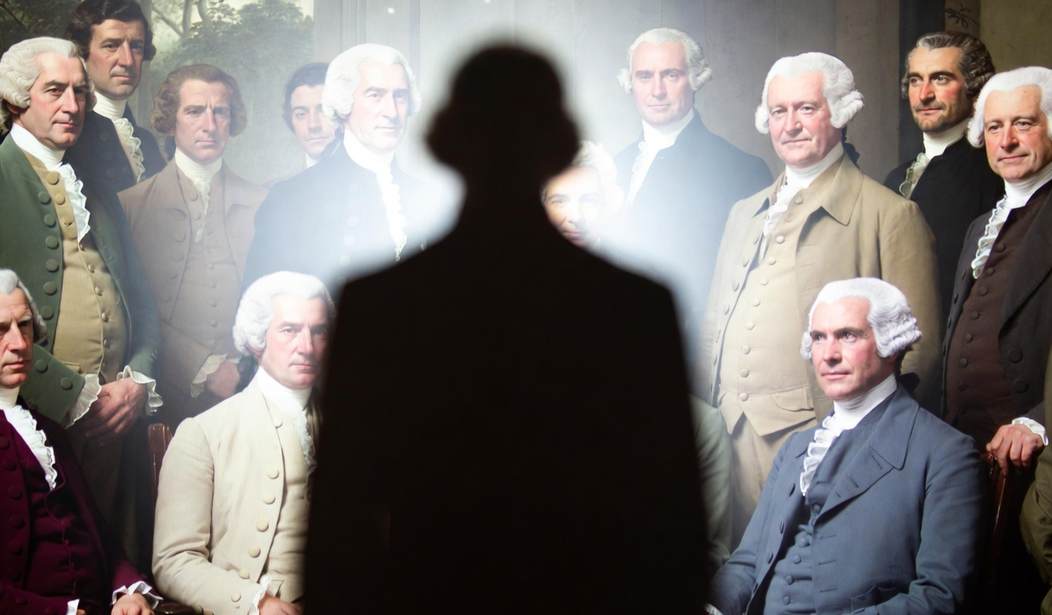
In 1773, important men gathered at the Ashley home to debate liberty. The Sheffield Declaration affirmed that people held equal rights to life and freedom.
He served as a judge of the Berkshire Court of Common Pleas. In January of 1773, he moderated the local committee that wrote the Sheffield Declaration. This declaration was approved on January 12, 1773. It stated that “mankind in a state of nature are equal, free, and independent of each other, and have a right to the undisturbed enjoyment of their lives, their liberty and property.” This same language was used in the United States Declaration of Independence of 1776 and in the Massachusetts Constitution of 1780.
Then, in 1780, Massachusetts adopted a constitution declaring that all men are born free and equal. After hearing those words spoken, Mum Bett believed they also applied to her.
After Ashley's violent outbursts, Freeman refused to return to the household, while she sought legal help from Theodore Sedgwick in Stockbridge. Another slave, Brom, joined her. In May 1781, they filed a writ of replevin, asserting that John Ashley had no lawful right to hold them.
Sedgwick took her case and filed a “writ of replevin” on behalf of Freeman (under her enslaved name, “Mum Bett”) and an enslaved man named Brom. This writ stated that John Ashley had unlawfully obtained property (Bett and Brom) and that he had to return them to the local sheriff; in other words, he had to free them. John Ashley refused to comply.
The case, Brom and Bett v. Ashley, reached the County Court of Common Pleas in Great Barrington on Aug. 21, 1781, before a white jury. Sedgwick contended that the 1780 constitution rendered slavery unlawful.
By August 1781, the case went to the County Court of Common Pleas of Great Barrington, known as Brom and Bett v. Ashley. During the case, Sedgwick argued that the Massachusetts Constitution outlawed slavery. The jury agreed with Sedgwick and decided that Bett and Brom were not Colonel Ashley's property. Bett and Brom were set free and awarded 30 shillings and the costs of the trial. Colonel Ashley filed an appeal with the Supreme Judicial Court but later dropped his case. His decision was likely informed by the Quock Walker trials that declared slavery incompatible with the new Massachusetts Constitution.
Ashley filed an appeal and later withdrew it.
Her victory carried consequences beyond one household. In 1783, the Massachusetts Supreme Judicial Court held, in related cases, that slavery was incompatible with the state constitution, prompting the practice to fade from the state without a battle or musket.
In 1780, when the Massachusetts Constitution went into effect, slavery was legal in the Commonwealth. However, during the years 1781 to 1783, in three related cases known today as "the Quock Walker case," the Supreme Judicial Court applied the principle of judicial review to abolish slavery.
Legal action compelled a young republic to measure its conduct against its own language.
Once she secured her freedom, Mum Bett changed her name to Elizabeth Freeman, worked for the Sedgwick family as a paid employee, and became a respected community presence. She raised children, served as a midwife and nurse, and purchased her own land, where she and her daughter lived independently until her death on Dec. 28, 1829, in Stockbridge, Mass.
Her grave lies beside members of the Sedgwick family, a significant placement for a woman once treated as property.
She is buried in the Sedgwick family plot in Stockbridge. While her gravestone does not mention the significant contribution she made to end slavery in Massachusetts, it does provide insight into the woman behind the court case: “She was born a slave and remained a slave for nearly thirty years. She could neither read nor write, yet in her own sphere she had no superior or equal.”
A field never returns to its former shape after flames run through it. Growth follows, but the ground remembers. Elizabeth Freeman heard a promise spoken in polished rooms and decided it must bind the people who spoke it, placing her own life against the claim. Massachusetts changed because one woman insisted that words mean what they say.
Next Up In The Series: Prince Hall
In post-Revolution Boston, Prince Hall pressed lawmakers to extend education and protection to free black residents. A veteran of the struggle for independence, he organized African Lodge No. 459 and petitioned the Massachusetts legislature for equal treatment under the law. His efforts didn't involve courtroom drama like Freeman’s, yet they demanded similar resolve. He insisted that liberty must stretch beyond celebration days and reach ordinary life.