





The confirmation that Iran's Supreme Leader Ayatollah Ali Khamenei was killed during joint U.S.-Israeli airstrikes was a cause for celebration inside the country.
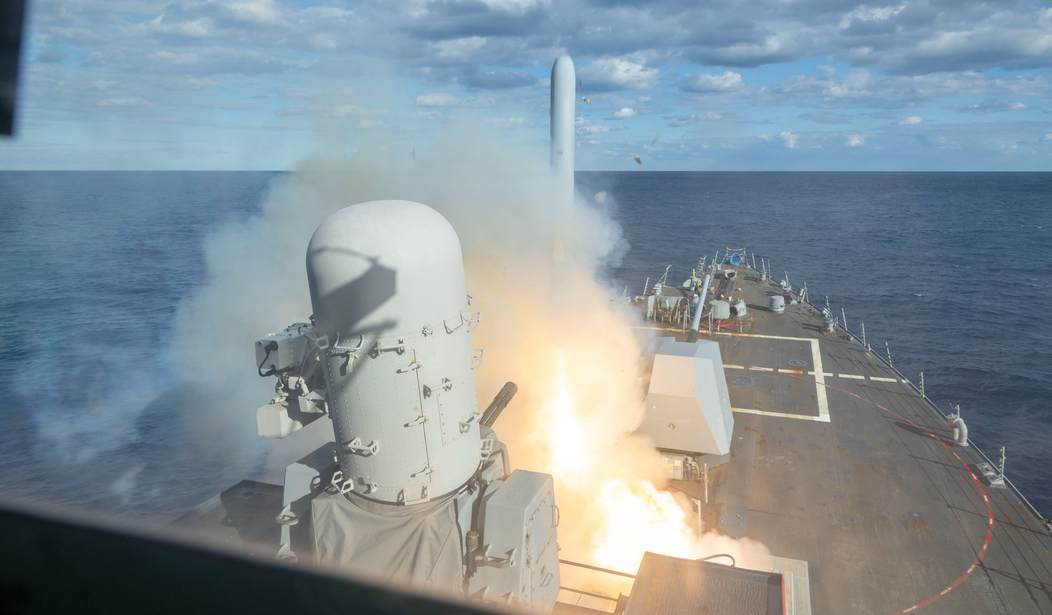
U.S. military officials announced that the operation targeted Iranian leadership compounds, missile facilities, and nuclear infrastructure across Tehran and other strategic sites.
U.S. and partner forces began striking targets at 1:15 a.m. ET to dismantle the Iranian regime’s security apparatus, prioritizing locations that posed an imminent threat. Targets included Islamic Revolutionary Guard Corps command and control facilities, Iranian air defense capabilities, missile and drone launch sites, and military airfields.
“The President ordered bold action, and our brave Soldiers, Sailors, Airmen, Marines, Guardians, and Coast Guardsmen are answering the call,” said Adm. Brad Cooper, commander of CENTCOM.
Following the initial wave of U.S. and partner strikes, CENTCOM forces successfully defended against hundreds of Iranian missile and drone attacks. There have been no reports of U.S. casualties or combat-related injuries. Damage to U.S. installations was minimal and has not impacted operations.
The first hours of the operation included precision munitions launched from air, land, and sea. Additionally, CENTCOM’s Task Force Scorpion Strike employed low-cost one-way attack drones for the first time in combat.
Operation Epic Fury involves the largest regional concentration of American military firepower in a generation.
Israeli Prime Minister Benjamin Netanyahu stated that the strikes aimed to eliminate immediate threats that Iran's regime posed.
Now, will this affect the war between Ukraine and Russia?
Iran has long supported Russia's war effort in Ukraine. Under President Vladimir Putin, Moscow relied on Iranian Shahed drones to strike Ukrainian infrastructure and cities, which became central to Russia's strategy of targeting energy grids during the winter months.
Iran also supplies oil to Russia during periods when sanctions squeezed global markets. Disruption within Iran is now pitting two competing forces against each other.
On the one hand, direct Iranian support to Moscow weakens amid disruptions to oil production and drone exports.
On the other hand, instability in the Persian Gulf pushes oil prices upward, and Russia remains one of the world's energy exporters.
Global energy markets face one of their gravest shocks in decades as joint U.S. and Israeli strikes on Iran and Tehran’s retaliatory missile attacks across the Gulf disrupt oil exports from the world’s most important producing region.
The duration of the conflict will likely determine the scale of the disruption, but for now, the threat and uncertainty are already enough to severely impact flows from the region, which accounts for 20% of global oil supplies.
Barring a swift resolution, oil prices will likely rise sharply when trading opens on Monday morning. Benchmark Brent crude oil prices rose in recent weeks to around $70 a barrel, their highest since August 2025, as investors braced for military confrontation in the Middle East.
With 20% of global oil shipments passing through the Straits of Hormuz and tanker traffic slowing amid heightened security risks, Iran's temporary closure of maritime routes sent oil prices sharply higher. A 10-12% spike in global crude prices strengthens Russia's revenue stream, at least in the short term.
That creates a paradox in the Ukraine conflict: Higher oil prices give Putin breathing room, while every dollar increase in crude prices translates into billions of additional revenue for the Kremlin. China, facing reduced Iranian supply, may turn more heavily toward Russian exports; that shift could deepen Moscow's economic relationship with Beijing.
Iran is the fourth-largest oil producer in OPEC at just over 3 million barrels per day in January. The Islamic Republic shares a coastline with the Strait of Hormuz, the world’s most important waterway for the global oil trade.
The oil market has long shrugged off the risk of a Middle Eastern oil supply disruption. Traders are underestimating the threat that Iranian retaliation to the U.S. attack poses to the market, said Bob McNally, a former White House energy advisor to former President George W. Bush.
“This is the real deal,” said McNally, founder and president of Rapidan Energy. Crude oil futures will likely rise by $5 to $7 per barrel when trading opens at 6 p.m. ET Sunday, as the market prices in some risk, he said.
Yet the loss of Iranian drone support could weaken Russia's operational capacity. Ukrainian cities have endured repeated waves of Iranian-made unmanned aerial attacks. If internal Iranian chaos disrupts production or supply chains, and it would be a surprise if things continue, Moscow must either accelerate domestic drone manufacturing ot look for new partners. It's a transition that takes time and money.
Sen. Lindsey Graham (R-S.C.) praised the strikes, arguing that degrading Iran's regime would weaken hostile networks aligned with Western interests. Netanyahu said that the goal was to neutralize threats, not escalate indefinitely.
Putin now faces a mixed strategic landscape. Short-term oil gains strengthen the treasury, while long-term supply disruptions weaken one of his battlefield advantages. Europe, still navigating energy vulnerabilities, must reassess its exposure to global shocks. Ukraine may gain temporary relief from drone saturation while Russia adjusts.
The broader questions concern sustainability. Russia's war machine runs on revenue and supply chains. If Epic Fury reduces Iranian military exports over time, Moscow's ability to maintain pressure could narrow. If oil remains elevated for months, the Kremlin gains leverage to prolong operations.
Operation Epic Fury is reshaping more than Tehran's skyline; it's altering calculations inside the Kremlin. Whether Putin benefits or suffers depends on which factor dominates: higher oil income or diminished Iranian military backing.
That answer will shape the next phase of the Ukraine war.
PJ Media VIP members get exclusive analysis on developing global events like Operation Epic Fury and its impact on Russia and Ukraine. Right now, you can get 60% off with promo code FIGHT. Join here.


Join the Conversation
VIP members get the ability to comment on articles.