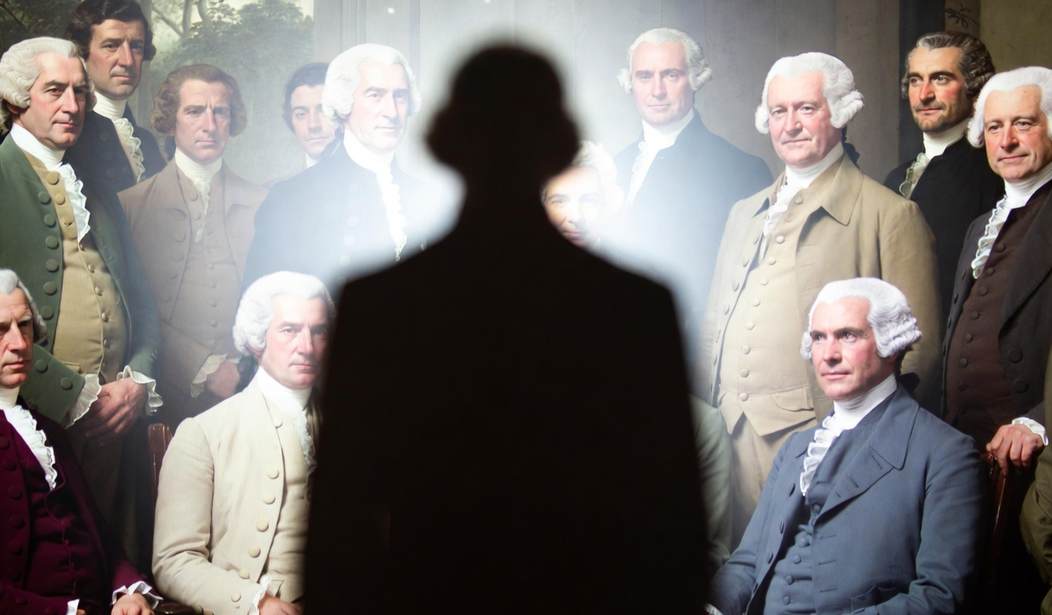
Benjamin Banneker: 1731-1806
Author's Note: Courage rarely announces itself when it matters most: It forms quietly, shaped by risk, resistance, and consequence, long before history decides who deserves credit or remembrance.
The Courage They Didn’t Teach tells those stories one life at a time, moving decade by decade from the mid-eighteenth century onward, not to crown heroes but to examine the moments when retreat felt reasonable, and endurance carried a real cost.
Each column in this series centers on a single figure who faced danger, opposition, or erasure and chose to hold ground without certainty of reward. Some acted in public view, absorbing punishment, exile, or violence. Others endured through restraint, patience, silence, or refusal to surrender inwardly when pressure mounted.
Taken together, the series challenges the comfortable idea that courage belongs only to the loud, the victorious, or the celebrated. Instead, courage appears as a discipline learned under weight, shaped by consequence, and practiced long before recognition arrived.
If it arrived at all.
Learning Without Invitation
An expert clockmaker learns patience by listening, not by rushing the gears. A single misplaced tooth ruins the entire motion.
Benjamin Banneker learned that lesson early, while teaching himself mathematics and astronomy in a society that didn't believe he should know anything at all.
Born free in Maryland, Banneker lived among neighbors who measured a person's worth by skin color rather than skill, yet he kept reading, calculating, and observing the sky with steady focus.
There are no simple ways to teach yourself two of the more complex sciences, and Banneker's story wasn't different; books arrived slowly, instruction was rare, yet his curiosity filled the gaps. He built his knowledge piece by piece, trusting accuracy to speak louder than any argument. With each correct calculation, the mechanism tightened, and every night spent charting the stars sharpened his judgment.
Precision As Reputation
Banneker's work couldn't hide behind opinion; he gained notice through his accurate almanacs, where dates mattered. Tides didn't follow moods; they followed math; farmers, sailors, and merchants depended on numbers to plan their days. As his predictions held, credibility followed.
Publishing his work reached an audience that might never meet him, yet they relied on his work. Almanacs quietly moved through homes and business shops, providing reliability without the fanfare.
Precision built trust where promises didn't.
Credibility mattered in a nation that was still forming habits of belief; numbers cut through doubt because they either worked or failed. Banneker's work worked.
At the Center Without the Spotlight
Later, Banneker joined surveyors who measured the land that would become the nation's capital. Surveying demanded discipline, stamina, and exact measurements: Lines had to match, angles mattered, and errors, even the most minor, grew dangerous over distance.
Banneker’s talents and intelligence eventually came to the attention of the Ellicott family, entrepreneurs who had made a name and fortune by building a series of gristmills in the Baltimore area in the 1770s. George Ellicott had a large personal library and loaned Banneker numerous books on astronomy and other fields. Using mathematical calculations, Banneker accurately predicted his first solar eclipse.
In 1791, Andrew Ellicott, George’s cousin, hired Banneker to assist in surveying territory for the nation’s capital city. The area eventually became Washington, D.C. Banneker primarily worked in the observatory tent using a zenith sector to record the movement of the stars. According to the White House Historical Association, both President George Washington and Secretary of State Thomas Jefferson knew of Banneker’s involvement in the survey. However, due to a sudden illness, Banneker was only able to work for Ellicott for about three months.
Ironically, working at the center of a new republic placed him near power without granting him any protection. While others debated ideals, he measured the ground, a role that proved essential, but limited at the same time.
Banneker's work demonstrated a quiet truth: The nation relied on competence, while it resisted equality.
Proof Against a Claim
The life Banneker led answered claims used to justify slavery without argument; his work demonstrated intellect, discipline, and independence in ways that prejudice can't simply explain away. He didn't shoot; he calculated, living openly carried risk because visibility invited scrutiny.
Banneker knew that every error would confirm doubts, but he met that pressure with care and preparation, not retreat.
His sustained exactness, day after day, year after year, led to unfailing courage.
The Weight of Being Correct
A single mistake erases years of trust. Banneker knew that pressure and continued to carry it anyway. He chose work that left little room for excuses, knowing the standards applied to him dwarfed those of others.
Through it all, he kept measuring, publishing, and watching, letting results speak where words couldn't. The truth didn't need volume, just time; numbers held, lies weakened.
Final Thoughts
A surveyor stretches a line across uneven ground while relying on the tension to keep it accurate. Benjamin Banneker did the same with knowledge, pulling facts tight across a country still finding its shape.
His life measured the stars, and his results judged him. When courage demanded proof over noise, the line held.
Next Up in This Series
Crispus Attucks
A dockworker with no protection and no promise of safety, Crispus Attucks stood where daily labor met rising unrest. When confrontation turned deadly, he became the first to fall. His courage arrived without preparation, measured in seconds rather than years, and helped ignite a movement that reshaped American history.