
Phillis Wheatley: 1753-1784
Author’s Note: Courage rarely announces itself. It forms through risk, resistance, and consequence long before history chooses names to remember. The Courage They Didn’t Teach moves decade by decade from the mid 1700s onward, setting aside hero worship to focus on moments when retreat looked safer but resolve demanded sacrifice. Please note that, since these people weren't readily celebrated, historical information may be light at times.
Each entry follows one life that faced danger, opposition, or erasure and stood firm without promise of reward. Some endured violence in the open. Others absorbed pressure in silence. Together, these stories show courage as a skill shaped under strain and refined long before applause, if applause comes at all.
On a cold night, a lantern burns, drawing a small circle of warmth while the wind pushes against the glass. Travelers see the light and wait, then morning arrives, while the lantern stays. The wind grows sharper, and the road empties.
The flame keeps burning, though fewer people notice.
A poet appears in unlikely company
Phillis Wheatley entered the Atlantic world under brutal circumstances, while a slave ship carried her around 1761 from West Africa to Boston, where the Wheatley family purchased the young girl and brought her into their household.
Wheatley was seized from Senegal/Gambia, West Africa, when she was about seven years old. She was transported to the Boston docks with a shipment of “refugee” slaves, who, because of age or physical frailty, were unsuited for rigorous labor in the West Indian and Southern colonies, the first ports of call after the Atlantic crossing. In August 1761, “in want of a domestic,” Susanna Wheatley, wife of prominent Boston tailor John Wheatley, purchased “a slender, frail female child ... for a trifle” because the captain of the slave ship believed that the waif was terminally ill. He wanted to gain at least a small profit before she died. A Wheatley relative later reported that the family surmised the girl—who was “of slender frame and evidently suffering from a change of climate,” nearly naked, with “no other covering than a quantity of dirty carpet about her,” to be “about seven years old ... from the circumstances of shedding her front teeth.”
By her early teens, Phillis read classical works and scripture, and wrote poetry that blended religious reflection with a sharp awareness of liberty.
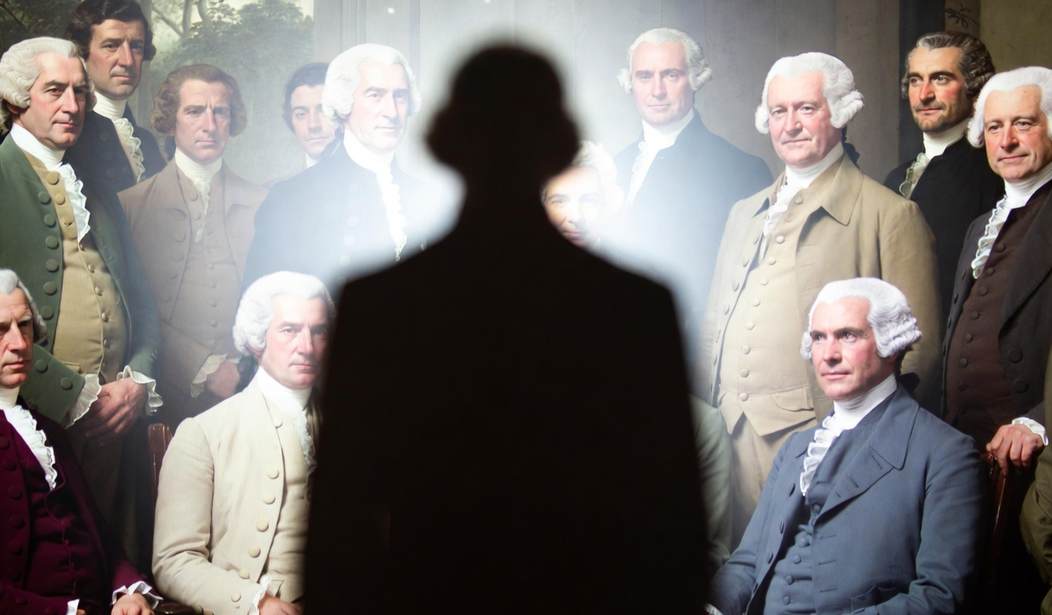
People noticed her work in Boston, while skeptics questioned whether an enslaved African girl could truly write such poetry. Prominent men gathered to examine her work and confirm her authorship. Wheatley published Poems on Various Subjects, Religious and Moral in London during 1773, making her the first female slave to publish a book of poetry.
Soon, she was recognized on both sides of the Atlantic: George Washington praised one of her poems addressed to him during the Revolutionary War. For a single shining moment, a former teenage slave stood inside intellectual circles normally closed to women and Africans.
Freedom arrives with thin protection
Freedom came to Phillis Wheatley in 1774 after Susanna Wheatley died. Manumission changed a person's legal status, but offered little financial security.
Phillis married John Peters, an ambitious man, in 1778, but struggled to maintain a stable income during a chaotic wartime economy.
Their debt grew as creditors pressed hard, and Wheatley tried to publish another volume of poetry. However, paper and the fog of war blocked her progress.
The Wheatleys manumitted Wheatley Peters in 1773 under pressure from critics who saw the hypocrisy in praising her talent while keeping her enslaved. They died within a few years of that decision, and Wheatley Peters soon met and married grocer John Peters. Her life afterwards was indicative of the troubled freedom of African Americans of that period, who were emancipated but not fully integrated into the promise of American citizenship. Wheatley Peters was also affected by the loss of all three of her children—the birth of the last of whom caused her premature death at age 31 in 1784.
Despite the hardship, Phillis never stopped writing, showing the same disciplined mind that was illustrated in letters and surviving poems that impressed readers years earlier. Public interest had shifted toward military news and political survival. Literary curiosity rarely survived in a city burning because of war.
Talent in narrowing circumstances
Phillis's life became even more difficult after Peters landed in debtor's prison during the early 1780s. Wheatley supported herself and an infant child through domestic labor and boarding work while she continued to write.
It was during those years that any admiration that once followed her early poems was stripped away. A gifted writer moved through Boston streets carrying laundry, tending fires, and working long days. Any recognition she once had was trapped inside her earlier pages while survival demanded hourly attention.
Tragedy struck in December 1784 when Wheatley fell ill and died around 31, while sadly her infant son passed the same day.
She had written a second manuscript of poetry that disappeared before publication, leaving only fragments of work that once promised another book.
The lantern kept burning
Many people remembered Wheatley for her early brilliance. Fewer remember the years that followed freedom, while her talent remained steady even as her opportunities thinned out. The same mind that wrote poems admired in London kept quietly working through poverty, illness, and attention that faded away.
Once the road emptied, the lantern kept burning.
Next in the series: Ona Judge
Ona Judge was born into slavery at Mount Vernon and served Martha Washington inside the presidential household in Philadelphia during the 1790s. In 1796, she escaped, fleeing to Portsmouth, New Hampshire, where she built a modest life with her husband, free black sailor Jack Staines.
George Washington sent agents and applied pressure to reclaim her, yet a judge refused the order, allowing Ona to live the rest of her life, defending the freedom she had taken for herself.
Other columns in this series
- Franklin Before the Break
- The Woman Who Printed the Names
- The Man Who Refused to Stay Quiet
- Measured by the Stars
- Courage Measured in Seconds
- Margaret Corbin’s Stand Under Fire
- Hidden in Plain Sight — Deborah Sampson
- The Man Who Listened
- A 16-Year-Old Against an Army
- The Shot That Steadied a Revolution
- Mum Bett and the Law
- Prince Hall and the Work After the War