


Tehran launched drone attacks against Kuwait and Bahrain, renewing hostilities across the Persian Gulf after a two-month lull and raising fears of a wider regional escalation.
Iran's regular military claimed responsibility for targeting U.S. Patriot air defense systems and drone and missile launch platforms at Ali Al Salem Air Base in Kuwait on November 17.
Kuwait's military said its air defenses intercepted the incoming drones without casualties or damage, while its Foreign Ministry condemned the attack as a violation of its sovereignty and a threat to national security.
"Kuwaiti air defenses are currently countering hostile drone attacks. The General Staff of the Army notes that any explosion sounds heard are the result of air defense systems intercepting hostile attacks. Everyone is requested to comply with the security and safety instructions issued by the relevant authorities," the Kuwaiti Army posted on X.
The assault followed a U.S. strike on November 17 on an Islamic Revolutionary Guard Corps (IRGC) missile launch site on Qeshm Island. American fighter jets used precision-guided munitions in response to Iranian attacks on U.S. personnel and assets, a U.S. official told Fox News.
The exchange followed an Iranian attack on a U.S. military radar installation at Sheikh Isa Air Base in Bahrain. Bahrain's military said on November 18 that its air defenses intercepted several Iranian aerial attacks, marking the fourth reported assault against the island nation in approximately six days.
The Iranian military's public claim of responsibility for the Kuwait operation marked a notable development in the regime's military campaign, which has mostly involved the IRGC. The regular army's direct participation could signal a broader escalation in Tehran's response.
Iranian Army Commander-in-Chief Maj. Gen. Amir Hatami warned Washington and its allies against further strikes.
"If the enemy repeats its mistake ... we have the readiness and the plans to confront it and its supporters in a stronger, more crushing way and without geographic limitations," Hatami said.
Qatar condemned Iran's attacks against neighboring Gulf states, calling them a dangerous escalation that threatens diplomatic efforts to contain the conflict. Doha has helped mediate stalled negotiations between Washington and Tehran.
The latest military exchanges coincided with renewed attacks on commercial shipping in the Strait of Hormuz, a strategic waterway that carries approximately one-fifth of global oil and natural gas shipments.
Abu Dhabi National Oil Company (ADNOC) reported that an attack struck one of its vessels Tuesday, leaving a sailor missing. The company evacuated the remaining crew, and 11 people received medical treatment.
The United Kingdom Maritime Trade Operations center separately reported that an unidentified projectile struck a tanker approximately 13 nautical miles north of Khasab, Oman. The impact sparked a fire that the crew extinguished.
Iranian authorities also claimed that two oil tankers and a liquefied natural gas carrier caught fire after striking naval mines along an authorized shipping route.
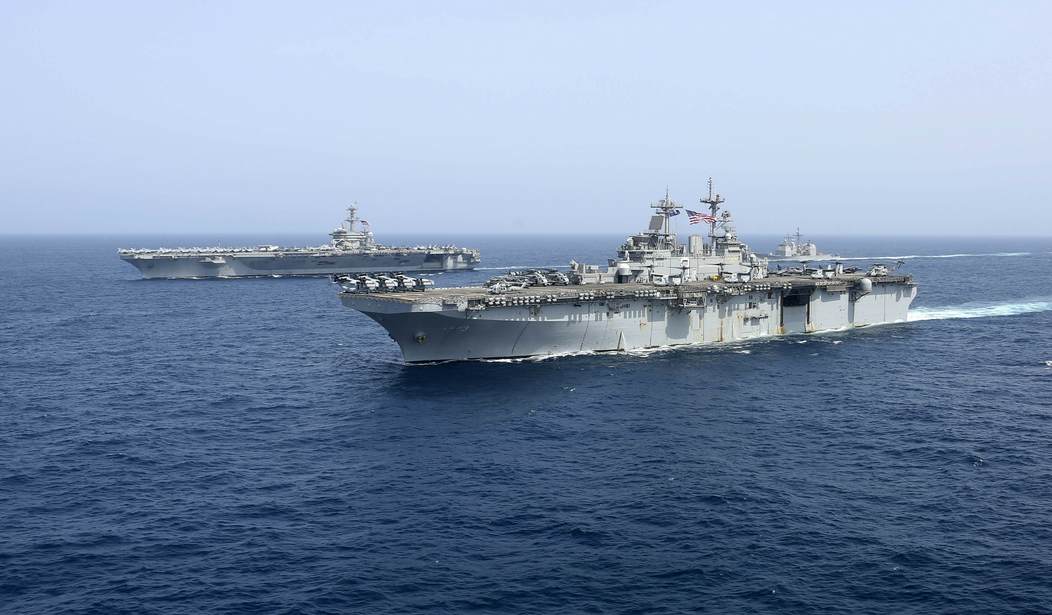
Tehran has repeatedly targeted commercial vessels since the conflict began, while the U.S. military maintains a naval blockade of Iranian ports. At least 25 seafarers have died across the Middle East since the fighting began.
Both nations reached a preliminary agreement in June to end the conflict and reopen the strait, but the arrangement collapsed within weeks after Iran resumed attacks on shipping and the United States reinstated its blockade.
The U.S. Navy has since escorted tankers through the waterway, helping Gulf energy producers restore oil exports to approximately 80% of prewar levels, according to analysts.
Tehran also faces renewed domestic unrest as military tensions escalate.
Meanwhile, hundreds of demonstrators gathered in the southern Iranian town of Abdanan on November 17 after a road accident killed 13 oil refinery employees, the Washington Post reported. Protesters demanded the resignations of company officials they blamed for the accident.
Videos obtained by the Associated Press showed demonstrators marching through the streets and chanting, "Death to the dictator!"
The latest protests add to the pressure on Iran's leadership as it confronts American military strikes, a collapsing economy, and growing domestic instability.
Iran's renewed attacks on Gulf states, threats against commercial shipping, and stalled peace negotiations have heightened the risk of a broader confrontation across the Persian Gulf.
Support and follow PJ Media’s coverage of breaking news and key events. Join PJ Media VIP and use promo code FIGHT to get 60% off your membership.


Join the Conversation
VIP members get the ability to comment on articles.