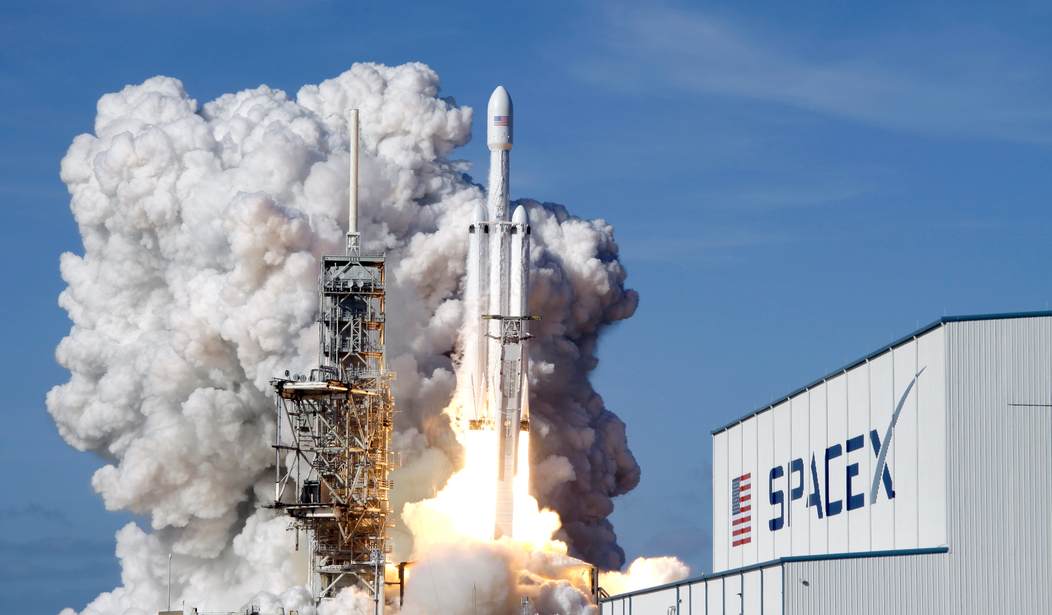

The Federal Communications Commission (FCC) has granted approval to SpaceX for the company to launch one million data center satellites into low Earth orbit. The FCC rejected calls from environmental groups and other satellite companies to block the unprecedented deployment due to interference, orbital safety, and environmental concerns.
“America is leading the world into the era of super intelligence,” FCC chairman Brendan Carr said in a statement.
“This action opens a bold new frontier for the computing infrastructure needed to power America’s leadership and growth,” he added.
The satellite constellation, known as Starmind, will deploy in orbits between 550 and 1,002 kilometers above the Earth. Launches may begin as early as next year. The FCC says "SpaceX must deploy and operate its first spacecraft for Starmind by Nov. 25, 2033, under conditions tied to the approval, and 10% of the constellation two years later," according to Space News.
As far as the concerns over the environment, interference with other satellites, and the impact on ground-based astronomical observations, the FCC said that wasn't within the scope of its regulatory mission.
“Potential concerns related to the emissions of rocket launches and the subsequent impacts on the human environment as an indirect result of the Starmind system are outside of the Commission’s purview,” the FCC order stated.
“Other concerns, including impacts on the atmosphere caused by satellites burning up on re-entry, remain speculative and not supported in the record.”
SpaceX is addressing the growing problem of orbital debris and atmospheric pollution from de-orbiting satellites by creating disposal orbits around Earth or the Sun. When a satellite reaches the end of its useful life, the remaining fuel is used to power the craft into geostationary orbit (roughly 22,300 miles above Earth). Operators boost the satellite roughly 300 km higher into an empty ring where it will drift harmlessly for thousands of years without colliding with active spacecraft.
Satellite operators Viasat and Amazon had called on the FCC to deny the constellation application over concerns including in-orbit collision risks.
For the satellites ending their mission above 600 km, SpaceX requested a waiver for the flexibility to move them into disposal orbits around Earth or the sun, rather than having them burn up in the atmosphere.
However, the FCC deferred a decision on the waiver because of insufficient information, requiring SpaceX to submit a final orbital debris mitigation plan as part of an application to modify its authorization before deploying any of the satellites above 600 km.
Viasat also raised concerns about communications interference from plans to use Ka-band for backup and emergency operations.
But the FCC agreed with SpaceX that it was unlikely that a Starmind optical communications failure would require all one million spacecraft to simultaneously use Ka-band.
With up to 1,000,000 large satellites (each with a 75-meter wingspan), burning all of them up in the upper atmosphere would deposit massive amounts of vaporized aluminum and other metals into the stratosphere, a major environmental criticism raised against mega-constellations. Companies like Astroscale, ClearSpace, and Northrop Grumman (SpaceLogistics) are building orbital servicing and debris-removal tugs. However, their business model is rescuing stranded satellites, extending the life of billion-dollar spacecraft, or removing broken junk that failed to reach a disposal orbit, not hauling away hundreds of thousands of retired mass-produced satellites from a graveyard zone.
SpaceX has committed to coordinating with the National Science Foundation on concerns that the constellation will obscure viewing for Earth-based telescopes. The company has agreed to sharply reduce brightness, avoid key telescope lines of sight, and help observatories mask or filter out streaks. With Starmind spacecraft carrying 75-meter wingspans and operating up to 1,002 km, where satellites stay illuminated by sunlight deeper into the night, coordination with the NSF focuses on practical hardware, orbital, and operational measures rather than total elimination.
This is an amazing plan, and even if Elon Musk achieves a third of his goal of a million data centers in orbit, it will change the world. With other companies like Blue Origin also getting into the orbiting data center game, the AI buildout will have all the power it needs and plenty left over for the "Next Big Thing" that will alter the destinies of humans.
Related: American Exceptionalism Can Beat China in Building Out AI