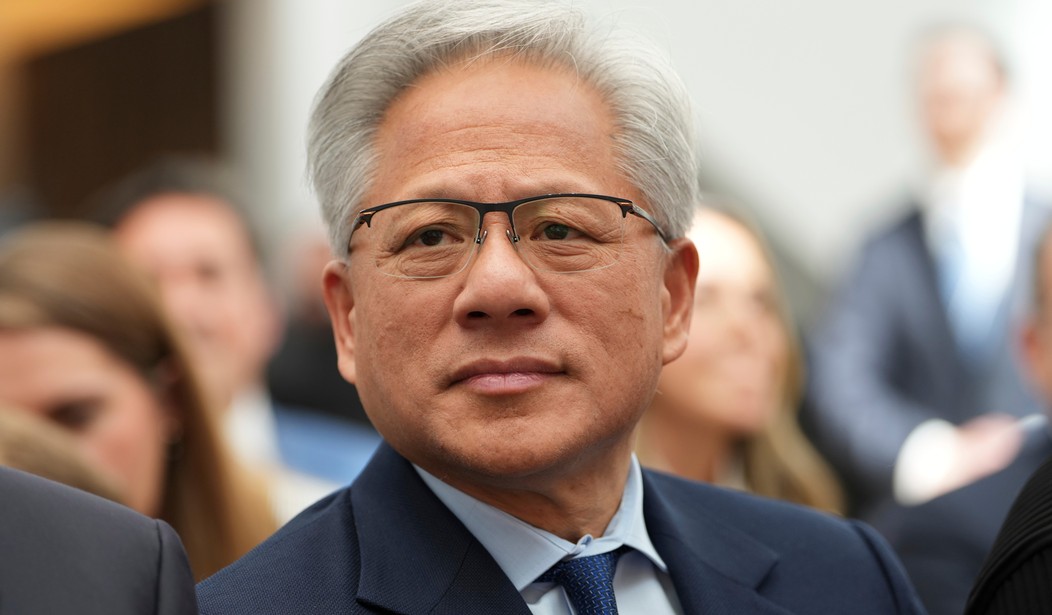

Jensen Huang is back at Nvidia despite being caught in a honey trap with a Chinese spy. Still to come are revelations about how China was able to get its hands on billions of dollars in advanced AI chips, and questions about what U.S. officials knew about it and when they knew it.
The fundamental question that supersedes all the juicy gossip and possible wrongdoing is how this will affect "The Great Game" being played between the U.S. and China in the race to develop AI.
The previous "Great Game" was the 19th-century geopolitical rivalry and intelligence struggle between the British Empire and the Russian Empire over supremacy in Central Asia. It centered on competing fears: Britain worried Russia would conquer Central Asia and invade British India, while Russia feared British encroachment along its southern frontier and into Persia and Afghanistan.
There was no real winner in that version of "The Great Game." Great Britain endured more pain than Russia, having fought three Anglo-Afghan Wars between 1839 and 1919 partly out of anxiety over Russian influence in Kabul, while Russia absorbed much of Central Asia by the late 19th century and then dealt with Muslim tribesmen and various jihads until the 1990s.
In the U.S.-China "Great Game," there will be a winner, there will be a loser, and the difference will be profound. Right now, the U.S. has the lead in building incredibly advanced AI models capable of performing tasks with extraordinary speed and precision. China has the lead in building extremely cheap "open-weight" models that can do most of what the advanced AI models do but at considerably less cost.
U.S. AI labs are blending open-weight openness with proprietary protection. Instead of choosing strictly between fully closed models and fully open-source software, major U.S. developers have adopted a middle-ground strategy.
Leading labs release smaller, efficient open-weight models (such as Google's Gemma and Microsoft's Phi) that developers can download, customize, and run locally, while keeping their largest, most capable frontier systems proprietary and behind paid APIs (Application Programming Interfaces).
It's an innovation that's only beginning to revolutionize the industry. And it shows exactly why the U.S. is in a fantastic position to dominate the AI industry for the next decade or more. "The United States is the world’s AI leader thanks to the superiority of our market-driven economic system," write former Sen. Phil Gramm and Brian Gross, a staffer for the Federal Reserve Board, in The Wall Street Journal. "However, the administration is undermining American exceptionalism with policies that work against the president’s goals."
We can’t lead in AI if we tolerate failing public schools, non-merit advancement and an immigration policy that makes it harder for the world’s best scientists, engineers and students to come to the U.S. to study, work, become Americans and build next-generation technology.
With secure property rights and open capital markets, we have accumulated the largest capital stock in the world and routinely attract far more foreign capital than any other nation. But with federal borrowing now absorbing roughly one quarter of total capital invested in the U.S. and the growing role of government in allocating private investment through “golden shares,” public equity stakes and subsidies for investing in government-favored industries, we are undermining the very system that has made us a magnet for capital and talent.
Jensen Huang has not been charged with a crime. But the revelations triggered a 37% multi-week slide that erased well over $1.5 trillion in value before his reinstatement sparked a massive single-day rebound, earning back more than a trillion dollars. Huang is a critical component of America's AI industry, and Donald Trump knows it. “We have to protect our geniuses, and he’s clearly a genius,” Trump told CNBC about his intervention to bring Huang back.
Nvidia “was shaken without a single chip or model changing,” said Winston Ma, an AI investor and adjunct professor of law at New York University. “Whoever builds and keeps that human layer will hold the rest of the stack," he told CNBC.
Is Sam Altman vital to ChatGPT? Is Elon Musk indispensable to SpaceX's success? Is Anthropic's Dario Amodei critical to his company's profitability? Can Meta do without Mark Zuckerberg? They are all people working in the most dynamic, innovative, and open system on Earth. The question isn't whether they are all indispensable. The question is: where else on the planet could they achieve everything they've achieved and will achieve?
The American system rewards success and allows failure, and that freedom fosters progress. Technological change is a wave of “creative destruction,” in which new technologies and business models replace outmoded ones. Every month, some 5.1 million Americans are laid off or quit their jobs while roughly 5.2 million Americans find new jobs. That churn is how labor and capital flow to more productive uses, and no other economy comes close to ours in allowing this wave of creative destruction to do its work.
America has turned a blind eye to evil before in the interest of national security. The U.S. brought about 100 Nazi rocket scientists to the U.S. after they surrendered to the Americans in May 1945. Germany was light-years ahead of the U.S. in the development of rockets, and we knew Russia had captured its own share of Nazi scientists.
One of the scientists who surrendered to the Americans, Wernher von Braun, ran NASA's manned space program and went on to design the rocket that took our astronauts to the Moon. Whether Huang sold out the U.S. or not will be determined later. For right now, he's right where he should be.