
They're called "microschools," and they've been springing up all across the United States since the COVID lockdowns proved to be the last straw for many parents and teachers.
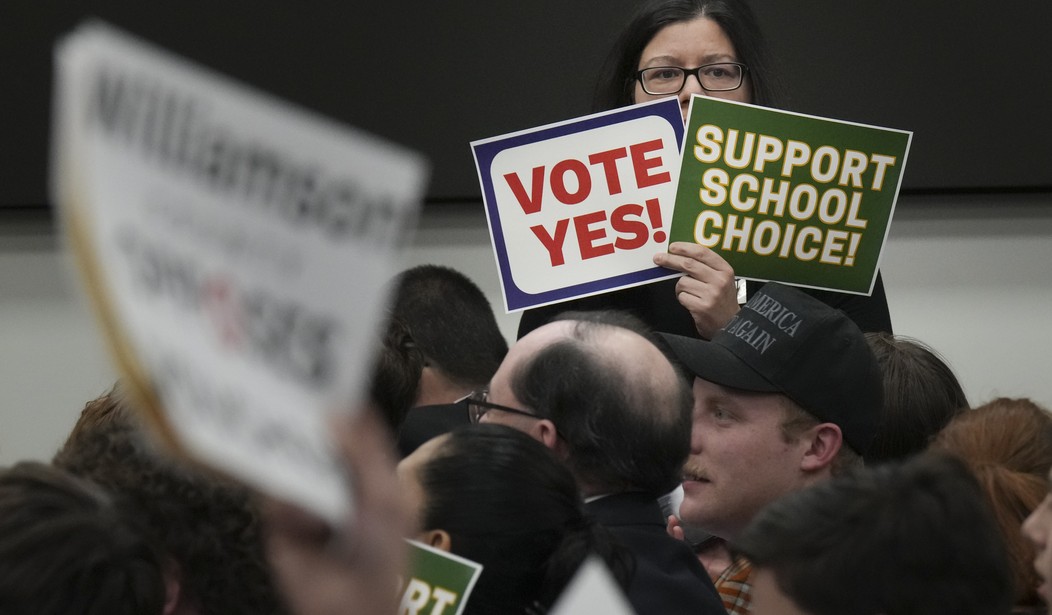
In states where school choice is a growing movement, the microschools are thriving. And in Florida, where the universal school voucher is revolutionizing education, there's a "pioneer spirit" among school choice advocates.
"There are a lot of eyes on Florida right now," says Tiffany Thenor. "We are kind of the pioneers of this universal voucher."
Naturally, the public schools don't like it very much.
"What we're seeing in Florida—it feels like an abandonment of public schools," says Andrew Spar, president of the Florida Education Association.
Gee, ya think?
"Is this the future of American education?" asks Reason.com. If it is, they'll have to shake the bugs out of the system and create better oversight of the voucher program.
A state auditor's report cited a "myriad of accountability challenges." At a Senate committee hearing, State Sen. Don Gaetz noted, "They cannot locate 30,000 students that they're paying for. That's $270 million that we're paying for students, which on any given day of the week, we can't find."
Gaetz is a charter school advocate who wants the program to be better managed and more accountable to both parents and taxpayers. He introduced a bill to separate voucher and education savings account funding from district school funding to better track the money. "I wanted to make sure that school choice wasn't besmirched by the way that the Family Empowerment Scholarship legislation had rolled out," says Gaetz, a former school superintendent.
And the programs need to be tracked.
In some cases, public schools are getting state money to educate students who are also receiving vouchers. Gaetz says "$1 to 2 million" may also have gone to fund education savings accounts for students who don't exist. One private school is accused of taking voucher money for students who never attended. According to the state auditor, the state failed to recoup between roughly $10 million and $59 million in overpayments.
"By mixing all the money we began a chain of accounting problems and financial management problems," says Gaetz.
Some school choice advocates oppose Gaetz's bill on the grounds that separating out voucher funding will make it easier to cut. Gaetz isn't worried: "We have a Republican governor who favors school choice, a Republican House that favors school choice, and a Republican Senate that favors school choice. Who are we afraid of?"
The fraud is probably higher than in some other programs because the accountability and transparency regulations are still being written. Gaetz is looking to change that with his bill that would make it easier to keep track of the money and who's getting how much.
"School choice mechanisms certainly make alternative education options more financially accessible to more families, and that leads more families to look around and see what's available to them, which then leads more potential founders to go ahead and respond to that demand for something new and different by opening a new school or space," says Kerry McDonald, the author of Joyful Learning: How to Find Freedom, Happiness, and Success Beyond Conventional Schooling.
One exciting alternative emerging in Florida is so-called "hybrid" schools, which McDonald says became popular during the COVID shutdowns. Essentially, the "co-ops" include two or more residences where children are homeschooled, as well as the "one-room schoolhouse" concept, where kids from different age groups gather for daily lessons.
McDonald notes that "many of these new schools and hybrid learning communities and homeschool collaboratives … were sprouting all across the country, primarily created in many cases by former public school teachers who left the classroom either during COVID or shortly thereafter, and began creating their own learning communities focused around individualized, flexible, student-centered education."
Recommended: New York Socialist Lawmaker Claims That Poor People Have a 'Biological Need' to Steal
Teachers' unions still have a stranglehold on public education and refuse to reform, to keep students from going elsewhere. In Florida, "about 14 percent of students attend a charter school and roughly 15 percent use state vouchers or education savings accounts," according to Reason.com.
That number, as well as similar numbers in other states that allow some form of school choice, will only grow as the public schools use their clout with state legislators to try to bury alternative school choice, to no avail.