





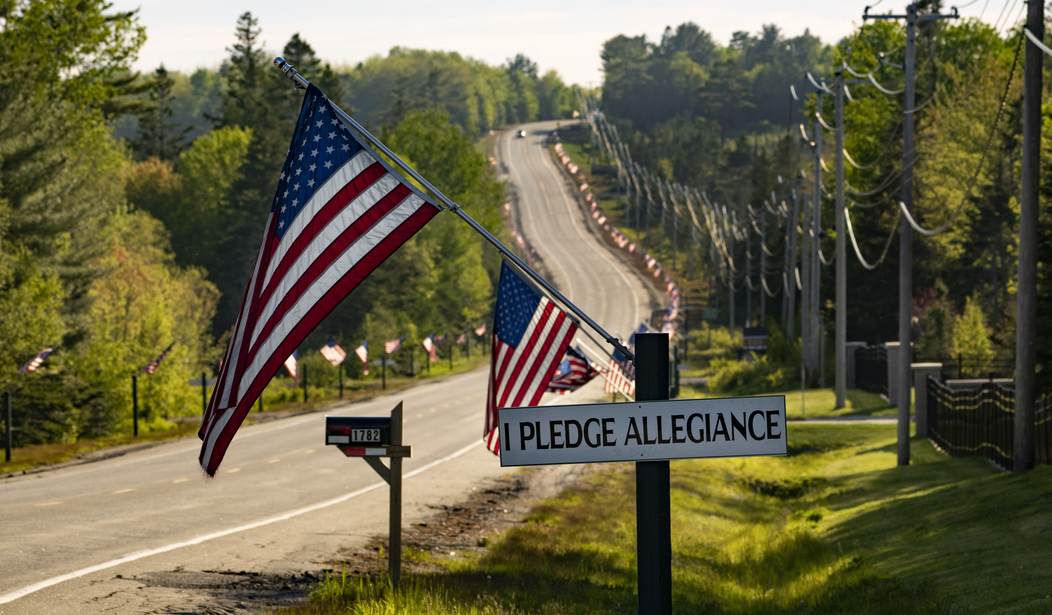
I remember coloring American flags in second grade. My friend Janet colored hers with green stripes, which was categorically wrong, and I told her so, but her creation was hung on the classroom wall anyway, praised by parents and teachers alike for its enthusiasm. We learned about the Founding Fathers through stories that widened our young eyes with wonder. Teachers rolled in heavy TVs almost daily to show PBS historical specials, grainy 1960s films, and catchy Schoolhouse Rock segments. We recited the Pledge of Allegiance with extra energy that year.
Outside the school walls, even our small, impoverished country town was decorated with celebratory bunting. The local librarian created special patriotic book displays, and television commercials proudly celebrated the nation, while products from beer to ice cream to T-shirts carried the Spirit of ’76. Corporations licensed official Bicentennial branding, with proceeds flowing back to the American Revolution Bicentennial Commission to help fund the national celebration.
It was 1976, and it felt like everyone loved America.
The Bicentennial Spirit: Unity in Tough Times
Planning for the 1976 Bicentennial had begun a full decade earlier. In 1966, at President Lyndon B. Johnson's direction, Congress created the American Revolution Bicentennial Commission, giving the nation time to build something meaningful rather than rush a single spectacle. The result was a year-long, nationwide celebration that reached deep into everyday American life.
Both political parties largely set aside their differences to support it. Corporate America embraced the moment with real enthusiasm. Baskin-Robbins launched its famous “Red, White ‘n Blueberry” ice cream. Companies across the country produced special packaging, merchandise, and advertising campaigns. Proceeds from officially licensed products helped fund public events and projects. It was commercial and sometimes wonderfully kitschy, but it created a sense of broad, joyful participation.
The cultural reach was extraordinary. Schools held patriotic projects, essay contests, and assemblies. The Freedom Train crossed the country, drawing millions. Operation Sail filled American harbors with tall ships from around the world. Parades, reenactments, fireworks, and local festivals were common. Television networks ran special programming, and “Bicentennial Minutes” grew to be a beloved daily feature.
What made it powerful was how natural and unifying it felt. Patriotism was not seen as a partisan stance. Democrats and Republicans, liberals and conservatives, businesses and communities all participated without hesitation or apology. President Gerald Ford later described the celebrations as a spontaneous expression of national affection that helped heal the country’s wounds.
In 1976, Americans chose to celebrate two centuries of shared history not by ignoring their problems, but by rising above them. The Bicentennial showed that national pride could be broad, participatory, and healing even in difficult seasons.
America 250 in 2026: Fragmented Energy
Fifty years later, the United States is preparing for its 250th anniversary — the Semiquincentennial — in a very different cultural climate. Official efforts are underway, including the Great American State Fair on the National Mall, large-scale July 4 fireworks, block parties, historical exhibits, and landmark restorations, such as the Christopher Columbus Memorial Fountain at Union Station, which recently reopened after 19 dry years.
Yet the Spirit of ’76 is noticeably absent.
Instead of the broad, joyful participation that defined the Bicentennial, we see partisan anger and hesitation. Some high-profile artists quickly pulled out of Freedom 250 concerts, claiming the events were too closely tied to the current administration. What should be a universal celebration of America’s founding has been treated by some as contaminated territory. Corporate enthusiasm is muted and cautious. The widespread cultural saturation that once made the Bicentennial inescapable feels largely missing.
This fragmentation is reflected in the numbers. Gallup reports that only 58% of Americans say they are “extremely” or “very” proud to be American — a record low, with deep partisan divides. Patriotism itself is increasingly coded as conservative-aligned rather than a shared civic virtue. The very idea that celebrating the 250th anniversary of the Declaration of Independence could be viewed as politically risky would have stunned Americans in 1976.
The contrast is striking. In 1976, a wounded nation chose unity and celebration. In 2026, a far wealthier and more secure nation struggles to summon the same spirit, defaulting instead to division and grievance.
The Pride Month Contrast
While the Spirit of ’76 feels muted, another form of pride dominates the public square in June 2026. In many cities and downtown districts, rainbow flags are more prominently displayed than red, white, and blue ones. Coordinated campaigns actively distribute thousands of Pride flags for neighborhood saturation, creating dense clusters on lampposts, homes, and businesses.
Organizations are also distributing American flags for the 250th — through initiatives like America Waves and local giveaways — but these efforts feel more scattered and less well organized than the highly organized Pride displays. What began as “Gay Pride” after the 1969 Stonewall riots has evolved into a broad institutional “Pride Month,” encompassing a wide range of alternative sexualities and gender identities.
These Pride displays command consistent institutional support and face relatively little mainstream criticism. The contrast in visibility remains striking: in key public spaces during June, Pride symbolism often overshadows national symbols in the lead-up to our nation’s 250th anniversary.
This shift is troubling because it fragments rather than unites. Over recent decades, institutions have increasingly prioritized identity politics, making celebrations of immutable traits like sexuality low-risk and high-reward in elite spaces, while open patriotism is often viewed with suspicion or coded as conservative. Celebrating what makes us different by birth emphasizes division. A genuine patriotic movement, by contrast, has the power to bring us together. It invites every American — regardless of background, politics, or identity — to take pride in our common story: overcoming failures, expanding opportunity, advancing human welfare, and building something larger than any individual.
The Fix: Choosing American Pride
The good news is that this imbalance is not inevitable. We can choose differently.
The fix begins with rejecting the idea that patriotism is the domain of one party. Love of country should never be treated as conservative-aligned. Rather, it is a civic virtue that belongs to all Americans. As conservatives, we can embrace our fellow Americans in this one thing: the celebration of America’s greatness, however that greatness is defined by different people. Whether one sees it in our founding principles, our history of expanding rights, our technological achievements, or our capacity for self-correction, there is room for broad agreement that this nation is worth celebrating.
A nation’s 250th birthday is significant, a milestone that comes only once. While it is too late to fully recapture the immersive Spirit of ’76 for this Semiquincentennial, we can still make the most of what remains. More importantly, these changes must become part of our everyday life going forward.
Real change starts with individuals. We may not control institutions, but we can influence them through our voices and choices:
- Parents and grandparents can push for patriotic school projects and support curricula that teach the full American story: its triumphs as well as its struggles.
- Neighbors and community members can organize local flag displays, parades, backyard barbecues, and gatherings that proudly fly the Stars and Stripes.
- Consumers can clamor for 250th-branded products and support companies that embrace national celebrations, while withholding support from those that don’t.
- Individuals can support artists and creators willing to celebrate America without apology.
We already see small but meaningful wins. These acts of stewardship embody productive pride: pride in what we build and preserve together, not in accidents of birth.
Patriotic pride should not be seasonal or partisan. It should be an everyday practice, one we model for our children and pass down to future generations.
As someone who experienced the Bicentennial as a child, I remember how it felt: optimistic, participatory, immersive, and so much bigger than any one administration or grievance. America remains the wealthiest, most innovative republic in human history. We owe it to ourselves, and to future generations, to make the Semiquincentennial worthy of that legacy.
The choice is ours: let polarization and identity narrowness define the moment, or reclaim the unifying spirit that helped heal us before.
Editor's Note: Do you enjoy PJ Media's conservative reporting that takes on the radical left and woke media? Support our work so that we can continue to bring you the truth.
Join PJ Media VIP and use promo code FIGHT to receive 60% off your membership.



Join the Conversation
VIP members get the ability to comment on articles.