







When I write an article for PJ Media, I enjoy reading the comments. Most of them are complimentary, and the ones that aren’t are usually polite. Every so often, I will get a comment that shows the reader didn’t bother to read the article all the way through. That’s fine. I don’t expect everyone to agree with me. I’m not a liberal or a Democrat. As long as the response doesn’t contain curse words, I’m happy. As my grandmother would say, if you have to use profanity, you have nothing to say.
Recently, I received a comment from someone who had nothing to say about the article, so they commented on my profile. To be honest, it’s a little long and needs updating. The comment read, paraphrasing, “…they read Agatha Christie and Longmire? *sniff* What about the classics?” Ah, the classics. Did they mean the books that generations of students have been dragged through unwillingly? Granted, that’s a very cynical way to look at the classics, but there is some truth in the question.
Let’s be honest. Out of all of the books people read in school and college, how many of them can people remember the title, let alone the plot? For me? One. To Kill a Mockingbird by Harper Lee. I read it in the tenth grade, and it was wonderful. I went to a mystery writer’s conference about ten years ago and attended a session on whether To Kill a Mockingbird is a mystery or not. Personally, I think it is, but I had never thought of the story in that way. After all, a ‘classic’ can’t be something interesting like a mystery, can it?
Related: Will Democrats Maintain the Renewal of Civics in Education?
Part of my job as an English teacher is to show the students how literature can change the way they see the world. If I’m stuck using the books that bored me when I was in school, I’m going to have a very hard time. I prefer the path of least resistance, something the students might like or be able to identify with. By doing so, I can get the entire class into the story without too much trouble. I can also get the reluctant readers to join in because they want to know what happens next.
As someone absolutely terrible at math, I understand completely what it’s like to be lost in the learning of a subject. If it’s not enjoyable, it’s terribly frustrating. It’s like there’s something wrong with you. Everyone else gets it, but you don’t. Reading is fundamental, like knowing how to do math. The easier the subject is made, the quicker it can be picked up. The more interesting a book, the easier it is to read. The easier it is to read, the more a student will want to read, which is the end goal for me.
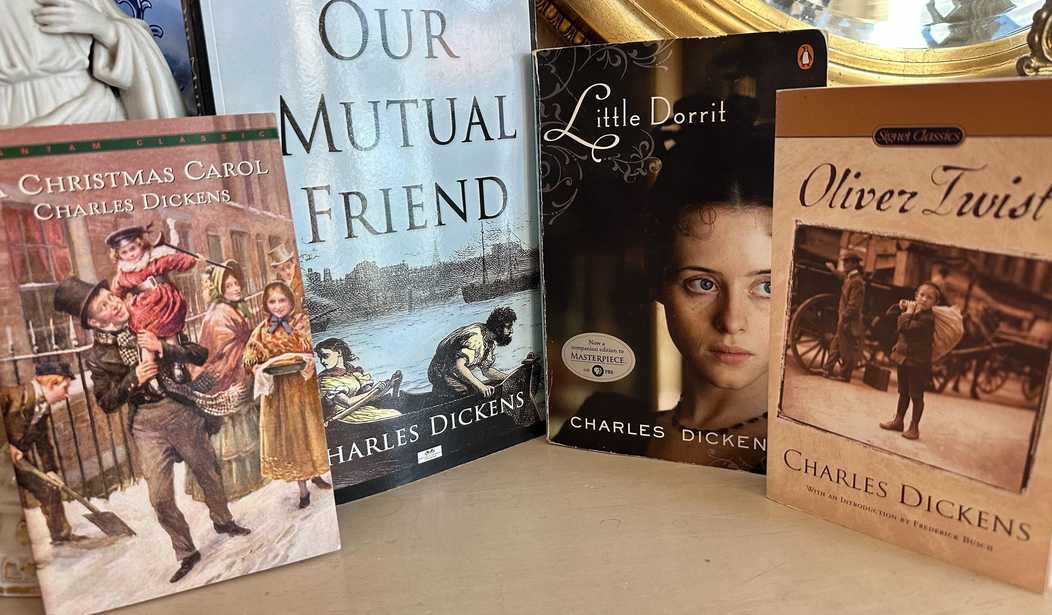
I have absolutely nothing against the classics. There are some very good stories that are classics, such as To Kill a Mockingbird or Earnest Hemingway’s The Old Man and the Sea. A lot of the stories deemed classic are not very good. For myself, I never want to read anything by Charles Dickens again. I find his stories to be tedious and long-winded. He got paid by the word; the more he wrote, the more he was paid, and it’s obvious. Dickens had plenty of contemporaries such as the Brontë sisters or George Elliot. There is no shortage. Any one of those authors can be used instead of Dickens.
Related: New Evidence Shows That School Cell Phone Bans Are Slowly Beginning to Work
After I spectacularly bombed out of the sixth grade at a local junior high school, my mother found a tiny, relatively inexpensive private school that went from kindergarten through the sixth grade. The entire class had fifteen or twenty students in it. Our teacher used all sorts of books to get our attention, including And Then There Were None by Agatha Christie. She would read a portion of the story, and we would have to figure out what was going to happen next. It was an excellent exercise in critical thinking. It was also the first Agatha Christie book I had ever read.
At the junior high where I failed, we read Where the Red Fern Grows by Wilson Rawls. It’s supposed to be one of those coming-of-age stories. It was one of the most depressing books I’ve ever read, and the ending was so sad that our English teacher started to cry as she read, and one of the boys in the class had to read for her. To this day, I don’t understand the point of that book, and yet it is considered a classic.
Today, there are books considered to be modern-day classics. Some I’ve read and did not like, such as The Handmaid’s Tale by Margaret Atwood. Some I’ve heard of and just never read, like The Hunger Games by Suzanne Collins. Books from 100 years ago, such as The Great Gatsby by F. Scott Fitzgerald, are considered to be modern-day classics. I truly enjoyed The Great Gatsby. I’m fascinated by that point in time just before the Great Depression, with the Lost Generation. Nobody had any idea of what was going to happen next. People figured they might as well enjoy themselves while they could.
In my classes, I want my students to think critically and be able to defend a position regardless of the topic. It’s hard to mount a defense when you’re not quite sure about the question. How can you know the question when you don’t quite know what the book is about? Using authors like Agatha Christie solves that problem. You have all the base emotions in an easy-to-understand presentation: greed, lust, envy, anger, resentment, pride. She uses an unreliable narrator in The Murder of Roger Ackroyd. It’s so well done that when the conclusion is reached, the reader has to go back into the book and see what they missed. I could not teach what an unreliable narrator is in a more concise way.
Agatha Christie died in 1976. When I asked my students in my 2024 college English class who had at least heard of her, half the class of twenty-five raised their hands. A handful could tell me titles, and a couple had actually read some of her books. To me, that’s what makes a classic. Being required to read a book only to forget everything about it as soon as the lessons are done does not. My students aren’t there to be entertained. They are there to learn. Why not make it easier on everyone and read something that might be worth remembering?
That’s all for this week. Please come back next week to see what’s next in Class Is in Session.
Editor's Note: Do you enjoy PJ Media's conservative reporting exposing the radical left and woke media? Support our work so we can keep bringing you the truth.
Join PJ Media VIP and use promo code FIGHT to receive 60% off your membership.


Join the Conversation
VIP members get the ability to comment on articles.