
Note: Most Thursdays, I take readers on a deep dive into a topic I hope you'll find interesting, important, or at least amusing. These essays are made possible by — and are exclusive to — our VIP supporters. If you'd like to join us, take advantage of our 60% off promotion.
“Books and movies are like apples and oranges. They’re both delicious, but taste completely different.”
—Stephen King
"I thought the book was better" is maybe the most pretentious-yet-meaningless criticism anybody ever made of the movie version of that book they (probably) read.
An author can put on the page layers of detail and texture that film simply can't match, and a good novel tickles the intellect. But a movie — a collaboration between author, screenwriter, director, composer, and an entire cast and crew — hits in different but no less valid ways.
You can't curl up in bed with a good movie, and you can't watch a book in HDR 4K video with Dolby Atmos multichannel sound. Sometimes, you want to spend a month plowing once more through all three marvelously literary volumes of J.R.R. Tolkien's The Lord of the Rings, and other times you want to spend a few evenings on the sofa with your sweetie, marveling in the visual, aural, and emotional spectacle that Peter Jackson brought to the screen.
They're different beasts, a book and a movie. So long as the movie version stands on its own, it needn't reproduce everything that made the book work. It's a similar story, at once stripped down and blown up for the big screen.
So when somebody says, "I thought the book was better," I like to ask them if they read it on Netflix.
But what about when the author of the novel hates the movie?
Yeah, if the movie is good, then they're wrong, too.
Here are my three favorite cases.
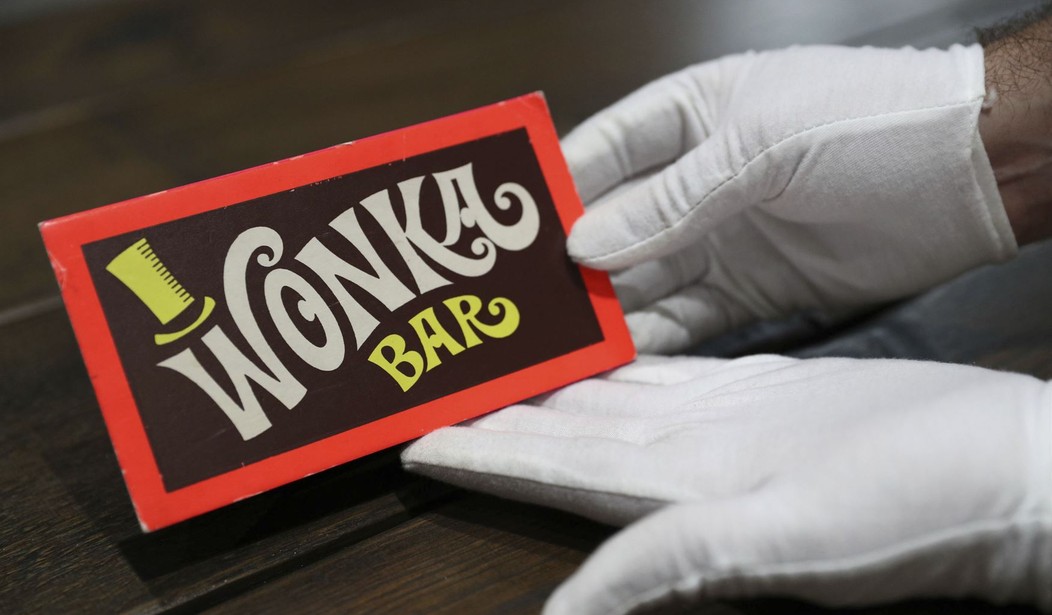
Roald Dahl's Charlie and the Chocolate Factory vs. Mel Stuart's Willy Wonka & the Chocolate Factory
Now today, if you’ll follow me, we have something rather special.
The movie version of Roald Dahl's children's classic had a lot going against it.
Despite the studio paying Dahl the princely sum of $300,000 — that's about $2.5 million today — and giving him the screenwriting credit, director Mel Stuart went behind Dahl's back and hired David Seltzer to do uncredited rewrites.
Starting with changing the title, which Dahl reportedly resented because it shifted the focus from Charlie to Wonka, Seltzer added or changed plot points, greatly increased Arthur Slugworth's villainous role, and supplied a cleaner-cut, happier ending. Dahl felt the changes blurred the book's cautionary tale, and I assume he must have hated the belching "fizzy lifting drinks" scene, which I thought was hysterical when I was a youngster, and so did my sons.
But that's not all.
Dahl thought that Gene Wilder was miscast as Wonka, calling him “pretentious,” “too soft,” lacking sufficient edge, and not “gay [as in jovial] and bouncy” enough. He'd pictured Spike Milligan or Peter Sellers in the role — someone more eccentrically British. Instead, the studio cast an American best known at the time for playing a scam artist in Mel Brooks's The Producers.
Yet I still haven't gotten to the most problematic part of the production.
The movie was shot for $3 million, a lean budget for a musical at the time. But the strangest part was that Quaker Oats financed it to launch a new line of Wonka-inspired candies.
That's right: Willy Wonka and the Chocolate Factory was one giant, feature-length candy commercial. Quaker might have even been behind Seltzer's title change, wanting the name on its candy bars front and center.
It shouldn't have worked, and many thought it didn't.
Dahl called the film "crummy," said Stuart had “no talent or flair whatsoever," and thought the songs were “saccharine,” “sappy,” and “overly sentimental.”
Audiences seemed to agree — at least at first. The movie barely broke even at the box office.
Gene Siskel gave it a meh two-star rating, and wrote, "Sure enough there is a chocolate river, but it looks too much like the Chicago River to be appealing. The quality of the color photography is flat. The other items in Wonka's factory — bubblegum trees and lollypop flowers — also look cheap."
Paramount declined to renew distribution rights when they expired in 1977, letting them go back to Quaker Oats, which sold them to Warner for a paltry $500,000.
The film only became a success through repeated TV broadcasts (it was cheap), and eventually achieved cult status on home video in the 1980s.
Dahl would have a stronger case against Willy Wonka if the movie weren't a perfectly scrumdiddlyumptious delight of pure imagination.
And Another Thing: Tim Burton's 2005 remake starring Johnny Depp was much more faithful to the book. It also isn't very good — despite a bigger budget, arguably better talent (except for Gene Wilder!), and modern production values. There's a lesson in that, and I'll come back to it when we get to the third movie.
Here's what I remember.
It's one of my earliest genuine memories, watching Willy Wonka on TV during its 1975 re-broadcast. Dad and I were at his girlfriend's parents' house, where we sometimes went for their Sunday family dinner.
(It's not like that; my parents were divorced.)
We watched on a tiny color TV on a cart wheeled into the dining room that evening. I don't know about anyone else, but I was entranced. So much so, that Dad put Sammy Davis Jr.'s hit recording of "The Candy Man" on the kid-friendly mix-tape he kept in the car for me on weekends together. It was probably the first real song I knew all the words to. Well, either that or Paul Simon's "50 Ways To Leave Your Lover." I was not a normal child.
One of my proudest moments as a dad was on a perfect snow day when my sons — then aged three and eight — begged to watch Willy Wonka with me. You can read all about it here, and the number of Wonka references I worked into one brief item is impossible, absurd, unthinkable.
The film worked in large part because Wilder brought his inherent sweetness to Dahl's far more unlikable character, which is a necessary ingredient for the screen. Maybe the songs aren't all winners (they aren't), but both "Pure Imagination" (the Lou Rawls version might be definitive) and "Candy Man" still make this 57-year-old feel five again.
And is the ending too soft, compared to the book's?
Perhaps.
But when production briefly stalled looking for a better ending, Seltzer came up with Wonka's final reminder for Charlie: "Don't forget what happened to the man who suddenly got everything he always wanted? He lived happily ever after."
Dahl might not have gotten everything he wanted on the screen, but millions of movie-lovers, young and old, certainly did.
James Ellroy's L.A. Confidential vs. Curtis Hanson's L.A. Confidential
Some thrillers — Jaws comes to mind — are regular treats here at Villa Verde. Visual comfort food best served with wine, grown-up snacks, and casual conversation.
Others are of a certain elevated quality, a je ne sais quoi of filmmaking, that makes you want to watch them less often, lest they become mere background noise.
Melissa and I hadn't watched L.A. Confidential in at least three or four years, and Monday night we decided it was time. It was probably around the 30th pause so we could ooh and ahh over some moment in the movie that I realized I had the topic for this week's Thursday Essay.
If Willy Wonka was a children's book turned into an extended candy commercial that shouldn't have worked at all, then L.A. Confidential is the 1990 novel nobody should have even thought of trying to film. There's also a deeply weird story about how Ellroy's opinion of the adaptation evolved over time... or did it?
And Another Thing: If a movie sucks, that's a different story, so to speak — the book is better because it's good and the movie isn't. But I can think of one case where the movie was hands-down the better experience in every way: Jaws. I read Peter Benchley's Jaws exactly one time, telling myself it must eventually get better. Spoiler: It does not. But my wife and I watch Steven Spielberg's Jaws every summer, almost without fail. And unlike the novel, the movie never once fails to entertain.
I went into L.A. Confidential blind, having never read it or any of Ellroy's three other "L.A. Quartet" neo-noir novels. I'm not even sure I knew beforehand the movie was a book adaptation at all. I went because I'd seen Russell Crowe in Geoffrey Wright's cult favorite, Romper Stomper, on VHS a couple of years prior, and decided he was an actor to follow.
Sometimes, gentle reader, I get one right.
The movie was so good — for reasons I'll get to in a moment — that I stopped at Barnes & Noble on the way home and picked up the paperback.
Honestly, I liked the book better.
I'm kidding, of course. But what I read was simply unfilmable, and Ellroy agreed. When he sold the movie rights to Warner in the early '90s, Ellroy and publisher Otto Penzler reportedly got a great laugh out of it. A 2008 Los Angeles Times retrospective quoted Penzler saying the two of them were laughing so hard they cried.
Apparently, Ellroy laughed and/or cried all the way to the bank with his check, expecting that would be the end of that. As far as he was concerned, he'd practically sold Warner the Brooklyn Bridge.
But then Warner hired writer/director Curtis Hanson (along with cowriter Brian Helgeland) and they made cinema magic.
They took Ellroy's dense, long (eight years), and convoluted but fast-moving story and streamlined it for the screen. They kept enough of the complexity to make you feel smarter just for following along, and reduced the focus to three cops about whom Hanson later said, "I couldn’t get Ellroy’s characters out of my mind."
Most importantly, while Hanson and Helgeland made the three protagonists more likable (as necessary here as it was for Wonka), they kept each character's central dilemma.
Russell Crowe's brutish cop, Bud White, has to use his brain. Guy Pearce's by-the-numbers cop, Ed Exley, has to play outside the rules. And Kevin Spacey as the slick and soulless Jack Vincennes has to decide if doing the right thing is more important than another easy payday courtesy of Danny DeVito's sleazy tabloid publisher, Sid Hudgens.
The screenplay forces each of them into a moment of character-defining decision, but director Hanson never hits you over the head with them. Forget everything you know about Spacey personally, and set aside any other role you remember him for, and just watch as Vincennes struggles to remember why he became a cop.
I do believe that was Monday night's 31st pause.
On its release, Ellroy gushed that Hanson and Helgeland "preserved the basic integrity of the book and its main theme," and called the adaptation “very deft."
Ellroy even said he realized about 40 minutes into his first screening that the movie was “a work of art on its own level,” that he “happily relinquished” himself to it, and that repeated viewings increased his appreciation of its “depth and design.”
"Wait," I hear you ask, "isn't this about authors who hated the movie adaptations?"
Yes, it is. And Ellroy... I don't know what to make of what you'll read next.
In 2006, Ellroy said of other film adaptations he was unhappy about, "I shouldn't have opened my mouth," which serves as our first clue about what he really thought in 1997. Hanson died in 2016 and Ellroy's appraisal also assumed room temperature: "I find the film problematic," he wrote in a remembrance that year.
And in 2023, he took the gloves off. "People love the movie L.A. Confidential. I think it's turkey of the highest form," he said at the Los Angeles Times Festival of Books. He then called the performances of Pearce, Crowe and Oscar winner Kim Basinger “impotent.”
“The director died, so now I can disparage the movie.”
Something changed between 1997 and 2023, but it wasn't the book or the movie.
Meanwhile, over wine on the sofa tonight, I plan on asking Melissa if we really have to wait another three or four years before watching it again.
Stephen King's The Shining vs. Stanley Kubrick's The Shining
You had to see this final selection coming, right?
Unlike Ellroy, who waited a quarter century and at least one celebrity death before letting people know what he really thought about L.A. Confidential, Stephen King called the movie adaptation of The Shining "heartless" while moviegoers were still lining up for tickets.
“Kubrick's direction is good,” King said, “but it's heartless.”
Honestly, he hasn't shut up about it since — which speaks, I think, to the staying power of both the book and the movie.
In 1982, King expanded on those thoughts in a Penthouse interview: "Kubrick’s a really smart man, and he made a really smart film. I don’t think it’s terribly successful, because horror is such a f***ing hot medium."
More:
You have to be emotionally involved with the people for it to work; you’ve got to be a warm, even hot, human being. And Kubrick’s not. He’s very cold, so you don’t care a lot about the people, and without caring it’s hard for horror to happen. I wish that he had done it in a different way, but being Stanley Kubrick, he probably wasn’t capable. A lot of filmmakers — in fact, most filmmakers — are pinheads. They have no brains. They can’t read; they can’t think. All they can do is visualize pictures on the screen.
I wanted to be kind to King in this section, and I'll still try to be as generous as I can — but he doesn't make it easy, does he?
Anyway, my point isn't that King is wrong about the changes Kubrick made. But he is wrong about how effective the film is anyway — or perhaps because of Kubrick's changes.
King's book was indeed a "hot" tale of a good-but-flawed man being driven murderously mad by the hotel where he and his little family are serving as winter caretakers. Kubrick's film was indeed cool, and Nicholson's version of caretaker Jack Torrance was, as King put it, "crazy as a s***house rat,” almost from the opening credits. If you were a fan of the book in 1980, and were hoping for a slow-burn psychological thriller, you were probably as disappointed as King was by Kubrick's decision to hire the craziest-looking leading man in all of Hollywood, and have him start leaning on the crazy so quickly.
But here's the thing King never appreciated — even now, almost 50 years later — about Kubrick's adaptation: Jack Torrance isn't really the main character. The Overlook Hotel is.
And that's where the director's natural coolness becomes the film's strength, not a weakness.
Kubrick reveals the mystery and power of the resort slowly, intriguingly, and yes, coolly, and in perfect sync with Torrance's increasing madness.
And Another Thing: King got much closer to the version of The Shining he wanted to see filmed, as a 1997 ABC miniseries. He wrote the script himself, made sure the actors were in line with his "hot" original story, and maintained the novel's plot and highlights. It also sucked.
King's novel asks whether Torrance can overcome his demons before the Overlook destroys him and his family. Kubrick's movie asks a much nastier question: What if the Overlook recognizes something in Jack that was always in him? And THAT, gentle reader, is why Kubrick hired Jack Nicholson instead of "Michael Moriarty or somebody like that," as King complained to Penthouse.
At the end of the book, Torrance redeems himself. He fights back against the Overlook long enough to tell his son, Danny, to run away, and then destroys the whole place. That's Moriarty or King's other suggestion, Jon Voight, in action.
Kubrick and Nicholson's Torrance has no such absolution. He is fully consumed at the end, a frozen corpse in the Overlook's hedge maze.
And yet he seems to live on in Kubrick's famous lingering final shot of Torrance front and center in a photograph of an Overlook Independence Day celebration — in 1921.
Maybe Kubrick's Jack was always crazy because Jack was always a part of the Overlook. For Torrance, there was never any escape because he's "always been the caretaker." If that's cold, it's the kind of chill that still gets under moviegoers' skin after five decades — unlike King's complaints, best ignored.
If there's a lesson here, maybe it's that often authors mistake their readers for moviegoers, even when they're the exact same people.
But if you still like the book better, I have good news for you: Not even Hollywood can keep us from reading.
Last Thursday: Let's Talk About the REAL '80s