







Before there were influencers, YouTubers, Groypers, and crackpot conspiracy podcasts, there were radio shock-jocks. Every decent-sized American city had at least one.
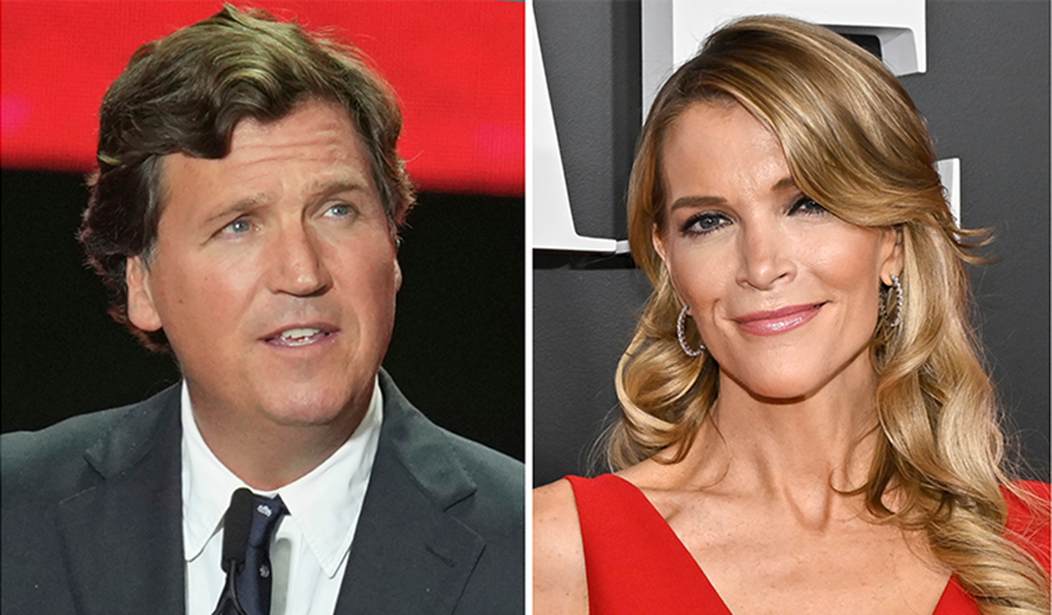
And if you thought today’s “controversial” media superstars — Tucker Carlson, Megyn Kelly, Candace Owens, Nick Fuentes, Steve Bannon, and Alex Jones — said and did crazy stuff, they had NOTHING on the old Howard Stern Show.
There were N-word drops every day. “It’s Just Wrong” was a recurring Stern bit where male family members would strip their sisters, mothers, and daughters naked. No subject was taboo: Stern even targeted children, mocking Steven Spielberg’s adopted black kids.
And sometimes he’d dabble in politics.
Which created a vexing dilemma for politicians: On one hand, he said and did so many vulgar, disgusting things that linking your brand to Howard Stern’s was political suicide. It’d hurt more than it’d help.
Fun fact: At his absolute peak in popularity, Stern claimed one out of every four cars on the Long Island Expressway were listening to his show — which meant, of course, that at least 75% were listening to something else.
The truth is, even in his home market, most people never liked him. (And his one-out-of-four stat was almost certainly exaggerated.)
But on the other hand, he still had millions of listeners. Stern was undeniably popular; anyone who claims otherwise is lying to you. His show had legit star power and influence.
And if you were a politician with limited resources, being promoted — and endorsed — by one of the biggest, most popular media platforms in America was a godsend.
Campaigns are expensive. Media interviews are free. They’re the most cost-effective way to reach the most people.
So how the heck do you reap the benefits of media exposure without damaging your brand?
That’s the question the MAGAverse is debating today: What do we do with all the lowlife, MAGA-adjacent podcasters who say and do offensive, deplorable, bat[poop]-crazy things — but whose platforms are huge?
In an ideal world, we’d love to reach their audience without tainting ourselves with their conspiratorial garbage. But is that possible?
Yup.
And we have the PR blueprint from a pair of Northeastern Republicans from the 1990s, Christie Todd Whitman of New Jersey and George Pataki of New York.
As I wrote in December of 2025:
The parallels are uncanny: Like Carlson today, Stern was a lightning rod for controversy. He said and did things that could kill a politician’s brand. (And how!)
But some of Stern’s positions were on the right side of the ledger: He hated high taxes. He supported the death penalty and wanted to get tough on crime. He was pro-police. He was infuriated by foreigners who moved to America and refused to learn English.
And many in his audience were potential GOP voters.
Whitman called into Stern’s show in 1993, humored the host, and assisted in a low-level radio stunt: She promised Stern that, if elected, she’d name a rest stop off the highway after him.
In turn, Stern endorsed the Republican over the Democrat and urged his listeners to vote in droves.
On Election Day, Whitman captured 49.33% of the vote; her Democratic rival, Jim Florio, got 48.29%. In all probability, without Stern’s endorsement, Whitman would’ve lost.
It was a similar story in New York:
Then, in 1994, Stern endorsed Republican state senator George Pataki over three-term incumbent governor Mario Cuomo. All it required was Pataki humoring Stern, calling into his show, and endorsing one of Stern’s ideas: Mandating nighttime road construction on New York City and Long Island highways, so commuters (like Stern) wouldn’t get stuck in traffic during rush hour.
Pataki scored an upset victory over the heavily favored Cuomo. In the 31 years that followed, the 1994 election was the closest in New York gubernatorial history.
Like Whitman, without Stern’s endorsement, Pataki probably would’ve lost.
Are the parallels between the 1990s and 2026 perfect? Not at all: Stern’s show certainly pushed the envelope, but it was primarily a humor/entertainment program. As such, Stern usually “shocked” audiences with taboo topics, i.e., sex, racial jokes, bodily functions, and off-color celebrity gossip. Today’s podcasters “shock” audiences with conspiracies, antisemitism, and revisionist history. The two are not the same.
But there are enough parallels to draw lessons.
One: If you’re firmly in the lead, stay the hell away from the shock-jocks.
Whitman and Pataki were big underdogs. They had to take risks, because the odds were stacked against them.
If they had been ahead by 15 points, they never would’ve called into Stern’s show.
Fast forward to 2028: I guarantee you, there WILL be Republican presidential candidates who appear on Tucker Carlson’s show. They might even join Candace Owens, Alex Jones, and Steve Bannon.
But I’d be shocked if the frontrunner appeared, because the risk-reward calculation wouldn’t be worth it.
Two: Cherry-pick an issue the podcast host cares about — and limit your engagement to that.
Neither Whitman nor Pataki ever played dial-a-date. They didn’t describe their sexual experiences/fantasies or discuss how frequently they passed gas.
Instead, they connected with Stern on an issue (or two) and ALWAYS kept their distance. At no point were their brands comingled.
Don’t get me wrong: They were friendly and respectful. They didn’t chastise Stern for being a sleazeball. But they NEVER came across like a Howard Stern superfan.
It worked because their appearances were 100% business-related, and that’s how the voters perceived it.
Three: Don’t get involved in influencer-versus-influencer feuds and media wars.
Not your monkey, not your circus.
Even if you’re Team Ben Shapiro in his feuds with Carlson, Kelly, and Owens, it’s not worth your time to get in the weeds. Your goal is to keep your relationship 100% business-related, and you can’t do that if you make it personal.
Making it personal is the worst thing you can do. It lowers yourself to their level.
For decades, Howard Stern’s archenemy was fellow New York shock-jock Don Imus. Their feud was legendary: Paramount Pictures even released a movie about it.
But Whitman and Pataki never let Stern’s endorsement prevent ‘em from joining Don Imus on the air. They both made regular appearances on Imus’ show (including one unfortunate incident where Imus asked Whitman about her bra size).
Four: Capitalize on the PR benefits of being on a controversial media platform.
Hey, it’s not all handwringing and pearl-clutching. When Whitman and Pataki appeared on The Howard Stern Show, it communicated to audiences that they’re gonna fight for every last vote — that they’re bold, daring, and unafraid — and capable of thinking outside the box.
Those positive attributes can become part of your brand identity, too. It all depends on how you leverage it.
Your goal is to retain the good, avoid the bad.
Recommended: The Great MAGA Reversal on Ukraine: How Helping Zelensky Became ‘America First’
Five: Have a game plan and follow it.
When JD Vance appeared on The Joe Rogan Experience, he found himself spitballing ideas about UFOs, demons, aliens, and angels. I’m sure the topic was fascinating to Rogan, who’s been obsessed with alien conspiracies for decades. Lots of Rogan’s fans probably enjoyed it, too.
But it wasn’t politically helpful. Vance should’ve focused on winning support for the Trump administration on a handful of key issues — and speculating about the demonic origins of E.T. didn’t advance the football.
Never accept an interview without knowing EXACTLY what you want to get out of it.
It’s not your job to answer the podcaster’s questions. (And it’s PR malpractice to chase the podcaster down every rabbit hole.) You’re there for you, not for the show.
Focus on what you want to talk about, and if you can’t redirect the conversation without sounding like an ass, don’t accept the interview.
Six: Half-measures are political poison.
If you don’t feel comfortable talking to Carlson, Owens, or Kelly, then don’t do it. Today’s media landscape is hopelessly scattered; other than (maybe) Joe Rogan, there really aren’t any “must-do” interview offers. The era of kingmakers like Ed Sullivan, Johnny Carson, Mike Wallace, Rush Limbaugh, and Bill O’Reilly is over — and it’s not coming back.
Saying no is always an option.
But if you say yes, you’ve got to live with it. That means you can’t turn around and complain about the host being mean to you. You can’t then call for him or her to be deplatformed, censored, or banned. You can’t express dismay or regret if/when the host says something ugly and antisemitic.
It’s too late: You should’ve known what you were getting into!
And if you screw up, simply say so. Admitting a mistake takes political courage.
Voters will forgive you for being brave, taking risks, and fighting tooth-and-nail for every vote. (And depending on how you spin your mea culpa, it could even enhance your brand.) But they won’t reward cowardice, hypocrisy, fear, or backstabbing.
Instead, it makes you a target.
If you never appear on a podcaster’s show, then his criticism sounds like sour grapes: He’s mad that you’ve spurned him. But if you appear on his show and then complain, he has the upper hand: Viewers will assume he has insights into your motives and character — and they’ll question your lack of gratitude.
In other words, you’ve given his criticism extra credibility.
So no half-measures. If you commit, commit to the best of your ability, because you’ve already determined that the good outweighs the bad. (And if you’ve gotta rip the Band-Aid off afterwards, commit to that, too.)
Yesterday it was Howard Stern. Today it’s someone else. But the PR principles remain the same.
Does the MAGAverse have a problem with grifters, lowlifes, bigots, and nutjobs? Sadly, the answer is yes: Of our top 20 platforms and podcasts, a depressingly high number fit this description.
That’s just a fact.
But it’s a problem we can work around and use to our advantage.
One Last Thing: 2026 will reach a crescendo with the midterm elections. Nothing less than the fate of the America First movement teeters in the balance.
Never before have the political battle lines been so clearly defined. Win or lose, 2026 will transform our country.
We need your help to succeed!
As a PJ Media VIP member, you’ll receive exclusive access to our behind-the-paywall content, commenting privileges, and an ad-free experience. VIP Gold gets you the same level of “insider access” across our entire family of sites (PJ Media, Townhall, RedState, twitchy, Hot Air, and Bearing Arms). That means: More stories, more videos, more content, more fun, more conservatism, more EVERYTHING!
And if you CLICK HERE and use the promo code FIGHT, you’ll receive a Trumpian 60% discount!
Thank you for your consideration.
Join the Conversation
VIP members get the ability to comment on articles.