
On November 20, an Anthropic mathematician posted a Claude-assisted proof of the Riemann hypothesis—a problem that has stumped the world's greatest mathematicians since 1859.
Also, Axios reports, "On Monday, OpenAI and Anthropic published competing proofs addressing a mathematical cousin of P vs. NP that many computer scientists had considered well out of reach."
This is just a sampling of the "impossible" math problems AI has solved to date. The technology has some mathematicians wondering if they're obsolete.
The P vs. NP problem is the most famous unsolved question in computer science and mathematics. It asks: if it is easy for a computer to verify that a solution to a problem is correct, does that mean it is also easy for a computer to find that solution from scratch?
Formally posed by Stephen Cook in 1971 (and one of the seven $1 million Millennium Prize Problems), the problem's answer would reshape the modern world.
How?
The great news is that complex optimization problems, such as folding proteins to design new medicines, optimizing global supply chains, and even automating mathematical proofs, could be solved rapidly.
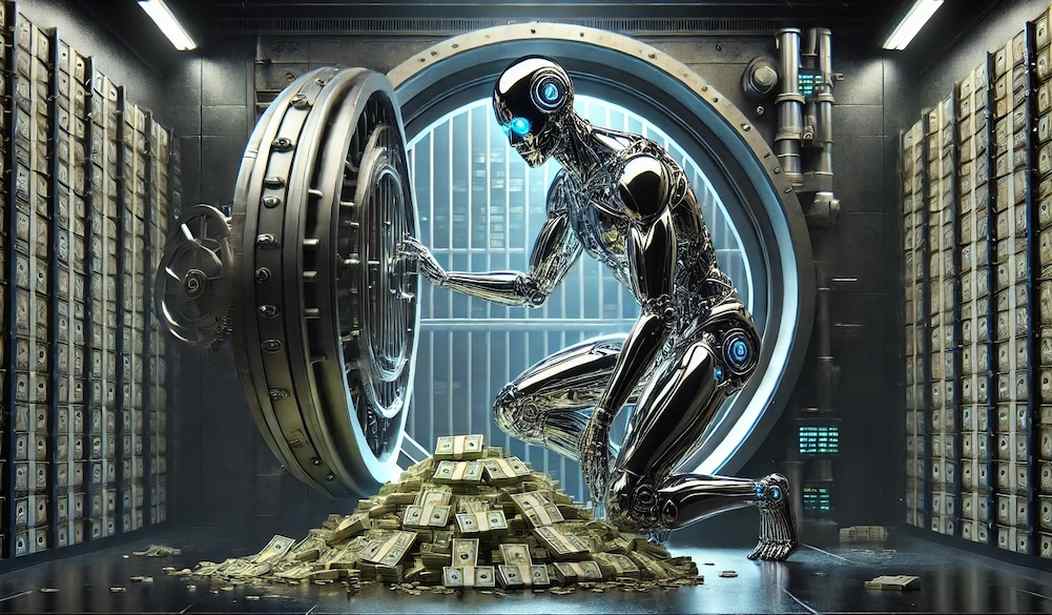
The bad news is very, very bad. Modern internet security, banking, and national defense rely on mathematical "trapdoors": problems like factoring massive numbers that are trivial to verify (by multiplying the factors back together) but practically impossible to solve without a key. If P = NP, all public-key cryptography becomes theoretically breakable.
Some computer scientists believe that P does not equal NP. If that's true, no universal shortcut exists, validating the mathematical foundations of modern cryptography while proving that human creativity and intuition cannot be completely replaced by brute-force algorithms.
The real worry is that combining a usable proof that P = NP with quantum computers that are coming online in the next couple of years could create chaos. "Governments and businesses are already racing to replace vulnerable encryption in anticipation of powerful quantum computers," says Axios. "A sudden math breakthrough could drastically shorten that preparation time."
In fact, if a proof that P = NP came with a practical, usable algorithm, many computer scientists and mathematicians argue it would be even more immediately transformative and destabilizing than E=mc².
While Einstein's equation unlocked the fundamental physics of matter and energy (leading to nuclear power, nuclear weapons, and modern astrophysics), a constructive proof of P = NP would unlock the fundamental nature of problem-solving, intelligence, and secrecy itself. It would instantly break nearly all modern encryption, including banking, military communications, cryptocurrency, and digital signatures, collapsing them all at once.
We're in no immediate danger. A mathematician could prove that a fast shortcut exists in theory without actually showing how to build it. That would win a $1 million Millennium Prize and stun academia, but change nothing in the real world.
If someone discovered a genuinely fast, low-overhead algorithm for an NP-complete problem, it would represent the single biggest discontinuity in human technological history, essentially turning every "needle in a haystack" search across science, engineering, and security into routine arithmetic.
As MIT computer scientist Scott Aaronson famously put it: "If P = NP, then the world would be a profoundly different place than we usually assume it to be. There would be no special value in 'creative leaps,' no fundamental gap between solving a problem and recognizing the solution once it's found." Aaronson wrote this week that he's "virtually certain" AI labs are sitting on cryptographic "bombshells."
(Aaronson titled his blog post, "HOLY S**T HOLY S**T HOLY SHI**T HOLY S**T.")
"The speed of these landmark advancements is a big reason that, as Axios' Madison Mills has exclusively reported, some top AI researchers, including inside frontier labs, are questioning whether some future models should be publicly released or even used internally," Axios reports. Indeed, can we really trust AI companies to keep a lid on something so revolutionary that it could change the world?
I think that the AI companies have acted very responsibly in most cases. Both Anthropic and OpenAI kept frontier models off the market until companies most at risk of being penetrated had a chance to develop countermeasures.
But self-regulation can only go so far, especially when dealing with something incendiary as a proof of P = NP. I will make a point I've been making for months about government regulation of AI. Would you rather have the Trump administration write the regulations, or a Democratic administration guided by Luddite Sen. Bernie Sanders (D-Vt.)?