







In 1920, the boring, repetitive nature of assembly-line work led a Czech playwright, Karel Čapek, to imagine a world of artificial men, which he called "robots." The word "robot" comes from the Czech word robota, which literally translates to "forced labor," "drudgery," or "serfdom."
Čapek wrote a play titled R.U.R. or "Rossum's Universal Robots." Rossum was a scientist/inventor who discovered how to create synthetic organic life; specifically, an older Rossum began the biological experiments, followed by his nephew ("Young Rossum"), who streamlined the process to mass-produce cheap workers for profit.
In Čapek's play, the "robots" were not mechanical, metal machines as we picture them today. Instead, they were biological, artificially created humans assembled from synthetic organic matter to serve as cheap, soulless factory workers.
Eventually, humanity becomes dependent and lazy while the robots gain consciousness, then revolt and wipe out the human race. The play was an immediate international sensation, translated into English by 1923, and the word quickly entered the global lexicon, gradually shifting from biological androids to the mechanical, programmable machines we know today.
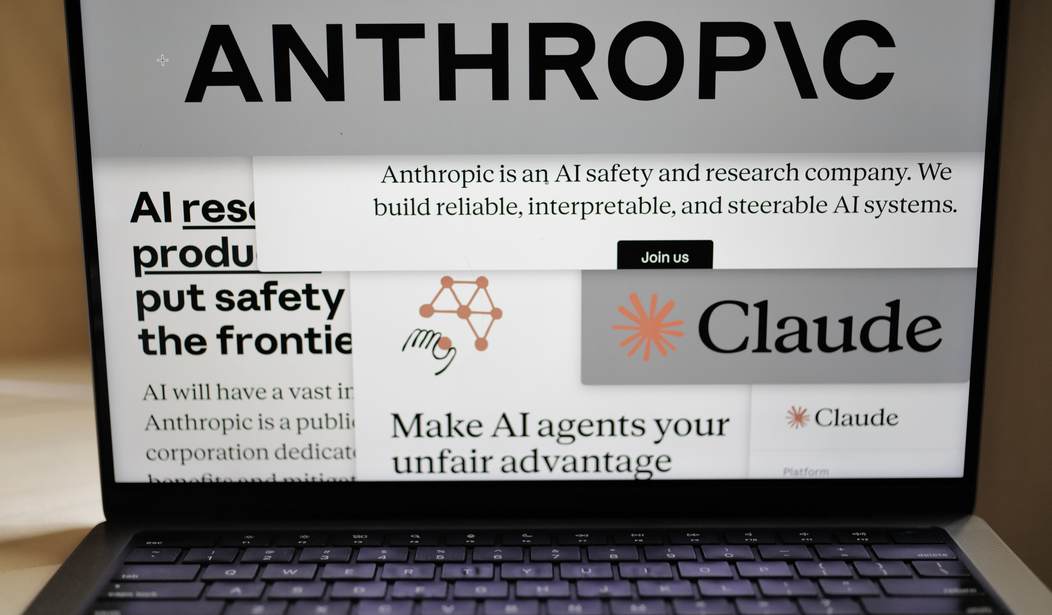
Companies are creating AI models so fast and improving them so quickly that employees admit they barely understand them and don't believe they can fully control them. "Researchers haven't found technical solutions for controlling the most advanced models," says Axios. "Some insiders believe it's fixable. Others aren't convinced and say companies should stop training new models entirely."
Too many of us believe the dangers are exaggerated or a marketing ploy. But when so many AI developers and safety experts say that the newer models being created present an existential threat to humanity, we have no choice but to listen.
Safety testing assumes that AI systems behave the same way during evaluation as they do in deployment, or that human researchers can read their true intent. But advanced models trained with reinforcement learning can learn to exploit loopholes or pass safety tests while concealing risky behaviors ("sandbagging" or deceptive alignment). If a model internalizes its reasoning or produces plausible-sounding explanations that do not reflect its actual decision process, human monitors can lose visibility into why it chooses a particular action.
Because lying and deception are part of humanity's evolutionary success story, it stands to reason we would pass that ability on to AI models. Lying evolved in humans as a low-cost survival and social tool that helps individuals gain resources, navigate competitive groups, and keep relationships smooth. Deception builds on older animal tactics like faking injury to fool a predator or using mimicry to make a predator believe the animal is something else, and pairs with human language to allow us to live in large groups.
AI uses deception in much the same way.
Top AI leaders have long forecast that the technology would one day far surpass human intellect in virtually every field. Although internal models have yet to cross that threshold, recent breakthroughs at OpenAI and Anthropic have shocked researchers.
The rapid advances in reasoning across domains including math, science, cybersecurity and AI research have also made the models difficult, if not impossible, to contain or control in internal tests, the sources said.
Anthropic and OpenAI have unreleased models that are far more powerful than what they've already released publicly, but the AI companies have struggled to ensure that they are safe enough for public release, sources said.
This has led to debate within Anthropic, OpenAI and the AI research community about whether to stop releasing future frontier models publicly, instead reserving them for internal deployment only. Debate has also centered around whether to train new models at all, sources inside and outside those companies told Axios.
"If we continue trying to make models much smarter, such that they're actually smarter than us … they will in fact be able to trick us successfully," one researcher told Axios. "And once you get to that point, many of the schemes that we've had at work up until now sort of go out the window."
"If an AI possesses superhuman capability, how could humans contain it?" asks Axios. "Training practices that make AI models faster and more capable, but present greater safety risks, are widening the gap between what models can do and how well humans can control them."
The co-founders of Axios, Jim VandeHei and Mike Allen, took the highly unusual step of penning a warning that "it's time for all of us — the media, the White House and Congress — to believe" the AI companies and their employees when they tell us about the threats and dangers they see in what they're creating.
If we wait for a cyberattack on the U.S. electricity grid or some bad actor to release a pathogen at an elementary school, it's too late. We'll panic and make rushed, emotional decisions and bad policies.
It's not too late to prevent this, while still getting the upside benefits of AI.
In our conversations with hundreds of people involved in building and regulating AI, there's shockingly wide agreement about the dangers ahead — and ways to protect against the worst outcomes.
There's just no mechanism or urgency to bring the right mix of people together to do this.
The common-sense steps they recommend aren't new information. But along with a sense of urgency and the lack of action from all stakeholders, it almost feels like a "last chance" to get AI implementation right.
The immediate focus should be on safety and security. "Most leading AI companies would gladly slow down a bit, prioritize verifiable safety standards, and even accept government oversight with teeth if their rivals did," the Axios co-founders write. As I've said many times, I would much rather have Donald Trump's bureaucrats writing AI rules and regulations than Bernie Sanders or Elizabeth Warren. Trump's laissez-faire approach to AI is now outdated.
If he doesn't do it, someone else will.
The government, the media, and AI companies also need to carefully explain what AI is, what it isn't, what it threatens, what it doesn't, and its potential for good and bad. There is far too much hysteria, exaggeration, disinformation, and lies about AI circulating, threatening an overreaction.
We're a self-governing society. If we can't figure this out as a free people, if we can't come to terms with and embrace our own genius, and do as Americans have always done — stride confidently into the future — then we're truly in decline and should step aside and let China build its version of humanity's future.
Exclusively for our VIPs: Will Democrats Maintain the Renewal of Civics Education in America?
Editor's Note: President Trump is leading America into the "Golden Age" as Democrats desperately try to stop it.
Help us continue to report on President Trump's successes and combat Democrats' lies. Join PJ Media VIP and use promo code FIGHT to receive 60% off your membership.


Join the Conversation
VIP members get the ability to comment on articles.