In the 1980s, an anti-semitic racist named David Duke gained notoriety by running for president, Congress, Senate, and finally governor of Louisiana. The anomaly was that he ran for those offices as a Democrat.
This was the last gasp of the Democratic Party in the deep South. Ronald Reagan eventually killed it off completely, forever changing American politics by creating what used to be a solid South for Democrats into a solid South for Republicans.
Duke said nasty things about Jews and Blacks, but he was far more interested in promoting David Duke than in gaining any real power. It wasn't until he switched to the Republican Party in 1988 that the media noticed him.
Duke ran in a special election in 1989 to replace a state representative who was named to a judgeship and finished first in the GOP primary. He ran a runoff election against the son of a former governor and eked out a victory by less than 200 votes. The Louisiana Republican Party, the national and local GOP, and every prominent Republican in Louisiana and nationally came out against him. Both George Bush and Ronald Reagan urged the election of the Democrat, but Duke prevailed.
This was an election for a state representative. And the entire Republican Party establishment came out against him.
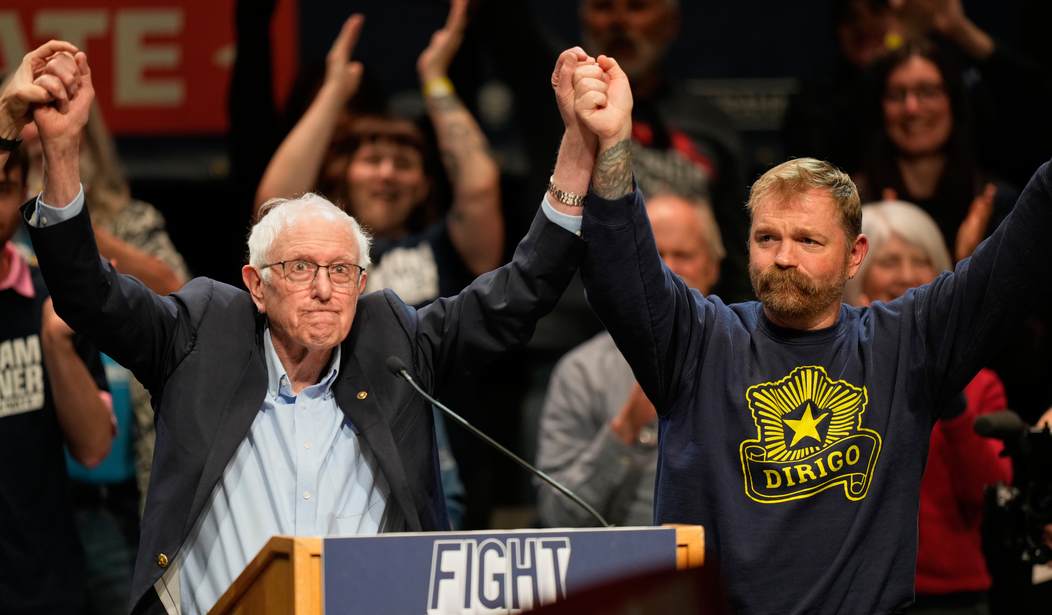
That repudiation should be compared to the modern Democratic Party's embrace of several candidates whose toxicity repels ordinary people. Graham Platner, the Democrat's candidate for the Senate in Maine, has a Nazi tattoo on his chest, roughed up a former girlfriend, sent lewd texts and photos to other women, and lied about all of it.
He has a decent shot of winning against the Republican incumbent, Sen. Susan Collins. If elections are about making a choice, would you rather choose a proto-Nazi misogynistic bully or a lukewarm Republican for senator?
Collins votes with Republicans about 75% of the time on average. How often do you think Platner will vote with the GOP? Senate Democrats vote with Trump just 5-10% of the time. You decide.
The entire Democratic Party establishment has gotten behind this creep and is pushing his candidacy. The same is true of Adam Hamawy, the probable winner of the New Jersey 12th district in November. The former combat surgeon and self-proclaimed "humanitarian" has some interesting connections, according to City Journal's Jesse Arm and Danielle Shapiro.
He "once interned for a foundation that allegedly served as an Al Qaeda front," says City Journal, and "he’s been accused of lying in court to protect Omar Abdel Rahman, a.k.a. the 'Blind Sheikh'—a terrorist who inspired the 1993 World Trade Center bombing."
He's a Sen. Bernie Sanders (D-Vt.) acolyte and "can’t wait to serve with @berniesanders and fight alongside him to unrig this economy," as he said in an Instagram post.
In a competitive district, Hamawy wouldn't survive a primary. As it is, he ran against five other candidates and prevailed with just 27% of the vote.
Recommended: 'America 250' Shouldn't Be About Donald Trump, But Some People Can't Get Past Him
I haven't mentioned Michigan's Islamist Senate candidate, Abdul El-Sayed, whose sympathies for Palestinians and other radicals would disqualify him from any Republican primary today.
How is it that the Democratic Party establishment can support these radical, unseemly candidates?
The modern Democratic Party increasingly resembles a coalition without a commanding general. The party’s elected officials, donors, unions, advocacy groups, activist networks, and online influencers often pull in different directions, with no leader possessing the authority or willingness to impose discipline. As a result, candidates who the party might have successfully sidelined in the past can now rise largely unchecked through activist ecosystems and fractured primaries. Once elected, those individuals then pull the center of gravity of the party away from the median voter and toward the extremist fringes.
True, Democrats can sometimes stop candidates they might find problematic. Texas Democrats recently demonstrated as much when they moved decisively against Maureen Galindo after it became impossible to ignore her calls for imprisoning “American Zionists” and other overtly deranged rhetoric.
But despite its efforts, the Democratic establishment has had less luck sidelining the party’s Nazi-tattooed socialist Senate nominee in Maine or the Islamist-sympathetic leftist candidate favored to secure Michigan’s Senate nomination. These two will reshape the party if and when they reach the Senate—especially if Democrats seize a narrow majority in which they become the deciding votes.
Last February, I made much the same point: "Democrats can't 'push back' on the radicals because The Groups [my term for NGOs, non-profts, etc.] now are the party. There is no campaign without them. They not only provide the cash to run competitive campaigns, but they are also a major source of the bright young men and women who staff them."
Platner, Hamawy, and El-Sayed are products of a Democratic Party that can't control its activist base, largely because they believe themselves to be in control of the party.
And no one among the leading Democrats has the gonads to stop them.