
In the early third century BC, King Pyrrhus of the Greek Kingdom of Epirus fought a monumental battle with Rome. In the Battle of Asculum (279 BC), Pyrrhus defeated the Romans after throwing in his last reserves and suffering enormous losses.
"If we are victorious in one more battle with the Romans, we shall be utterly ruined," Pyrrhus was quoted by the great Roman historian Plutarch as saying after the battle.
Thus was born the idea of a "Pyrrhic Victory" — a victory in name only. While the U.S. pulverized Iranian defenses, destroyed most of its nuclear infrastructure, blew up a large portion of its ballistic missile stocks, killed many of its military and civilian leaders, and severely weakened the regime's ability to oppress its citizens, it does not meet the definition of "victory" set out by Donald Trump at the beginning of the war. And Iran knows it.
Iran still has more than 400 pounds of highly enriched uranium (HEU). In several months, they can build a couple of hundred centrifuges to spin up that HEU to a bomb-grade level of 90% in a matter of weeks.
Iran had 3,000 to 10,000 ballistic missiles before the war. It's estimated they have less than 2,000 missiles remaining. It's also estimated that most of their stockpile of hypersonic missiles and highly advanced Khorramshahr ballistic missiles is intact, although launchers are scarce.
We'll get a better idea of Iran's remaining stockpile of missiles and whether it would be worth going after the HEU that's probably buried — but not inaccessible — under tons of rubble during the ceasefire.
Certainly, a massive defeat for Iran, right? Not by a long shot. When you consider that China and Russia are already rearming Tehran with missiles and drones, and that the one thing the U.S. and Israel can't bomb and destroy is the knowledge of how to enrich uranium and how a nuclear bomb works, it seems to me a long way to "victory."
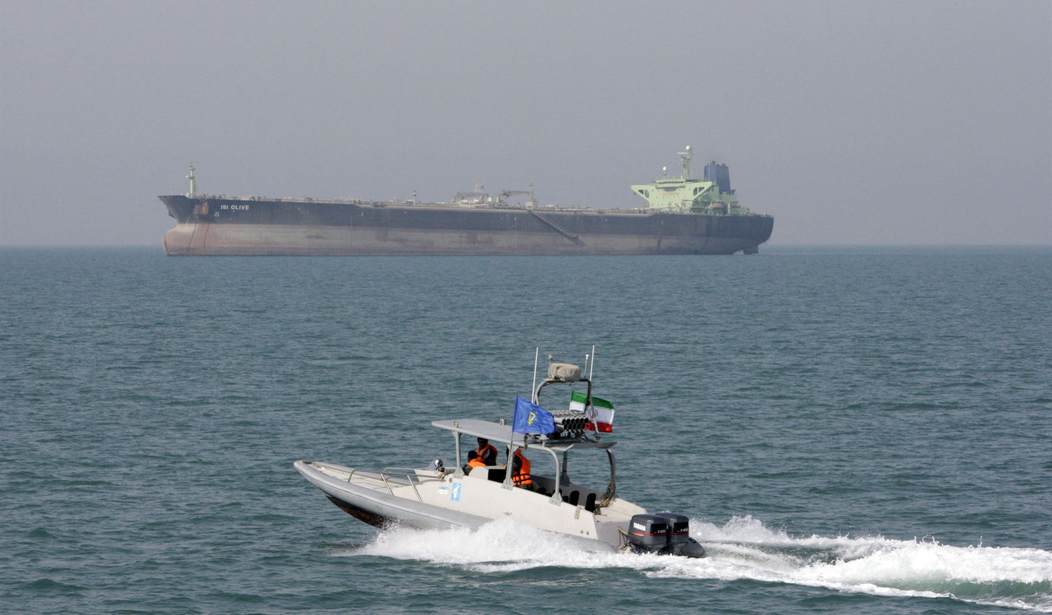
More than nukes or missiles, the clearest indication that the U.S. did not achieve much of a victory against Iran is the situation with the Strait of Hormuz. More than 1,000 ships are still stacked up, waiting to traverse the Straits on both sides, while Iran is allowing only a trickle of ships through. On top of that, the Iranians are demanding a "toll" to safely steam through the passage.
Throughout the conflict shipowners have cited the safety of their crews as a reason not to transit.
Shipowners, brokers and insurers also pointed to what they said were several apparently different versions of Iran’s peace plan as one reason for a lack of clarity.
Iran says it has agreed to two weeks of safe passage in coordination with its armed forces and within “technical limitations”.
By contrast, US President Donald Trump announced a “COMPLETE, IMMEDIATE, and SAFE OPENING”. He said in a separate social-media post that the US would be “helping with the traffic build up” and “hangin’ around” to ensure smooth flows, options unlikely to appeal to Tehran.
“You don’t switch global shipping flows back on in 24 hours,” said Jennifer Parker, adjunct professor at the University of Western Australia Defence and Security Institute. “Tanker owners, insurers and crews need to believe the risk has actually reduced — not just paused.”
The ceasefire agreement “doesn’t change the situation in the sense that Iran is still in control”, said Richard Meade, the editor-in-chief at the maritime data provider Lloyd’s List Intelligence. “It still requires ships to essentially seek permission, and that’s the key. That means that nothing has changed – no permission, no transit.”
“It’s good to see that the market is reacting the way it is, but this is day one of a tentative ceasefire,” Michael Pregent, a former US Intelligence advisor, told Bloomberg Television. “We are likely to see the regime control who moves through, who is charged what, and who is denied.”
Iran's ten-point ceasefire plan, rejected by the U.S, allows Iran and Oman to charge a "toll" of $1.2 million per ship. If Iran insists on ships paying that toll, that will slow traffic through the Strait to a crawl. Where 120 vessels moved through the Strait before the war, perhaps as few as 20% of that number would traverse the waterway if Iran decides to exact a toll.
We shouldn't worry, though. The UN is on the case.
Arsenio Dominguez, the secretary-general of the UN's seafaring authority, the International Maritime Organization (IMO), said: “I am already working with the relevant parties to implement an appropriate mechanism to ensure the safe transit of ships through the Strait of Hormuz. The priority now is to ensure an evacuation that guarantees the safety of navigation.”
The bottom line is that few ship owners believe that traffic through the Strait will get back to normal during the ceasefire, nor do they expect "normal" operations as long as Iran has its finger on the trigger.
Recommended: Rep. Eric Swalwell Denies Accusations of Sexual Misconduct. Just Ask the Chinese Spy He Slept With.