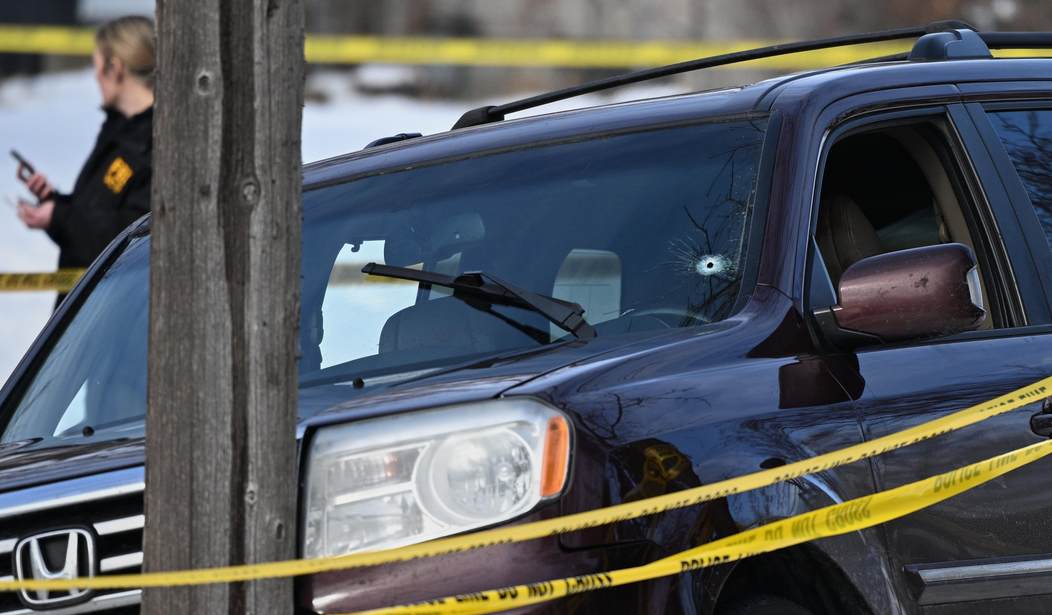
In the days since Renee Good used her car to hit an officer and wound up fatally shot, the left has been trying hard to gaslight the public on pretty much every single detail, from painfully inaccurate interpretations of the video evidence to false claims about why she was there in the first place. Each claim has fallen apart. So, they keep moving the goalposts, and I suspect even they understand their case is falling apart.
It’s amazing and scary to watch as Democrats have gone from insisting that the ICE agent was not in front of Good’s car, to him not being hit by it, to eventually conceding he was, in fact, struck by the vehicle, but that it doesn’t matter because he wasn’t hurt too badly. And at the root of their latest revised position is the claim that Good didn’t set out to harm the ICE agent, and thus shouldn’t have been shot.
We saw this argument tried on CNN’s NewsNight this week when the overwhelmingly left-leaning panel tried desperately to absolve Renee Good of responsibility for the circumstances surrounding her death. As usual, Scott Jennings was the lone adult in the room and stuck to observable facts, which really got under the skin of the rest of the panel.
Host Abby Phillip tried to corner Jennings early. “Do you really not think that her intention in that moment was to run that officer over?” she asked.
“I think her intention was to move the car forward with a law enforcement officer standing in front of it,” he said.
That answer acknowledged reality without speculating about Good’s intentions, but Phillip pressed again. “But do you think she meant to try to kill him?” Jennings refused to play mind reader. “I don’t know, Abby, and I wouldn’t have any way of knowing.”
Phillip insisted intent mattered, and repeatedly demanded a yes-or-no answer about whether Good intended to kill the officer, as if that mattered.
“Actually, no, I don’t,” Jennings said when told intent was essential to understanding the incident. He focused on conduct, not hypotheticals. “If you’re behind the wheel of a 4500-pound automobile and you’ve [driven] it towards another human being.”
ICYMI: New Video From Before Shooting Destroys Another Left-Wing Narrative About Renee Good
“She showed up there with the intent to impede active federal law enforcement activities,” Jennings explained. “She put herself in a position with a car in which she made a bad decision that caused the officer to believe his life was in imminent danger that is not in dispute. Whether she intended to do that or not when she woke up in the morning is irrelevant.”
🚨 BOOM! Scott Jennings NUKES Abby Phillip trying to downplay the anti-ICE terror attack in MN
— Eric Daugherty (@EricLDaugh) January 11, 2026
"Don't you think she was trying to escape?!"
SCOTT: "ESCAPE?! I'm sorry, but 'she was scared so she tried to 'escape' by running over a federal officer' is NOT an explanation I'm… pic.twitter.com/G5IA8lJ2qG
He’s not wrong. That principle comes straight from settled law.
Under standard self-defense law, deadly force is justified when a reasonable person believes he faces imminent death or serious bodily harm. The law doesn’t require victims to guess an attacker’s inner thoughts. It’s impossible to do that. When an officer confronts a rapidly unfolding situation involving a moving vehicle, the legal question stays simple. Did he reasonably believe his life was in danger?
The answer is in the videos of the encounter.
They show us that Renee Good was deliberately impeding an ICE operation, knew she was dealing with ICE agents, and was refusing lawful orders. We know she turned her vehicle and put the ICE agent directly in front of her, before she accelerated and hit him before he shot.
Did she go there with the intention of killing an ICE agent? I don’t think anyone believes that. Did she hit the ICE agent with her car after refusing a lawful order to leave her vehicle? Yes. Every single video of the incident proves this. That’s why the left is now grasping at straws for an argument that will stick.