





The other day a friend from another state said he didn’t care about the S.C. Senate special primary election, because it wasn’t in his state.
Well.
Why is this race so important? Why should readers across the U.S. care who gets the Republican primary win? Why do I keep banging on about this day after day in the digital pages of PJ Media?
Simple: because the Republicans don’t have a filibuster-proof majority (60) in the Senate. They barely have a numerical majority – only 53, far too close if a squishy Republican decides to vote with the Democrats. As we all know, there are far too many establishment Republicans in the Senate (er, Sen. John Cornyn (R-Texas), who thankfully will be going home soon.)
That’s why I care so much. I’m invested, of course, as a resident of South Carolina – but also as a concerned citizen who wants the most conservative candidate to win the primary. Just like I care about whether Sen. Susan Collins (R-Maine) wins against her Democrat opponent. After all, she is the most conservative of those two.
Short and Sweet Campaign Season
As S.C. GOP chairman Drew McKissick said at the Aug. 1 Republican Stump meeting, none of the candidates knew they’d be running just three weeks previously. Since Sen. Lindsey Graham’s death on July 11, the candidates have had very limited time to make their decision and file to run. Most candidates take weeks if not months to pray and talk about that kind of decision. They had to be in the race by July 29, the filing deadline.
From that deadline to the start of early voting on Aug. 5 is only one week. The actual voting day adds only six more days. If there’s no one with more than 50% of the vote Aug. 11, the race continues for two more weeks until Aug. 25. From the day of Lindsey’s death to Aug. 11 is just 32 days, and to the runoff only 46 days.
The Latest Numbers: On July 30, the Emerson College poll ranked the candidates as follows:
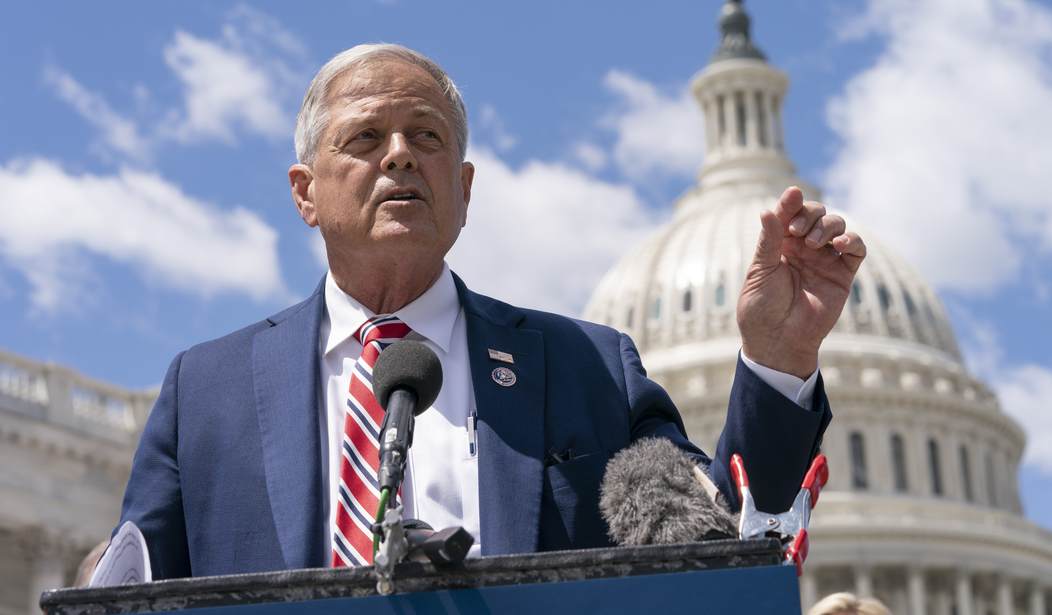
- Rep. Ralph Norman, 22%
- Sen. Darline Graham, 19%
- Rep. Russell Fry, 12%
- Mark Sanford, 11%
- Mark Lynch, 7%
- Danny Ford II, 2%
What the short timeline means for South Carolinians
I finally understand what television viewers in swing states like Michigan and Pennsylvania endure during the national election season. The deluge of radio and television spots for this race has been a new experience for this very red state. Usually, during a presidential election, we see far fewer ads because of our voting history. In addition to the commercials, mailers for most candidates are showing up every day. I have four sitting on my kitchen counter now, besides the ones I’ve already tossed.
I started to wonder what it would be like to have national races take place in a shorter time frame. Back in the days of yore, before the 24-hour news cycle, candidates would announce for president the year of the election! John Kennedy announced January 2, 1960, while Richard Nixon said he was running a week later. Barry Goldwater announced his 1964 campaign on January 3 of that year.
Now, we have candidates announcing two years in advance: President Trump announced on Nov. 15, 2022 for 2024, while in 2020 Joe Biden announced his campaign in April 2019.
How do such extended campaigns help us? The joke around politicos is that most voters don’t pay attention to presidential politics until after Labor Day of an election year. I started to think of the cons of long campaign seasons first:
Every television is hijacked from Labor Day to Election Day by campaign ads. Pity those poor voters in the swing states. The cost of these campaigns is astronomical. Apathetic voters tune out, bored by their never-ending nature, and so don’t educate themselves adequately before primaries.
One nice thing about this abbreviated Senate race: there's less time for nasty, negative attack ads. BUT — there's also less time for a real investigator to uncover wrongdoing by a candidate. On further reflection, I compared what we’re going through in our incredibly short, exceedingly fast campaign in S.C., and realized voters are best served by at least a year’s campaign. (Hey, it worked for Ronald Reagan, who announced November 13, 1979!)
During Monday’s whirlwind Gray Media/S.C. GOP debate, we barely had time to digest the candidates’ answers before it was off to the next question. Tuesday, Aug. 4, another debate was broadcast by the Nexstar Media Group, parent company of The Hill and NewsNation. The travel pace is just as fast and furious, as candidates race from the Lowcountry to the Upstate.
Extrapolate to a presidential contest: candidates wouldn’t be able to cover the entire country; money for advertising would play an even bigger part in the campaign.
The one truly good thing about a 46-day campaign? Those campaign flyers are going to stop showing up in the mail after only a few weeks.
Editor's Note: The Democrat Party has never been less popular as voters reject its globalist agenda.
Help us continue exposing Democrats' plans to lead America down a dangerous path. Join PJ Media VIP and use promo code FIGHT to receive 60% off your membership.

Join the Conversation
VIP members get the ability to comment on articles.