





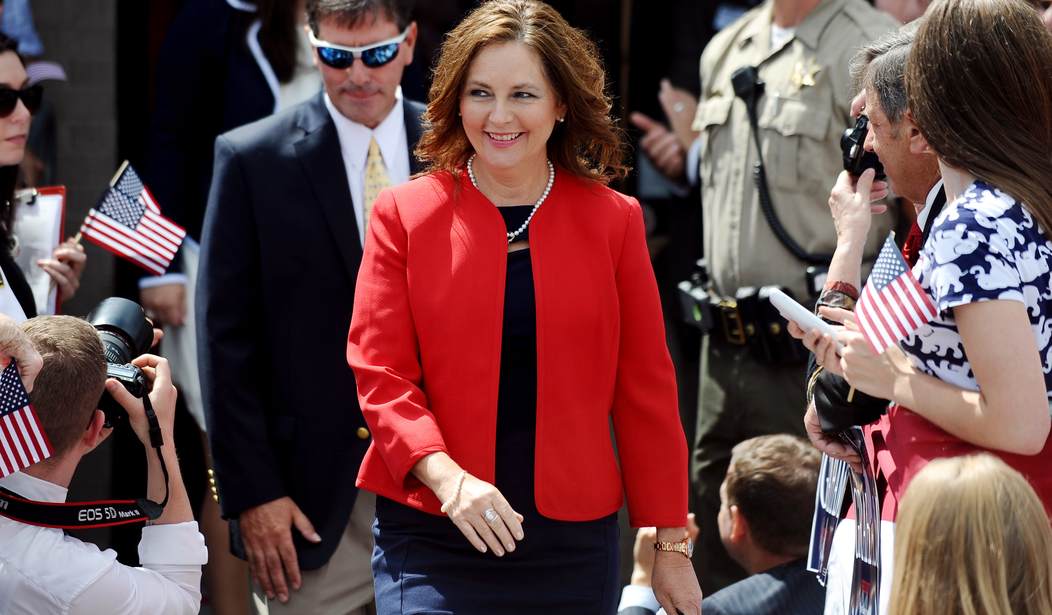
During a debate featuring much agreement among candidates Aug. 3, Sen. Darline Graham (R-S.C.) proudly told viewers that she differed from her brother Lindsey. Questioned about a realistic path to pass the SAVE Act, she said “I’m all for getting rid of the filibuster, because eventually the Democrats are going to get rid of it anyway.” One other candidate agreed. “The Senate has to be shaken up," said Rep. Russell Fry (R-S.C.). “If that means changing the filibuster, then we have to do it.”
Monday night Republican primary voters in South Carolina got their first good look at the candidates for the special Senate seat race in a debate televised by Gray Media. The debate was a blitz of questions followed by 45-second answers, with only occasional 30-second rebuttals. The fast pace meant the candidates focused on stating their case, only rarely snapping back at others.
Five candidates qualified to stand on the stage at the local NBC affiliate’s studio in Columbia: Sen. Darline Graham; Mark Lynch, Lindsey Graham’s June primary opponent; Rep. Russell Fry; Rep. Ralph Norman (R-S.C.); and former Gov. Mark Sanford.
With the candidates all agreeing with each other on many issues, finding their differences was a challenge. All agreed that the Senate needs to pass the SAVE Act, the border has to stay secure, data centers need to pay their own way and local citizens should have a voice in where they go, and the national debt needs to be paid down.
On the runaway national debt, Sanford emphasized his record as S.C. governor, saying he “held the line on government spending as no governor has done before or since.”
In response to a question about whether a U.S. senator’s primary responsibility should be to support the president or represent the state’s wishes, several candidates tried to straddle that fence, while Fry and Graham came down on the president’s side. Graham said, “I completely support the president's agenda. I am 100% behind him.” “People expect us to get the job done, not grandstand or get in the way,” Fry said. Norman and Sanford both thought there was room for disagreement. “He loves competing ideas,” Norman said, as long as “he makes the final decision.” Lynch expected to be able to talk to the president when he differed with him.
Businessman Mark Lynch, who came in second to Lindsey Graham in the June primary, tried hardest to point out the other candidates' voting records, which he said showed their flaws. He claimed Norman supported illegal immigration by voting for the bill that allowed Afghan allies into the United States. Norman laughed it off as "silly season" talk. “Mr. Lynch, to say I support illegal immigration, it’s just not true,” he said.
The state GOP chose these five candidates out of the ten certified to run. Party regulations stated participants had to rank among the top five candidates in polling averages (not paid for by the campaign) no later than 72 hours before the debate.
Early voting starts on Wednesday, Aug. 5, and the actual election is only a week away on Aug. 11, so the debate was the big push for these candidates to make their case to voters.
The live one-hour debate ran on a tight schedule to accommodate the five candidates. Moderator Judi Gatson of WIS-TV, Gray Media’s NBC affiliate in Columbia, cut speakers off in mid-sentence. Each candidate politely stopped talking when time was up – when have we ever seen that in a national debate? Opening statements were just 45 seconds long, and closing statements were just 90 seconds.
Unlike in any national debate I’ve ever seen, half of the six panelists asking questions were chosen by the S.C. Republican Party. The other three panelists were chosen by Gray Media.
Editor’s Note: Republicans are fighting for election integrity by requiring proper identification to vote.
Help us continue to report why Democrats oppose such obvious measures by joining PJ Media VIP and using promo code FIGHT to receive 60% off your membership.
Join the Conversation
VIP members get the ability to comment on articles.