







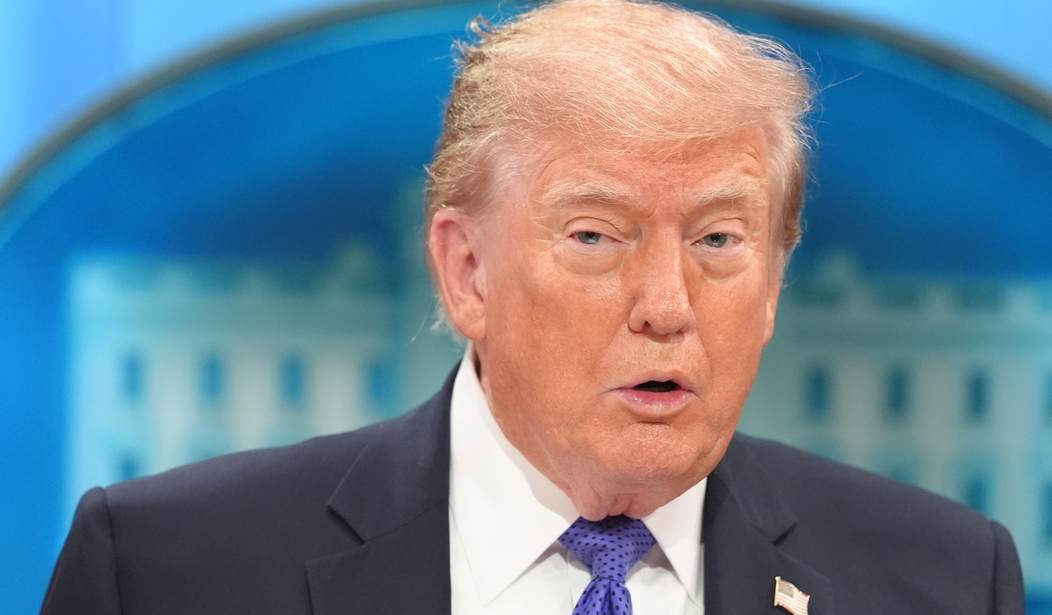
President Donald Trump won another chance Monday to move his New York criminal case to federal court. A three-judge panel of the U.S. Court of Appeals for the Second Circuit reversed a ruling that blocked his latest attempt and directed a federal district judge to decide promptly whether the case should stay in federal court.
From the Associated Press:
A three-judge panel of the 2nd U.S. Circuit Court of Appeals reversed a lower court decision that had kept the case in state court in New York, where Trump was tried and convicted on 34 felony counts of falsifying business records to obscure a $130,000 payment to adult film performer Stormy Daniels.
The panel ordered a federal judge to promptly issue a decision on whether the U.S. District Court in Manhattan should retain control of the case. If the case stays in federal court, Trump could then argue that verdict should be discarded because of presidential immunity.
The immediate question is which court will hear the case. Trump wants a federal judge to consider whether prosecutors used evidence of official presidential acts to win a conviction. If the district court allows the transfer, Trump can press that challenge there. The appellate panel left the district court to decide the transfer question first.
A Manhattan jury found Trump guilty in 2024 of falsifying business records tied to the reimbursement of a $130,000 payment to Stormy Daniels. Trump denies wrongdoing, and the state court later gave him an unconditional discharge, leaving the verdict intact without a jail term, fine, or probation.
His lawyers have challenged the conviction in New York courts while also trying to move the case to federal court.
Trump first tried to move the case after his indictment and tried again after the trial. By then, the Supreme Court had ruled in a separate federal case that presidents have absolute immunity for conduct within their exclusive constitutional authority and at least presumptive immunity for other official acts.
Private conduct carries no presidential immunity, and the ruling also limited prosecutors’ use of evidence about protected official acts to prove charges based on private conduct.
Trump’s lawyer told the Second Circuit that Manhattan prosecutors used testimony about Oval Office conversations, White House work practices, and social media posts. The defense argues that the evidence implicated the restrictions the Supreme Court laid out after the trial. Steven Wu, who leads the Manhattan district attorney’s appeals division, urged the judges to leave the case in state court.
The district attorney’s office declined to comment after Monday’s ruling.
Monday’s order was the second time the appeals court sent the dispute back. In November 2025, it directed the district judge to weigh questions he had left unresolved, including whether the Supreme Court’s immunity ruling gave Trump a good cause to seek another transfer. The judges also asked him to consider whether a transfer remained available after trial and whether Trump had raised a federal defense.
In August, U.S. District Judge Alvin Hellerstein found that Trump had failed to show good cause for filing his second request after the usual deadline. On Monday, the appeals panel said Hellerstein was wrong to treat a conviction as a categorical bar to transferring a state criminal case. The judges also rejected his conclusion that Trump lacked good cause to try again.
The earlier findings had blocked the district court from taking up his latest request.
The state appeal was already underway: New York’s Appellate Division heard arguments on November 5 and had not yet ruled when the federal panel acted. Monday’s order paused those proceedings. Trump’s lawyer had asked for a swift federal decision, arguing that the state appeals process could take years before the president could ask the U.S. Supreme Court to review the case.
Again, from the Associated Press:
In a statement, a spokesperson for Trump’s legal team said the president “appreciates the 2nd Circuit’s prompt and correct ruling, as he continues to win against Democrat weaponization of our Justice System.”
The Manhattan District Attorney’s Office, which prosecuted the case, declined to comment.
Trump’s lawyer, Robert Giuffra Jr., had urged the judges to rule swiftly, arguing that without federal court intervention, the president “will likely have to wait years” for state appellate courts to rule before he can take the matter to the U.S. Supreme Court.
Steven Wu, chief of the appeals division at the Manhattan DA’s office, urged the 2nd Circuit panel to uphold Hellerstein’s ruling and leave the case in state court.
A transfer would put the case in a different court and give Trump a place to argue that the trial crossed the line the Supreme Court drew around official acts. The district judge has to decide whether federal law permits that transfer.
For now, the verdict remains in place, and Monday’s order puts the next decision in the hands of a federal district judge.
Support PJ Media’s reporting and commentary. Get 60% off PJ Media VIP with promo code FIGHT.

Join the Conversation
VIP members get the ability to comment on articles.