





A Microsoft employee who lost a job in 2025 might have a few questions for the company’s executives today. The technology giant eliminated thousands of American jobs while continuing to sponsor foreign workers.
Now President Donald Trump’s administration wants answers, and the consequences have arrived.
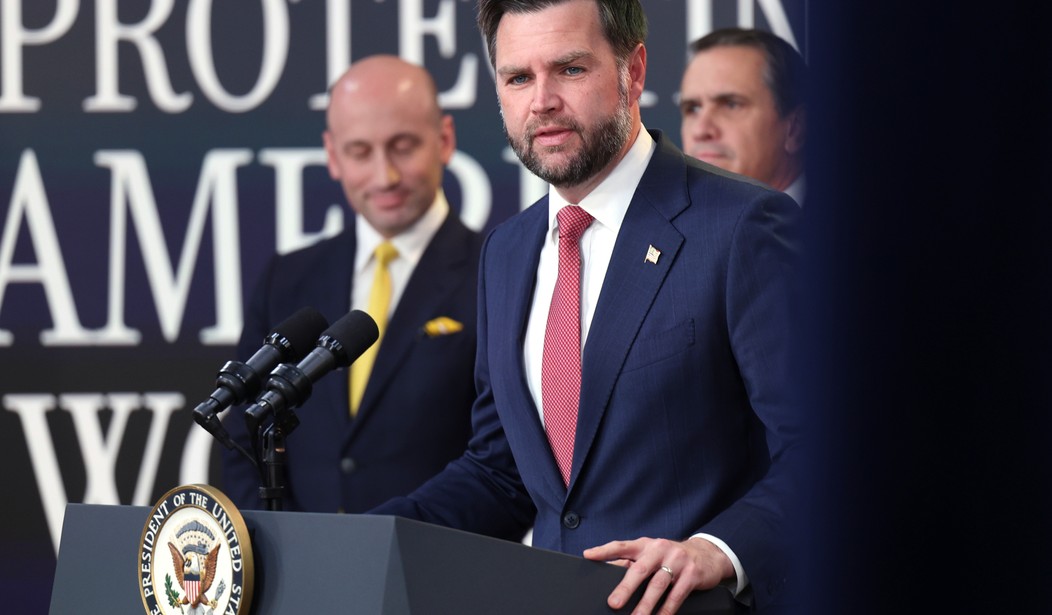
On Thursday, Vice President JD Vance and Labor Secretary Keith Sonderling announced that Microsoft, Adobe, and six major technology outsourcing companies were being suspended from the federal Permanent Labor Certification Program, known as PERM. The Labor Department won’t accept new applicants or process pending applications involving the eight companies while the administration pursues its concerns about possible immigration fraud.
For Americans who supported Trump’s 2024 campaign because of his America First employment promises, the announcement is a direct expression of what they expected from his presidency. The policy puts a familiar question before some of the world’s wealthiest corporations: What responsibility do American employers owe American workers?
Vance singled out Microsoft, pointing to approximately 6,000 layoffs in 2025 and thousands of H-1B visa applications. He accused the company of abusing a system intended to address genuine labor shortages. Microsoft disputes that characterization, saying roughly 80% of its H-1B applications involving existing employees and that new visa hires represented only about 1% of its American workforce.
From the Associated Press:
Microsoft, which is based in Redmond, Washington, said of the approximately 6,000 H-1B visa applications it submitted in the last fiscal year, 80% were “to extend or change the status of existing Microsoft employees.”
“These were not to hire new people,” Microsoft said in a statement. “The remaining filings for new employees were for individuals already legally in the United States who decided to come work for us, and they equal only 1% of our U.S. workforce. They are not new arrivals to our country.”
The company added that it only files H-1B petitions for “those who meet the rigorous standards of this visa category.”
We need to take a good peek at those numbers because layoffs and foreign worker sponsorship don’t automatically establish that Americans were displaced. They do, however, raise questions that can be looked at through hiring records, recruitment procedures, and the specific positions involved.
PERM isn’t simply another foreign worker visa. Before sponsoring someone for permanent residency through this process, an employer must establish that sufficient qualified American workers aren’t available for the position and that hiring the foreign worker won’t undermine comparable American wages and working conditions. Those protections have long been part of federal law.
The administration’s action reaches well beyond Microsoft. Cognizant, Infosys, Tata Consultancy Services, Wipro, HCL Technologies, Capgemini, and Adobe are also affected. Sonderling said these companies collectively requested nearly three million foreign workers since 2009, received more than 230,000 H-1B approvals, and obtained over 100,000 permanent labor certifications.
Those figures describe different categories of immigration activity, not a confirmed count of Americans replaced. The Labor Department hasn’t publicly demonstrated that every certification was improper. Its investigations will need to distinguish legitimate recruitment from false claims that qualified American applicants weren’t available.
The larger dispute involves more than immigration enforcement. Technology executives argue that access to international talent helps American companies compete, innovate, and retain highly skilled workers. Critics of the visa programs argue that employers can exploit immigration rules to reduce labor costs, weaken domestic bargaining power, or avoid investing in American employees.
Trump’s supporters have long regarded those concerns as central to the America First agenda. The administration is now testing whether existing federal safeguards can be enforced against companies with enormous economic influence.
There’s an especially interesting detail from Thursday. While Vance publicly challenged Microsoft’s employment practices, Trump honored Microsoft CEO Satya Nadella with the National Medal of Technology and Innovation.
The investigations could ultimately establish wrongdoing, identify compliance failures, or find that some accusations went too far. The suspensions also affect foreign workers already pursuing permanent residency, creating questions about fairness, legal authority, and how long their applications will remain stalled.
Those outcomes will determine whether Thursday’s announcement produces lasting reform or another prolonged federal dispute. For the voters who backed Trump expecting stronger protection for American employment, the measure demonstrates the administration’s willingness to challenge Big Tech.
Whether it actually delivers more opportunities for American workers remains the test that matters.
Washington’s biggest decisions affect your job, your paycheck, and your family’s future. PJ Media keeps digging into the facts behind those decisions, without giving powerful corporations or politicians a free pass. Join PJ Media VIP today and save 60% with promo code FIGHT

Join the Conversation
VIP members get the ability to comment on articles.