Through his periscope on Sept. 18, 1944, Lt. Cmdr. Stephen Lynch Maydon saw what looked like another Japanese cargo ship.
He commanded HMS Tradewind, a British submarine hunting enemy shipping off Sumatra. The vessel ahead was old, roughly 5,000 tons, escorted by two smaller craft, and carrying cargo for Japan's war machine.
Maydon ordered an attack.
What he couldn't see were the thousands of prisoners hidden aboard.
The Junyo Maru carried roughly 6,500 people; about 2,300 were Allied prisoners of war, many of them Dutch. Another 4,200 were Indonesian forced laborers, known as rōmusha. Japan was transporting them from Java to Sumatra, where they would be used to build the Pakan Baroe railway.
Among them was 23-year-old André Henri Mantiri, an officer cadet in the Royal Netherlands East Indies Army. He had begun training for a military career before Japan conquered the Dutch East Indies.
He would never reach the railway.
From the Defense Magazine:
Officer André Mantiri of the Royal Netherlands East Indies Army (KNIL) was 23 when he made the ultimate sacrifice. Together with 2,300 Allied prisoners of war and 4,200 Indonesian forced laborers, he was en route from Batavia to Sumatra to work on the railway for the Japanese occupiers. Mantiri would never reach his destination. The Junyo Maru was sunk off the coast of Bengkulu by the British submarine HMS Tradewind with two torpedoes. In the ensuing maritime disaster, an estimated 4,000 forced laborers and 1,420 Allied soldiers lost their lives. Among them was Cadet Ensign André Henri Mantiri. According to Jeane Mantiri – who came to the Netherlands for the occasion with her brothers Herman and Rudy – her brother managed to escape the ship and reportedly saved other passengers from drowning. André died hours later from exhaustion at sea.
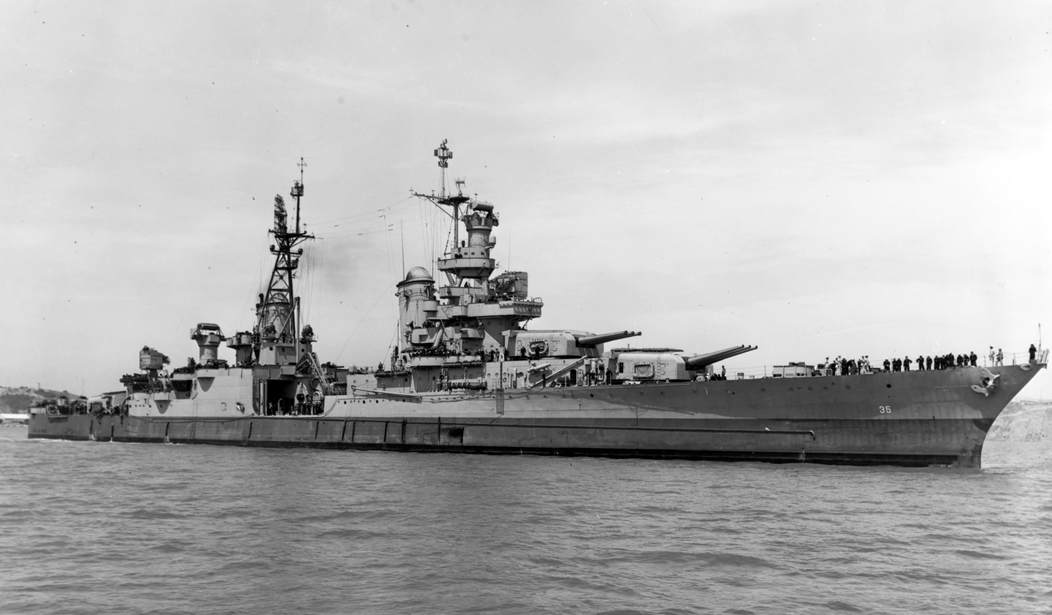
The Junyo Maru carried no Red Cross markings and no visible sign telling Allied submariners that prisoners were aboard.
This was part of a much larger tragedy. Japan routinely transported POWs and forced laborers aboard merchant vessels that looked like ordinary shipping. U.S. naval historians have found that Allied intelligence sometimes intercepted Japanese messages containing prisoner information, but such details were stripped from the reports eventually sent to commanders at sea.
The men firing the torpedoes often knew the ship's location, size, destination, and defenses.
They didn't know who was locked below decks.
Tradewind fired.
The torpedoes struck the Junyo Maru off Sumatra.
Men who had already survived invasion, defeat, capture, imprisonment, hunger, and forced labor suddenly found themselves inside a sinking ship. Some escaped onto the deck, while others never had the chance.
About 5,600 people died.
The U.S. Navy's historical account puts the dead at roughly 4,120 Javanese laborers and 1,520 Allied POWs. Other official records vary somewhat, an unavoidable result of incomplete wartime documentation, but all describe one of the deadliest maritime disasters of World War II.
For perspective, the Titanic disaster killed about 1,500 people.
The Junyo Maru took several times that number into the water, yet its name is largely absent from American memory.
André Mantiri was among those who died.
Another prisoner aboard was Heiko Roelfsema, a teacher who had been preparing for retirement in the Dutch East Indies. War prevented him from returning home. He joined a local defense force, was captured by the Japanese in 1942, and eventually found himself packed aboard the Junyo Maru on his way to forced labor.
He died on Sept. 18, 1944.
Even survival offered little mercy.
Japan needed labor for the Pakan Baroe railway, a 220-kilometer project across Sumatra. Roughly 102,000 Javanese forced laborers and 5,000 POWs worked on it under brutal conditions. Hundreds of Dutch prisoners died building the line, along with enormous numbers of Indonesian laborers.
The men rescued from the sea remained prisoners.
The Junyo Maru also leaves us with one of war's cruelest truths.
The British submarine crew had done what submarine crews were supposed to. They had identified enemy shipping during wartime and attacked it. The Japanese had placed thousands of prisoners aboard an unmarked vessel moving through waters patrolled by Allied submarines.
Maydon couldn't see through steel.
He couldn't know that pulling the trigger meant killing people he would've risked his life to rescue.
Japanese hell ships carried prisoners throughout the Pacific War. U.S. naval historians estimate that more than 19,000 Allied POWs died when those vessels were attacked by Allied forces that often had no idea they were aboard.
Today, the Junyo Maru is remembered at memorials thousands of miles from the sea where it went down. Families still preserve names such as André Mantiri and Heiko Roelfsema because history is too easily reduced to numbers.
About 5,600 died: one submarine and one unmarked ship.
And thousands of men the captain could never see.