


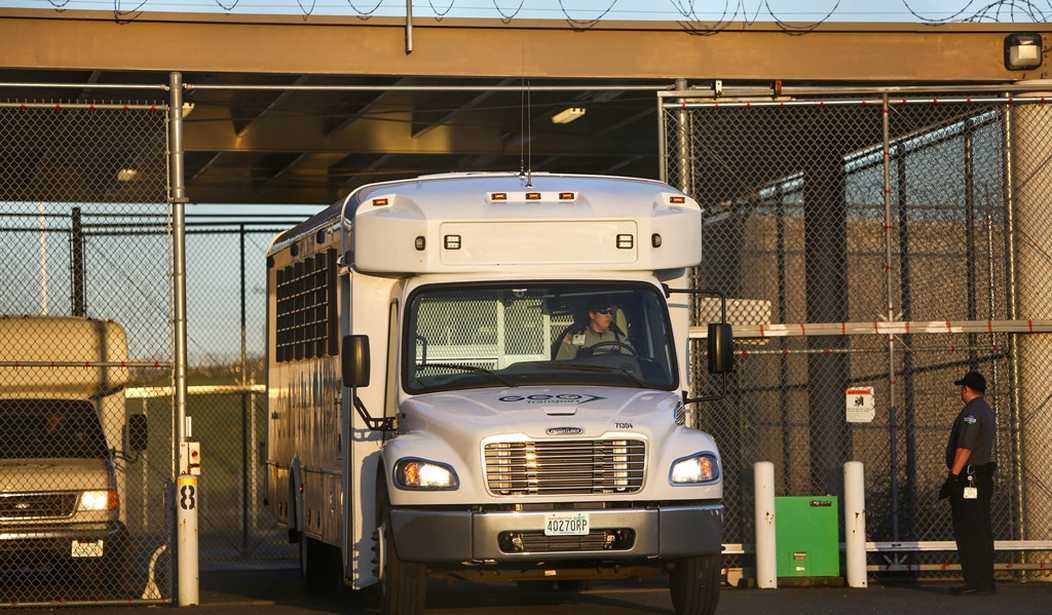
Acting ICE Director David Venturella can put more agents in the field, but every arrest creates an immediate problem: Where will the government hold the person while the case moves forward?
President Donald Trump's deportation policy depends on a clear answer. ICE is now seeking 5,500 detention beds across four regions, with each facility required to begin accepting detainees within 30 days of an award.
The mandate requires each facility to be reserved exclusively for ICE. The agency will accept sites built for low- and medium-custody populations, but prefers those capable of handling high-custody detainees.
While contracting documents reviewed by Project Salt Box state that turnkey properties, renovations, and new construction are all eligible, the timeline tells a much different story. In practice, a strict requirement to begin housing detainees within 30 days of an award effectively limits the field to only existing, fully staffed, and functional buildings.
ICE also specified exactly where the detention centers must be located. The Denver facility must be located within 30 driving miles of the field office in Centennial, Colorado. The Miami detention center must be within 50 driving miles of the field office in Plantation, Florida. The Seattle facility must be within 30 driving miles of the field office in Tukwila, Washington. For the Philadelphia field office, the detention center must be located near the airport in State College, Pennsylvania.
The plan calls for 1,500 beds near Denver, 1,500 near Seattle, 700 near Miami, and 1,800 in central Pennsylvania. Each site would be reserved for ICE and equipped with secure video links, courtroom space, judges' chambers, and interview rooms.
The facilities will be required to have video feeds and courtroom space, so that detainees can be swiftly processed through the immigration system and have their cases heard and settled onsite without the detainee having to be transported elsewhere for that purpose.
ICE also implemented a “best-value” bidding system where the total ability of the contractor to provide the services are taken into consideration and where readiness and management experience are prioritized, as opposed to a lowest-bidder system that just signs for the cheapest price.
Rumors of a fifth facility were shot down by the Department of Homeland Security (DHS) after reports claimed that ICE was set to contract a facility in the former Rivers Correctional Institution in Winton, North Carolina. However, DHS did not note if the Rivers location is now or has been under consideration for future use.
While the bidding was open to all comers, the sites suggested and the operating capacities align with the facilities currently owned by The GEO Group, which already has multiple contracts with DHS. The effort is likely meant to resign contracts that are soon to expire.
ICE also plans to judge bidders by readiness and experience, rather than selecting a contractor on price alone.
Early headlines described four new detention centers. The procurement record points to a more careful conclusion. The locations and bed counts closely match four GEO Group facilities already serving ICE: the Aurora ICE Processing Center, Broward Transitional Center, Northwest ICE Processing Center, and Moshannon Valley Processing Center.
Their current agreements are nearing expiration. Tacoma's contract runs through Oct. 27, while the Pennsylvania county agreement expires Sept. 28. Contract terms for the Colorado and Florida sites also end this fall.
New awards may preserve existing capacity instead of adding the full 5,500 beds to ICE's national total. The administration should plainly say so.
Even so, preserving those beds is essential; ICE recorded 43,138 arrests in June, and during the first 11 days of July, arrests averaged 1,474 per day. A block of 5,500 beds equals less than four days of arrests at that pace.
Beds turn over as people are removed or released, but the numbers show how quickly the system can lose room when arrests move faster than case decisions and transportation.
Congress has already supplied the money. The federal government's fiscal year 2027 budget says ICE received $75 billion for President Trump's deportation initiative, including $45 billion to activate as many as 100,000 single adult beds and 30,000 family beds.
Cost can't become an excuse for disorder, weak contracts, or inflated claims about new capacity.
Critics will question private contractors, medical care, staffing, and outside inspections. The draft terms also declare that state and local laws "shall not apply" to facility operations.
The new terms were published earlier this month, a day after a federal judge ruled that a contract cannot override state law and ordered ICE’s largest Pacific Northwest detention center opened to Washington health officials.
The ruling, by US District Judge Benjamin Settle, came only after three years of litigation; 10 refused inspections, according to the state; and 3,500 detainee complaints. A Ninth Circuit judge temporarily paused the order on July 21, with a decision on a longer stay expected in early August.
Settle ordered the operator of Tacoma’s immigration detention center to admit Washington state health inspectors, ruling that nothing in the company's federal contract barred them and that no contract could override state law in any case. The next morning, on July 10, ICE published draft contract terms for 5,500 detention beds in four regions of the country—including language declaring that state and local laws “shall not apply” to the facilities' operations.
Settle found that the GEO Group, the private prison company that owns the Tacoma facility, had executed a new contract with ICE in the middle of the lawsuit to support the company’s claim that ICE, not GEO, controlled access to the building. “Preemption requires Congressional intent, not a contract,” Settle responded, “and GEO's new contract cannot preempt state law, even if it purports to.”
Settle also noted that GEO's court filing omitted part of a contract provision under which ICE agreed to ask the Justice Department to get GEO dismissed from lawsuits over its performance, or to have ICE substituted as the defendant.
A federal contract can't erase state law by merely saying so. ICE should enforce national immigration law while using clear standards, frequent inspections, transparent contracts, and real penalties for failure.
Trump promised enforcement, and now he has the funding to pursue it. Venturella and Homeland Security Secretary Markwayne Mullin own the execution. ICE should move quickly, publish the net increase in available beds, and identify which contracts are renewals.
The goal is lawful removal; detention space is one requirement for carrying it out.
Washington’s biggest fights rarely fit inside one headline. Join PJ Media VIP and use promo code FIGHT to take 60% off your membership. Your support keeps independent reporting and commentary in the field.







Join the conversation as a VIP Member