
A Star that Refuses to be Ignored
The quiet hum of morning static across Africa and Europe suddenly fell silent at precisely 10:00 GMT on November 11, 2025.
Radio frequencies — usually chock-full of maritime chatter, aviation routes, and ham operators — went dark not because of sabotage, war, or weather, but because of the Sun itself.
From the rolling surface of the region known as AR4274 spewed an X5.1-class solar flare, the strongest of the year so far. Billions of tons of charged plasma were blasted outward, some of it aimed squarely at us, resulting in a storm of electromagnetic energy lasting several minutes that struck Earth's upper atmosphere, frying high-frequency communication channels and forcing pilots, mariners, and broadcasters into unscheduled silence.
This was no mere skywatcher's thrill; it was a preview of how fragile our modern world can be when an ancient, life-giving star decides to wake up on the wrong side of the bed.
Understanding the X-Flare and G-Storm Scales
I have to admit that I understand how scientists grade solar storms a little better than I know the Richter Scale.
Solar flares are graded by X-ray intensity on a logarithmic scale that ranges from A to X. Each letter represents a tenfold increase in power. For example, a "C" flare is modest, while an "M" flare causes temporary high-frequency radio blackouts at polar latitudes.
But X-class flares are a totally different beast. These are the giants, powerful enough to disturb satellites and ripple through Earth's electrical grids.
The number within the X-class adds precision: an X1 flare is the baseline for that category, while an X10 is ten times stronger.
November 11's X5.1 flare was roughly five times more intense than the smallest X-level burst. The strongest ever measured occurred in 2003, when an X28 saturated instruments and caused auroras as visible as far south as Texas.
When those flares launch coronal mass ejections towards Earth, the resulting geomagnetic storms are classified on the G-scale:
- G1 (Minor): Slight voltage irregularities and small auroras.
- G2 (Moderate): Some power-grid fluctuations and satellite corrections.
- G3 (Strong): Voltage alarms on high-latitude grids, GPS interference.
- G4 (Severe): Possible transformer damage, widespread radio disruption, auroras far from the poles.
- G5 (Extreme): Grid collapse risk and navigation failures on a global scale.
The event in November is expected to trigger a G4 storm, which is serious enough to affect high-altitude aviation and power systems at northern latitudes.
In other words, X measures the flare, and G measures how hard the Earth feels the punch.
What Happened Overhead
A magnetic monster on the Sun's surface generated the flare, twisting and snapping lines of magnetic energy like a cosmic whip.
Before this X5.1 event, two other minor flares originated from the same region: an X1.7 on November 9 and an X1.2 the next day.
Scientists at NOAA’s Space Weather Prediction Center expect the coronal mass ejection (CME) from the latest blast to collide with Earth’s magnetic field by November 12, possibly sparking a G4-level geomagnetic storm, which the agency defines as “severe.”
Potential disruptions are not limited to satellites but also include power grids, GPS signals, and high-latitude flights.
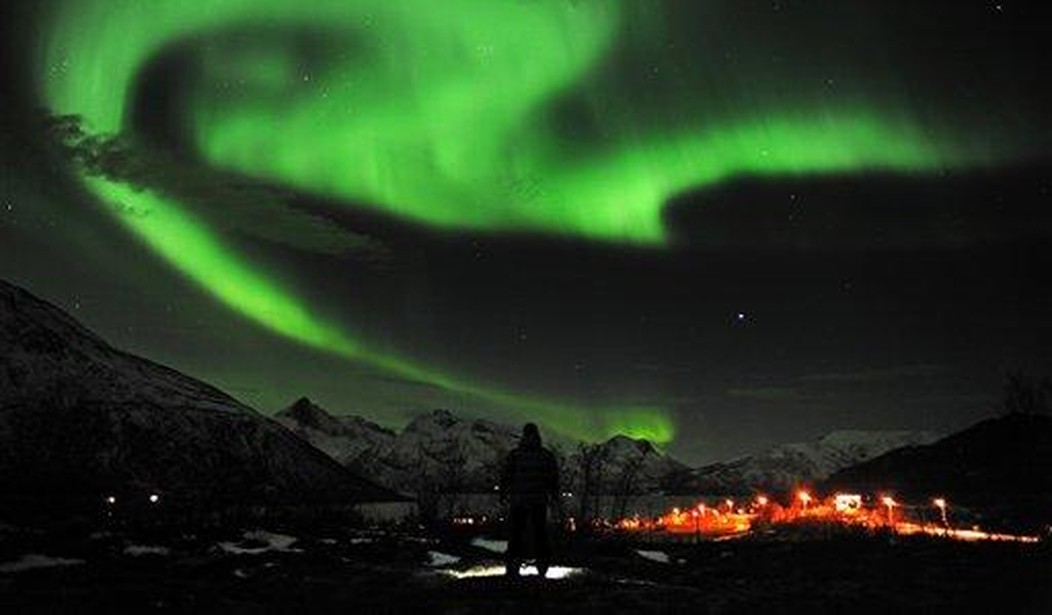
In non-geek speak, it means auroras might dazzle the nighttime sky as far south as Kansas, while northern cities may see their lights flicker, a natural show doubling as a test of mankind's wiring abilities.
Lessons from History
We've seen these storms before. The Carrington Event in 1859 electrified telegraph lines, set offices on fire, and produced auroras visible in Cuba.
At the time, the world's infrastructure was made of copper, not silicon, but our digital age, dependent on satellites, internet relays, and global positioning networks, is far more vulnerable.
Quebec's grid was knocked out for 9 hours by a mild storm in 1989. Today, if we get hit by an equally strong storm, it would ripple through supply chains, banking systems, and defense communications.
We are, quite literally, one severe solar storm away from living off-grid.
Dependence, Meet Reality
Despite humanity's ego in engineering, one solar belch reminds us that we live in a delicate web of connectivity.
Our modern culture worships at the altar of convenience, where we always assume Wi-Fi, GPS, and streaming services exist as naturally as oxygen. Yet they're entirely dependent on a magnetic cocoon and a quiet Sun.
Although national grid operators and defense planners know this, public awareness hasn't caught up, because space-weather forecasting programs remain underfunded, and backup systems lag.
And relatively few Americans have even heard of geomagnetically induced currents: electric surges that cook transformers worth millions.
Nature doesn't care about quarterly reports, social media schedules, or whatever kids these days watch on their phones: it only demands respect.
The Strategic Angle
Solar flares aren't just atmospheric curiosities for the Pentagon and its allies; they're potential strategic wild cards.
Imagine if there were communication blackouts during high-tension moments; they'd cripple command-and-control networks, and navigation errors would affect aircraft and missiles.
The one adversary that doesn't need a motive in our era of cyberwarfare dominating headlines is a solar flare. It simply arrives.
Sounding like a bureaucratic catchphrase in a PowerPoint, a "space-weather strategy" is increasingly a national security necessity, where hardened satellites, diversified data routes, and surge-resistant transformers aren't luxuries. They've become survival instincts for a civilization so wired that sunlight can take it down.
Media Silence and Modern Complacency
Ever wonder why we typically don't see stories like these dominating our evening news? There aren't any news readers, talking heads, or doom tickers.
We're largely uninformed of these storms because the danger is invisible. "If it bleeds, it leads" has been the mantra of legacy media, which loves fear with faces — storms, wars, and scandals, and the Sun's invisible chaos doesn't sell ad slots.
The danger feels abstract when the grid hums and the lights stay on, yet that quiet hum is the only proof of how lucky we've been so far.
We won't always be so lucky.
The Moral of the Flare
It is sincerely humbling that every byte of data we send still depends on a well-behaved 864,000-mile-wide ball of fire; the same star that warmed the Pharaohs now powers our satellites, and when it sneezes, its "snot" allows us to feel the tremor through every circuit.
In our arrogance, we need moments like this flare to reset our perspective, to remember that progress is nothing more than borrowed time — not guaranteed tenure — and to realize that the same humility that kept sailors watching the horizon should guide our engineers who now watch the Sun.
Final Thoughts
Whenever President Donald Trump speaks about national resilience, this is part of what he means: building a country strong enough to withstand the unpredictable — from pandemics to solar flares. Resilience isn't paranoia; it's prudence.
The X5.1 flare of November 2025 may pass without catastrophe, but it certainly offers a warning worth heeding. Our species has learned to fly through the air and send pictures from Mars, yet we're still tied to a star whose storms can knock us back to the 19th century.
In this case, wisdom lies in listening to the silence that follows a burst of light.