





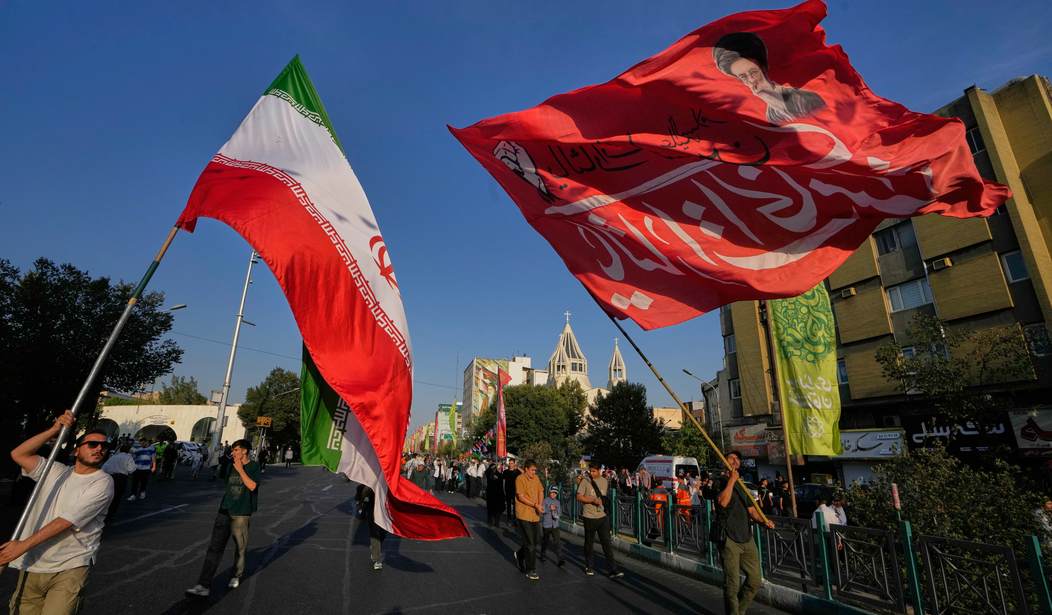
On Feb. 11, 1979, the Shah of Iran was overthrown, causing the culmination of the Iranian Revolution and the beginning of the Islamic Republic of Iran. I was seven years old. My family was living in Washington because both of my parents had worked for the government.
My mom had left government service in the early '60s before my sibling was born. My father had died the year before from lung cancer. He had smoked cigarettes before filters existed. My mother also blamed the stress of working for the federal government. Forty-seven years later, my family had moved to Houston, Texas, a few years after the Shah was deposed. My mother passed on fifteen years ago, and the Islamic Republic of Iran is still in existence, barely. Hopefully, not for much longer.
When I was looking for a title for this piece, I remembered the song "Rock the Casbah" by The Clash, a British band. I remember the song when it originally came out in 1982. "Bomb Iran," by Vince Vance and the Valiants, a parody of the Beach Boys’ "Barbara Ann," came out earlier, in 1980. Like most children, I sang the songs without having any idea of the meaning of the lyrics. To the nine-year-old me, they were funny songs. To the adult me, they’re still funny songs. I just have a better understanding of what they were talking about. I discovered that "Rock the Casbah" was written specifically about the oppression and the loss of freedom in Iran.
The Islamic Republic of Iran has been in existence for most of my life. It's just there, and the rest of the world has had to deal with it over the forty-seven years, as with the Soviet Union. Nine presidents have come and gone since 1979; the current president is on his second term. Every president has attempted to solve the problem of Iran and the wider-ranging problem of conflict in the Middle East. Most haven’t been even remotely successful. Accords, plans, and understandings for the past 55 years have come and gone, and still Iran is threatening the world.
Related: Why Can’t More Democrats Be Like This?
President Barack Obama “helped” matters in January 2016 when an unmarked plane was loaded with $400 million and flown to Iran. His administration claimed it was a payment for a longstanding dispute between Iran and the U.S. Coincidentally, four U.S. citizens were released from captivity in Tehran. Obama’s administration insisted the payment had nothing to do with the release of the Americans. Considering that Iran’s assets were frozen in the U.S. in 1979 after the start of the Iranian hostage crisis and are still mostly frozen, I can see how desperate the Iranian government would be for actual cash. The situation is even worse today.
President Donald Trump has been the only U.S. president, in my opinion, to make significant headway in removing the threat of Iran from the Earth. In my entire life, all 55 years, this is the closest I have ever seen Iran come to collapse. I hope that collapse continues. A government such as Iran’s needs to be eliminated. It serves no purpose except to sow division, terror, and destruction. I can trace the terrorism either supported or caused by Iran through my entire life. The 1978 oil shock, the 1979 Iranian hostage crisis, the 1981 release of the hostages, the 1995 bombing of the Khobar Towers, the 2001 attack on the U.S., which they supported, are just the ones that came to mind.
Related: When is Jihad Not Jihad?
I remember each event clearly even as a small child. I remember sitting in the car with my mom waiting to get gas. I remember tying yellow ribbons around trees to symbolize the 66 hostages Iran held. I most certainly remember the hostages getting released in 1981. I’ve written about that memory in another article for PJ Media. I was wearing a dark green coat with brass buttons and a yellow ribbon tied around one of those buttons when my mom took me to see the returning hostages.
It’s not just Iran that’s been creating chaos in the Middle East. The history of the Middle East and the countries that comprise it is absolutely fascinating and terrifying. Some of the countries in the area have existed, in one form or another, for thousands of years. Before it was the Islamic Republic of Iran, it was the Imperial State of Iran. Before that, it was the Imperial State of Persia, one of the oldest continuous major civilizations in the world.
I have heard the names of Middle Eastern countries my entire life and never in a positive way. Syria, Iraq, Egypt, Libya, Lebanon. When I was in the 11th grade, my U.S. History class was talking about the U.S. and the rest of the world in the fifties. My teacher told us that Beirut, Lebanon, was a resort area and Lebanon, the country, was famous for its trees, the cedars of Lebanon. That’s why there is a cedar on the country’s flag.
Talk about mind-blown. The idea of Beirut as anything other than a bombed-out crater was something the entire class had a hard time understanding, and this was in the late 80s. This discussion took place five years after the Marine barracks in Beirut were destroyed by a suicide bomber in 1983, killing 220 Marines, eighteen sailors, and three soldiers. Who claimed responsibility? Islamic Jihad and the Iranian Ministry of Intelligence. Why were the Marines there? They were part of a peacekeeping force during the Lebanese Civil War. I can say, with great certainty, that this part of the world doesn’t value life very much.
Related: Nothing Happens Until All Happens
The only two countries in the Middle East about which I have heard positive things are Israel and Jordan. Israel, the country created because 6 million Jews were slaughtered for no other reason than being Jewish. Jordan, one of the few stable governments in the region. The current leader is King Abdullah II. King Abdullah was sent to the U.S. as a child for schooling. His father, King Hussein Bin Talal, having been schooled abroad, decided that his firstborn son would follow the same path.
That schooling is, among other things, one of the reasons that Jordan is a stable country. The current king has lived in and experienced a stable society for most of his childhood. When the attacks of October 7 happened in Israel, Jordan allowed Americans stuck in Israel to use his country as an escape route. I have a good friend who was in Israel with his wife and their church group when the fighting started. They were all quite happy that Jordan was willing to let them in.
The Middle East is a puzzle. There are many shifting loyalties and alliances. If you want to see something that will make your eyes cross, look at a map of the Middle East after World War I. No wonder it’s hard to make anything positive happen. No one knows which piece of land belongs to what country. Iran is a piece of that puzzle, a very confusing, violent piece. If Iran could be made to settle, then perhaps the rest of the Middle East could begin to settle. (Note: I said if.) The best chance of that happening in my lifetime is now, with President Trump.
Editor’s Note: Thanks to President Trump and his administration’s bold leadership, we are once again respected on the world stage, and our enemies are being put on notice.
Help us continue to report on the administration’s peace through strength foreign policy and its successes. Join PJ Media VIP and use promo code FIGHT to receive 60% off your membership.


Join the Conversation
VIP members get the ability to comment on articles.