
Because the Predator Watch column focuses primarily on wild animal attacks against humans in the United States, the content is heavily skewed towards stories involving bears, mountain lions, sharks, and the occasional rabid beaver or bobcat. But when shocking video emerges from other countries, I'll cover it.
I wrote in August about a male hippo that chased a tour boat in Botswana. The woman who captured the encounter on her phone called it "one of the most terrifying moments I’ve ever experienced."
Just like the tourists on that boat in Botswana, the tourists in this week's story fortunately survived their encounter with a wild animal in Africa, and there is equally terrifying video of what went down.
Related: Predator Watch: Video Captures Hippo Chasing Tour Boat in Botswana
It happened on September 19 at Etosha National Park in Namibia. The video, taken by wildlife tour guide Ebot Enow Ebot Agbor Ndip, shows a black rhinoceros, which is clearly teed off at something, charging a parked SUV full of tourists.
It's hard to believe that only the vehicle was damaged and that the tourists escaped injury when you watch the rhino ram its head into the passenger side of the car, seemingly determined to inflict harm on the human passengers. When the car finally drives away, after what seemed to me like a much-too-long delay, it looks like we will be in store for another chase like the one involving the hippo in Botswana, with the rhino starting to run after the car before suddenly stopping.
Ndip provided some information that points to how this attack during a self-drive safari in the park might have been avoided. “The rhino appeared to be disoriented, as it had just been released by the wildlife authorities,” he told Storyful.
While Ndip remained a safe distance away as he recorded the video, he said other vehicles did not. According to People, "He added that the driver of the vehicle, which was the focus of the attack, may have failed to recognize the 'warning signs' from the animal’s behavior beforehand." Ndip hopes tourists who visit Namibia’s animal parks without local guides will learn from his video.
While researching this story, I noticed that I overlooked the death of a rhino conservationist who was gored by a 2,900-pound black rhino in April. Schoeman van Jaarsveld, a 58-year-old anti-poacher, was on patrol at the Samara Karoo Reserve to protect rare white and black rhinos when the attack happened. He was declared dead at the scene.
“The attack was just explosive and Schoeman took the rhino’s horn,” a friend said, according to the New York Post. “The injury was basically untreatable without immediate medical help, which was not available.”
Rhinos are responsible for far fewer human deaths per year than hippos, elephants, and crocodiles. Biology Insights says, “While exact global statistics are difficult to compile, rhino fatalities are counted in the single digits or low tens per year.” Hippos and elephants are responsible for deaths in the hundreds.
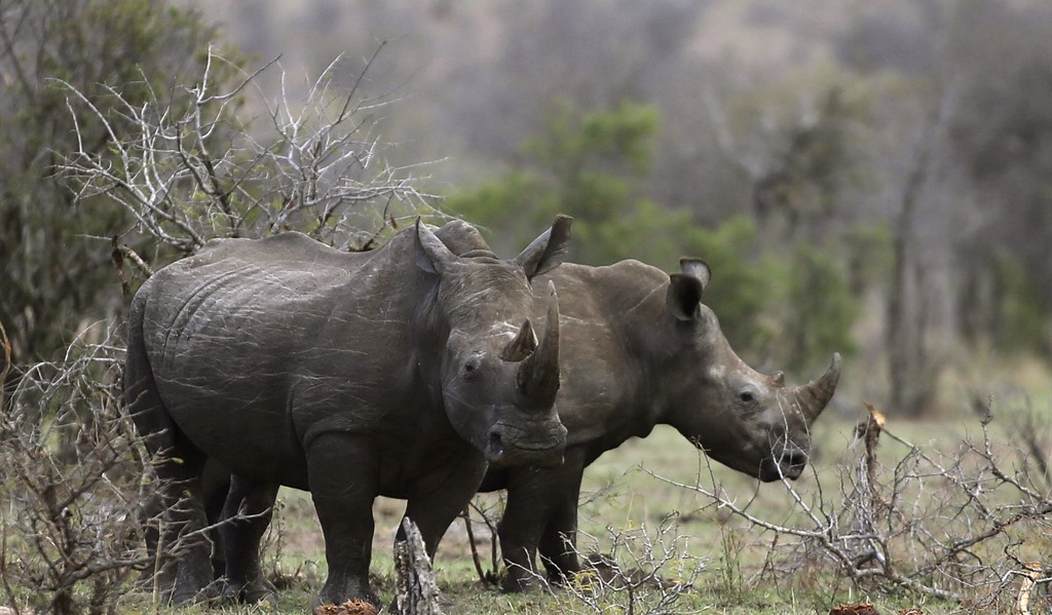
A video on the Kenya Wild Park YouTube site explains that while rhinos, which are generally solitary herbivores, are not naturally aggressive toward humans, the black rhino is the species among the five rhino species that remain today that is known for being the most short-tempered and unpredictable. White rhinos, meanwhile, are calmer and more social.
When a rhino does attack, it's often due to its poor eyesight. The video notes that "if a human is downwind and silent, they might not even realize we are nearby until it's too late. When surprised or unsure of what's around them, they'll often default to charging as a defensive measure." Adding context to the attack this month in Botswana, most of the human attacks by rhinos are not direct attacks but aimed at vehicles or trees.
As also seen in the video, black rhinos are extremely fast, able to reach speeds of 35 mph. They have two horns, which are made of keratin. Here's a POV view of what it looks like when that speed and those horns are coming right at you:
Share in the comments if you've ever been on an African safari or, if you've ever thought of going on one, whether stories like these would make you think twice.