
Note: Most Thursdays, I take readers on a deep dive into a topic I hope you'll find interesting, important, or at least amusing. These essays are made possible by — and are exclusive to — our VIP supporters. If you'd like to join us, take advantage of our 60% off promotion.
“Palm trees grow and rents are low / But you know I keep thinkin’ about / Making my way back” —Neil Diamond, from one of the worst songs he ever wrote.
America's first and second cities — New York and Los Angeles — are doing their best imitations of That '70s Show, but without the laugh-track or anyone with Kurtwood Smith's natural authority to tell them to stop being dumbasses.
If you had to bet a hundred bucks right now on which city could turn it around, which would it be? LA? NYC? Both? Neither?
They're both run by commie mayors, even if Los Angeles Mayor Karen Bass tries to keep her communism closeted. Zohran Mamdani wears his on his sleeve... and got elected anyway.
So if you're thinking I'm here to trash both cities' futures today, I have some items to share that might surprise or even disappoint you at first. That's because my research for this essay, while it didn't exactly give me hope for either city, suggests that NYC might not be quite as doomed as I thought it was.
But that's a big "might," and trajectories could still change.
First, let's look at Los Angeles — if you can bear the sight of it.
There's so much to say about LA's sad decline, particularly the Pacific Palisades fire. Despite the justifiable outrage, Bass and the rest of the city's leadership seem determined to never let the storied (and wealthy) neighborhood recover its past glory. They'd rather get their beaks wet, turning it into more overpriced "affordable" housing built by well-connected developers who know exactly where to kick back.
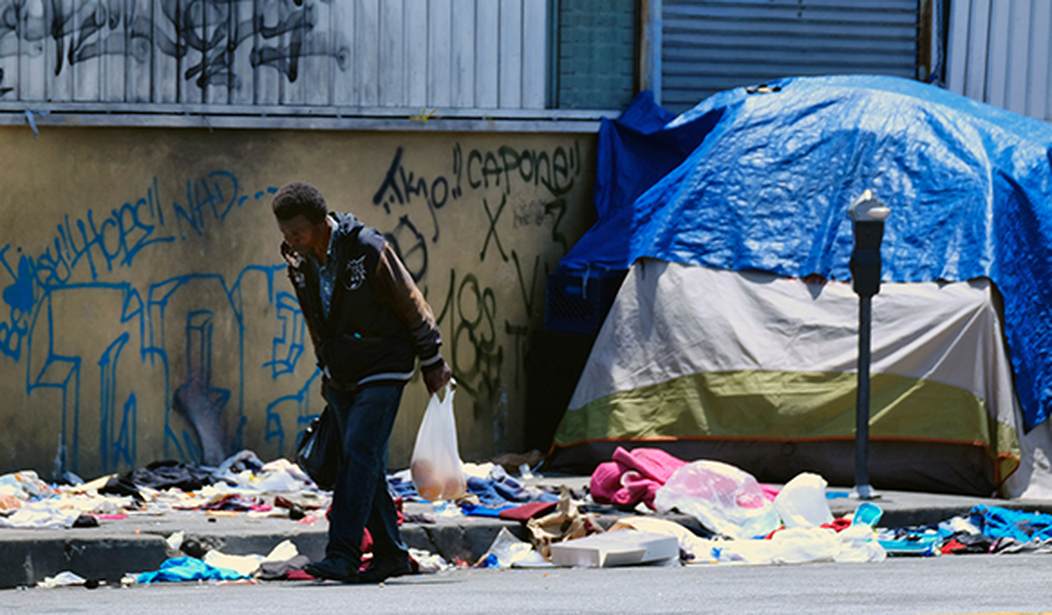
We could talk about subsidized homelessness, the normalization of drug sales and abuse, the filth, the decaying infrastructure, and the high prices and exorbitant taxes that do nothing but line the pockets of the already well-off and well-connected. Say what you will about Tammany Hall, but at least the old-school grifters cleaned up the streets before taking their cut.
But it's the exit — not the decline, but the vamoose — of LA's signature industry that augurs worse for the city.
What is Hollywood without the Hollywood?
And Another Thing: My apologies for the trite and obvious headline, but it's the best I could come up with for those two losers, even after sipping an extra cup of coffee over it.
Asking that question, I was immediately taken back to George MF Washington's Substack essay from earlier this year, titled "Seen The Lights Go Out On Sunset." After a lovely introductory discourse of Sunset Blvd.'s most storied (and most trafficked) eateries, George noted the toll taken by the city's decline:
Nowadays, even the most desirable tables at those famous eateries which still remain are available to walk-ups. And Le Dome, despite being featured prominently in Steve Martin’s pitch-perfect Hollywood satire “Bowfinger”, no longer exists. A few years ago a friend and former colleague who is now retired invited me out to lunch on The Strip. I hadn’t been to a lunch up on Sunset in years, and was surprised to find a parking spot on the street right outside our restaurant… a feat once unheard of in this magical place. The daytime tourist and Hollywood lunch crowds evaporated long ago, almost without anyone but the valets noticing.
George is a conservative (and safely anonymous) Hollywood screenwriter. I wonder sometimes how long he'll stick it out before joining the others enjoying a happy exile in Nashville. He could be neighbors someday with my old boss, PJ Media cofounder, and screenwriter, Roger L. Simon.
Roger, of course, saw the writing on the wall before most did, and left LA what must be a decade ago, probably longer.
The thing to understand about how Hollywood lost Hollywood is that these aren't the days of the old "studio system" when production was essentially vertically integrated in-house.
And Another Thing: We could also discuss the decline of the Los Angeles music industry, but that's only tangentially related. All I'll say today is that songwriting and production began sounding like AI slop before "AI slop" was even a thing — so why not outsource the industry to LLMs ASAP?
Yes, the studios front the money and (some) of the creative vision, but the days when a studio's entire dedicated production crew would wrap one film and start right up on the next are long over. Today, a movie production is probably best understood as a single-project startup company, hiring crewmembers, stuntmen, special effects companies, and all the rest on a practically ad-hoc basis.
Sure, there are favorites and longstanding relationships, but you can watch back-to-back $250 million MCU movies with almost entirely different credits at the end. And the credits on those things roll on interminably.
This production evolution led to hyper-mobility in terms of where to produce that I didn't fully comprehend until I came across this next item — and I might be the guy who coined "single-project startup" years ago to describe modern filmmaking.
This is courtesy of analyst Andrew Sharp:
Georgia, for example, was once a booming alternative to Hollywood in its own right, but its cost advantage disappeared as the workforce matured and local unions became more powerful. It also didn’t help that all stateside work was halted during 2023’s WGA and SAG-AFRTRA strikes; local production has still not come back from that deep freeze. Today, Georgia’s film industry is experiencing a steep decline and Disney has relocated all of its Marvel productions from Atlanta to the United Kingdom.
It isn't just LA, it's anywhere that produces filmed entertainment and becomes even the slightest bit ossified by regulation or hamstrung by costs. A single-project startup can materialize anywhere the tax breaks do. Or as Sharp further explained, "Productions have been moving to places like New Mexico, New Jersey, Texas, Canada, London, and more recently Hungary—all in search of friendly tax credits, lower wage scales, cheaper and more efficient permitting regimes," and more.
Old acquaintances of mine — a married couple — decamped Colorado for Georgia a decade ago to get work as extras, and they appeared in a bunch of stuff you've probably seen or certainly heard of. I wonder now if they can still get work there thanks to this blink-and-you-miss-it hyper-mobile industry.
And Another Thing: If there's an outlier, it's Netflix, which is probably better described as a tech firm rather than as a traditional studio — which explains the "content firehose" of its in-house productions. For streamers, quantity counts far more than quality. That's why I sometimes get excited about a movie trailer, right up until the Netflix logo pops up. I'm looking at you, War Machine.
The chief motivator, Sharp argued, "is that as IP [intellectual property] and talent have become more expensive in the face of surging content demands," the studios are forced to control costs elsewhere.
Georgia was "elsewhere." Now it's Hungary. Tomorrow it could be Timbuktu.
The lesson to take away is this: Hollywood's most valuable asset is the only thing in the world arguably more mobile than capital: intellectual property. You don't even need a bank account to store it. A human skull will do nicely.
And yet, Los Angeles in particular and Sacramento more generally chose to do pretty much everything in their power to encourage production to go elsewhere. Considering the network effects enjoyed by a century of studio production, all LA had to do was keep offering tax breaks, force some union concessions, and keep the regulatory boot off Hollywood's throat.
Now it's probably too late. Even if Mexico-born U.S. District Judge Araceli Martínez-Olguín, a Joe Biden appointee, should deign to allow the Paramount/Warner buyout to go through after next spring's antitrust trial, Paramount chief David Ellison now seems likely to relocate his studio out-of-state.
I mean, if I were him, I'd move just out of spite.
Hollywood and Los Angeles used to practically be synonyms. Now that Hollywood is globally dispersing, what is Los Angeles? Is it just millions of mostly tax-sucking residents, many of questionable legality, in search of the next great food truck?
That last line was perhaps needlessly cruel, but I honestly don't know what LA means any longer. And that comes from someone just old enough to remember when merely mentioning LA conjured visions of wealth, glamour, and something magical. Now it doesn't.
Needless to say, I don't have much hope for the city formerly known as "of angels."
New York, on the other hand, reminds me of what British economist and philosopher Adam Smith said about nations. A young friend of his, Sir John Sinclair, wrote to Smith in a panic following Burgoyne’s 1777 surrender at Saratoga during our Revolutionary War, "If we go on at this rate, the nation must be ruined."
Smith wrote back, “Be assured, my young friend, that there is a great deal of ruin in a nation.”
So it might prove with New York City, where despite themselves, the residents enjoy advantages that Los Angelenos do not.
Before we get to that, let me remind you that I've written about New York for as long as I've been blogging, going back to shortly after the 9/11 attacks. I've covered Rudy Giuliani's turnaround of a city that was broke, filthy, and riddled with violent crime. I've poked fun at Michael Bloomberg's dour Giuliani-lite approach to sucking the fun (and the sodas) out of the city without ruining everything. Then it was my sad duty to cover Bill de Blasio's "Welcome Back, Carter" administration, Eric Adams' doomed tenure, and now Mamdani's Islamo-Communism.
Having reminded you of it, please also let me dispense with any more history lessons so we can get right to the good stuff.
New York City survived the "Drop dead!" 1970s and the crime-and-corruption-ridden 1980s. There's a reason for that, and it wasn't just Giuliani and his "broken windows" police commish, William Bratton.
But believe me, I don't short the miracle those two pulled off.
Since we focused first on LA's signature industry, let's focus now on NYC's: finance.
Remember Citadel billionaire Ken Griffin's recent feud with Mamdani over Hizzallah's signature pied-à-terre tax — and Griffin getting doxxed by Gracie Mansion?
"The past few months have been a point of contention for the Citadel CEO and the young self-described democratic socialist mayor of the nation’s biggest city," Fortune reported earlier this month, "complete with video callouts and threats to remove Citadel’s funding of a major Midtown skyscraper."
Well, guess what? Despite his threats, Griffin caved. "According to a Tuesday morning earnings call from Vornado CEO Steven Roth, Citadel will carry forward with the 350 Park Avenue redevelopment after all," Fortune also reported, and Griffin's company is also "expected to remain involved in the project as a '60% partner.'" Roth called Citadel "our 1-million-square-foot anchor tenant." This, even after Griffin described Mamdani's behavior as "creepy" and "frightening."
A week later, they moved from "expected to remain involved" to "formally committed" to the project.
Griffin isn't exactly the kind of guy I usually root for, but Mamdani is exactly the kind of guy I root against. It was disappointing, to say the least, to read that Griffin didn't tell Mamdani to stick it up his gulag.
But why?
For that, let's go back to Sharp, who also noted that while Griffin personally relocated to Miami (presumably for tax reasons), Citadel "will remain rooted in Manhattan even as it expands its footprint in Florida."
It starts with network effects that are older and more durable than Hollywood's:
Just as AT&T became irreplaceable to customers as more people joined the Bell System in the early 20th century, or as Meta properties gained utility with each new friend who joined them 15 years ago, similar dynamics preserve the primacy of Wall Street. The more firms there are working in the finance industry in New York City, the more valuable it is for talent to be close by, and the more satellite services emerge to make everyone’s life easier. Likewise, the more painful it becomes to switch networks (aka “switching costs”).
"Talking to friends in finance, there are a few different factors in play," Sharp continued. "The first and most obvious is that talented employees are an asset unto themselves for firms like Citadel, and the fund risks bleeding talented people if it were to issue a top-down edict ordering those employees to uproot their lives and move to Miami."
Sharp explained there are little things like the East Coast's exclusive private schools and arguably more exclusive country clubs that Wall Street types demand. Miami has those, too, but not at the scale needed to move Citadel — much less all of Wall Street. But also remember that many of those people already relocated to Connecticut or New Jersey just as soon as they made it big. The younger Wall Street guys don't (yet) have that option.
LA is surrounded by nothing but just more Commiefornia. Leaving there means leaving. But you can commute to NYC.
It pains me to say this, but Mamdani and his comrades could loot New York for years and years before the city hurts as badly as LA does now. There's just so much more infrastructure — in terms of wealth, culture, social connectivity, and (seriously) shopping — still left to ruin.
If there's an irony here, it's that LA might — here's another big "might" — be able to reinvent itself as something other than Tinseltown. Back east, New York could probably stagger along for another couple of decades, much like the city did pre-Giuliani, before either mending its ways or going Full Detroit.
And if neither NYC nor LA can turn it around?
We still have Miami and, I dunno, Austin. If our two top cities can't reinvent themselves, there are always competitors willing and able to take their not-so-rightful places.
America's got this.
Last Thursday: What's in a Name, Virginia?