In order to form a new nation, America’s founding fathers and everyone who was with them had to first be part of an “old nation.” Almost 250 years later, we tend to take for granted that the America we know always was, but the Revolutionary War just made it official. That wasn’t the case.
The act of separating from the crown was an act of treason, even though America was a fiercely independent set of colonies with an ocean between them and Great Britain. You may already know this, but I had to mention it as a reminder and to provide context for a better understanding of what the Continental Congress was and the role that it played.
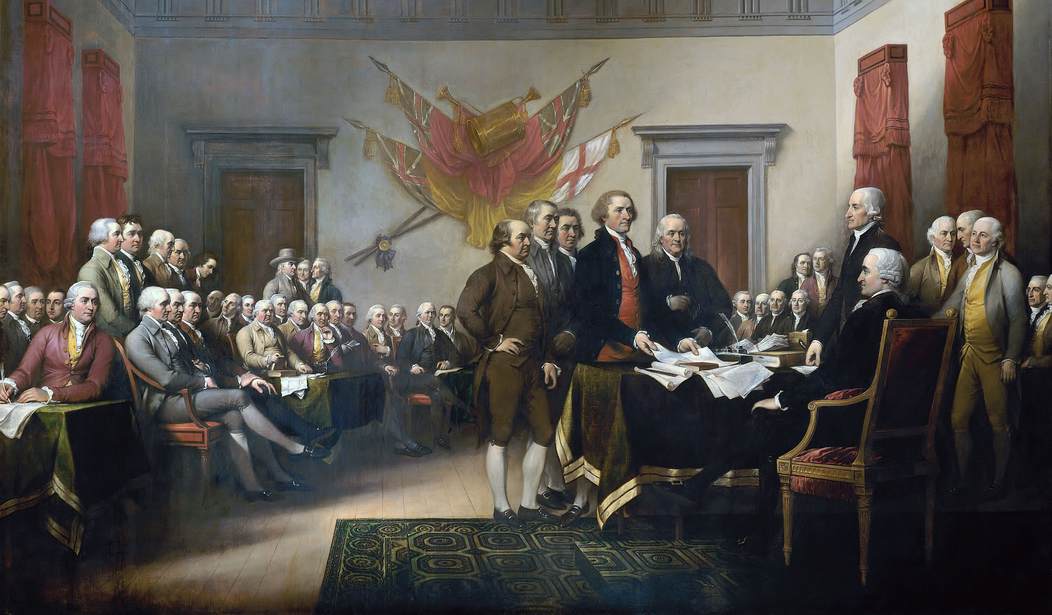
The independence-minded Americans formed the Continental Congress before they declared independence from the king. The First Continental Congress convened in 1774, and it served as the governing body of the colonies leading up to and during the war. Its purpose was to provide unified “national” leadership as part of the concerted resistance effort in America.
Delegates from 12 colonies traveled to Philadelphia in 1774 in response to the tightening British oppression over the colonies. In this convention, the First Continental Congress concluded and declared that American colonists should possess the same rights as British citizens. The Congress also decided to form the Continental Association, where trade with Great Britain would be suspended.
Domestically, the Congress sought to balance the interests of individual colonies while serving as the interlocutor with the British government and the crown. Once the revolution started, the Congress served as the national government of the burgeoning nation, and so it was charged with oversight of the war effort and with diplomacy.
One of the major triggering events for the formation of the Congress came in 1774 when the British Parliament enacted what were known as the Intolerable Acts. They were designed to end tensions in Boston by shutting down the port and implementing martial law. Instead of suppressing unrest, the Intolerable Acts had the opposite effect, fueling the colonists’ fervor to rid themselves of British rule.
The Sons of Liberty, a colonial protest group, organized a boycott, but there were issues. Merchants didn’t want to participate unless certain terms and conditions were in place to enforce the boycott. This all led the legislatures of the individual colonies to elect representatives to attend a “Continental Congress” to finalize details and terms for the boycott.
The group met in Philadelphia on Sept. 5, 1774. Delegates from each of the 13 colonies, with the exception of Georgia, were on hand. A little over a month later, on October 20, Congress adopted the Articles of Association. These maintained that the Intolerable Acts be repealed by Dec. 1, 1774. Otherwise, the colonies would boycott British goods. At the same time, the Articles detailed the workings of an embargo on exports. The Congress issued a deadline of Sept. 10, 1775.
On Oct. 26, Congress issued a petition that detailed their grievances, which was then submitted to King George III.
The colonists were realists. They didn’t expect the king to have a change of heart. They didn’t expect Great Britain to agree to their terms simply because they issued a piece of paper, or even because of a boycott. And so, members of the Continental Congress agreed to reconvene in Philadelphia on May 10, 1775.
The battles of Lexington and Concord happened on April 19, 1775, marking the start of the Revolutionary War, before the Continental Congress had the chance to reconvene. And so, with war already raging, the colonies sent delegates to the Second Continental Congress, which formed the Continental Army under the command of Gen. George Washington.
At the same time, Congress authorized what was dubbed the Olive Branch Petition, which was intended to find a way to address and resolve any disputes between the Americans and the crown. King George III refused to accept the petition when it arrived on July 8.
That was the point at which the Continental Congress became the unofficial but acting government of the American colonies. This was beyond the authority delegated to it by the individual colonial legislatures, but still, the colonists realized that with a war going on, and the movement for full independence from Great Britain underway, they needed a national government.
The Second Continental Congress met through March 1, 1781. It served as the national government until 1781, when the Articles of Confederation established a permanent, formal government for the United States of America.
Key members of the Continental Congress included George Washington, a delegate from Virginia and the commander in chief of the Continental Army. Other delegates from Virginia were Thomas Jefferson, Patrick Henry, and Richard Henry Lee. Massachusetts delegates included John Adams, Samuel Adams, and John Hancock. Alexander Hamilton was one of the key delegates who represented New York. Benjamin Franklin was among the Pennsylvania delegation. John Rutledge and Edward Rutledge were two of the South Carolina delegation. Key delegates from Maryland were Charles Carroll and Samuel Chase. Caesar Rodney represented Delaware. And Button Gwinnett from Georgia represented what was, at the time, America’s smallest and newest colony.
These were some of the men who risked their lives to lead a new country’s government, hash out all of the most difficult issues, oversee a war effort and the creation of a new national governing infrastructure, and conduct diplomacy with nations around the world. No small feat. As a testament to their success, they not only created a new nation but also the nation they founded, which placed freedoms and human rights above all else and unleashed human potential in a way never before seen. What they created has changed the world.