
Y’know, for a state that’s home to Silicon Valley, California’s electoral process is absurdly low-tech. There’s probably been more headlines about its slower-than-molasses ballot-counting than anything else:
USA Today (June 6): California Ballot Counting Continues After Bacerra Advances
New York Times (June 6): Deluged With Mail Ballots, California Takes Its Time Counting Votes Again
Washington Post (June 6): Why California Is Taking So Long to Count Votes in Key Primary Races
Fox News (June 6): California Ballots STILL ARRIVING as Counting Drags On
BBC (June 5): California Elections: Results in Los Angeles Are Slow, But That’s Expected
Los Angeles Times (June 5): Millions of Ballots Still Need to Be Counted in California
Los Angeles Times (June 5): California Voters Want to Know Who Won Elections. The Wait Can Be ‘Frustrating, Even Annoying’
CBS News (June 4): Why Does It Takes So Long to Count Votes in California?
CNN (June 3): Why the Count Will Go on in California
ABC News (June 3): Why It Takes Days or Even Weeks for California to Count Votes
The Hill (June 2): California Primary Vote Count Could Take Days or Even Weeks — Here’s Why
Los Angeles Times (June 2): Vote Count for California Governor, L.A. Mayor Could Be Painfully Slow
So who’s gonna advance from California’s never-ending jungle primary?
On the gubernatorial side, it looks like Democrat Xavier Bacerra will grab the top spot. Initial frontrunner, Republican Steve Hilton, was in the lead for a short while, but as new votes (endlessly) trickled in, he fell to second place — and if ballots continue to miraculously appear, he could fall to third: Billionaire Democrat Tom Steyer now trails Hilton by less than 5 points.
In Los Angeles’ mayoral race, the pro-teeth candidate, incumbent Karen Bass, grabbed the brass ring and looks likely to advance. For a while, Republican Spencer Pratt was firmly in second place, but the endless deluge of late-arriving ballots has whittled his lead to just 1% over far-left L.A. City Councilwoman Nithya Raman. With even more ballots sure to arrive, Pratt’s chances of advancing have plummeted. His goose, it seems, is cooked.
What does this mean for the 2026 candidates?
This, of course, is the easiest riddle to unravel: It means the Republicans are in a world of hurt.
If Hilton advances, he’ll need AT LEAST a double-digit lead on Election Night to have a chance. Otherwise, the endless onslaught of slow-moving ballots will be too much to overcome.
It calls to mind Joseph Stalin’s classic quote, “Those who vote decide nothing. Those who count the vote decide everything.”
What does this mean for California’s voters?
The Democratic Party and the mainstream media will try to spin the bug into a feature: “Sure, the ballot-counting takes a while — but that’s a good thing, ‘cause it means we’re sticklers for accuracy!”
That was the argument by The Guardian (June 6): “Trump Cries ‘Steal’ Over Slow California Vote Count, but Anti-Fraud System Works, Say Experts.”
California’s slow vote counting has frustrated political observers eagerly awaiting results, and handed Donald Trump and others an opportunity to claim “election rigging”. But experts say the system is working as designed: to protect against fraud and assure every vote is counted.
[…]
“There’s not a lot of people I know who would say: ‘Nah, I would rather have known who won the race faster than have my vote count,’” said Paul Mitchell, vice-president of the voter data firm Political Data Inc. “So what’s the rush? The focus should be making voting as easy as possible.”
“The only people who complain about it are the people who lose,” Mitchell added. “The conspiracy around it is really a conservative thing.” [emphasis added]
Well, yeah: People who benefit from cheating don’t usually complain about it. Given that there’s not a single example of a Republican’s numbers improving when a Blue State takes weeks to “count and recount” the ballots, you can understand why conservatives have side-eyed the process.
Does this mean the Democrats are cheating?
There’s almost certainly some cheating going on. When millions of people vote, it’s probably inevitable.
Whether or not it’s enough to swing an election is unknown. Maybe, maybe not. Cheating stats are impossible to prove, because — by definition — the people who got away with cheating didn’t get caught.
But in a way, it doesn’t matter, because the government has a vested interest in promoting public confidence in its voting process. (That’s actually something the Supreme Court considers when reviewing election law.) Fraud itself is obviously a problem, but so is the appearance of fraud.
And here, the government of California has failed: There’s clearly the appearance of fraud.
What does this mean for the presidential aspirations of Gov. Gavin Newsom (D-Calif.)?
In the Democratic primaries, it means absolutely nothing. For liberal voters, any election that ends with a Democrat winning was a good one. (And completely fair, too!) That’s the most probable outcome of both the gubernatorial race and the mayoral race.
But if Newsom wins his party’s nomination, the appearance of corrupt, rigged elections will 100% hurt him in November. There are only a handful of high-profile government functions, and running competent elections is at the top of the list: If Alabama, West Virginia, and rural Kentucky could figure out how to do it, why couldn’t hi-tech California?
You get make this up
— Wall Street Apes (@WallStreetApes) June 5, 2026
Los Angeles County ballot processing center says actually they aren’t taking a long time to count ballots, they say “We're ahead of the pace that we've been in past elections”
- India took 24 hours to count 640M ballots
- Brazil took 2 hours to count 124M… pic.twitter.com/E2hKIccZEv
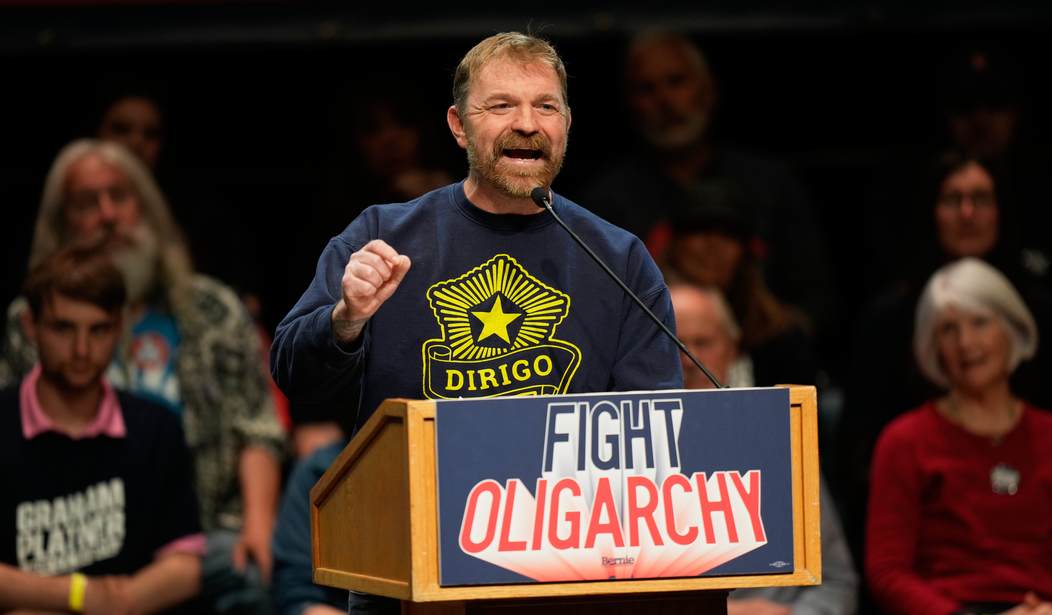
California is always good for a few chuckles, but the nation’s most-watched primary battle will be this Tuesday in Maine, where beleaguered Democrat Graham Platner will either lock up his party’s senatorial nomination and reclaim his mantle as the darling of radical leftists — or his upstart candidacy will crash and burn.
Spoiler alert: He’s not gonna crash and burn.
PRediction: Graham Platner will cruise to victory in Maine. He’ll win by a comfortable margin, too. Despite the uproar over his Nazi tattoo, domestic violence, checkered past, and (numerous) personal picadilloes, the predictive market barely budged. He’s still the heavy favorite.
In fact, one day after the New York Times’ exposé, he raised $200K:
Platner campaign says it's raised $200k "since the publication of the New York Times article," a quarter of it from first-time donors.
— David Weigel (@daveweigel) June 6, 2026
"The people of Maine know what's on the ballot Tuesday: not Graham Platner's past, but whether their voice in the Senate works for them." https://t.co/Cjz6B08gDz
PRojection: The question then is, how does Platner leverage Tuesday’s victory to put these scandals in the rearview mirror and position himself for the general election?
Simple. Look for him to do a combination of the following:
- Point to his margin of victory and claim that “the people have rejected these smears and lies” and therefore he doesn’t need to address ‘em anymore.
- Make overcoming the New York Times’ hit piece part of his brand: “They tried everything they could to destroy me, but I’m still here!” (He’s such a fighter!)
- Turn these liabilities into an asset: Yes, he’s an “imperfect vessel” — but if the Democrats really, truly want to stop the Evil Orange Man, they’ll need a tough-nosed street fighter like Platner. (It’s his imperfections, you see, that make him so perfect.)
Will that be enough for the Totenkopf-tatted candidate to goose-step to victory in November? Time will tell. And a lot will depend on liberal women.
If high-profile female Democrats abandon him en masse — the AOCs, Elizabeth Warrens, and Kamala Harrises — then Platner is dead in the water. A Democrat cannot win if female voters are demotivated. (Besides, as a white, hetero male, Platner is especially vulnerable to the rebuke of Democrat women.)
But I don’t think that will happen. For their own reasons, Harris, AOC, and Warren would be ill-served by getting on the wrong side of their party’s left-wing base.
They can’t become president without being the darling of the left.
PRaise: To all the brave women who put their reputations on the line to tell the truth about Graham Platner. Some of them, like Lyndsey Fifield, now regret it:
I bucked all advice from my friends (and resisted my conservative bias) and decided to fully trust the Times journalists.
As they left my home they asked that I not talk to any other outlets and I insisted then and repeatedly over the following weeks that I would keep my word and only share this story with them.
But then the weeks dragged on. They kept coming back to us saying the editors needed more. I needed to go on the record (okay). We need more screenshots (okay). I met every bench mark they set, eager to provide more sources or evidence as needed.
After the story went up I began to ask them … wait, where are the stories from the other women? Where are their accusations of sexual assault? Why am I the focus? Why are there 11 paragraphs dedicated to detailing my work history (more than has been published about Graham’s by far)?
Why does it say “nobody could corroborate” when I offered them sources that COULD corroborate?
Why did they include an out of context quote from a friend joking “do not call Graham” after I called off my wedding? (Because she knew I would never).
Where were the screenshots they’d said they would use? Or the mention that I’d supported local democrats and that most of my family (and husband) are liberal?
The editors said it was too much, they explained.
The Times also failed to include any mention that I DID confide in multiple friends through the years that Graham had been abusive — long before he was running for office. Those friends confirm they told the Times so.
It dawned on me that this really was a set up all along. The journalists I trusted who convinced me to share a story I never wanted to tell methodically delayed and twisted this into a gift to the Platner campaign. Violating the trust of his victims. Shattering the trust I placed in them with the most vulnerable story of my life.
And at the end of my call with them I reluctantly accepted their insistence that this was still a powerful story and that I had done a brave thing. And I thanked them for all the hard work they had put into it.
Still fawning after all these years.
—Lyndsey Fifield
If Ms. Fifield has evidence that the New York Times left on the cutting room floor, there’s still time to get it out. (Shoot me a message, Lyndsey. I’ll do it right here on PJ Media!)
I know she’s disappointed by what was omitted, but the upside is that those omissions have elevated interest in her story. (In just 48 hours, her June 5 X post has over 2 million views.) It’s a little contradictory, but a smart PR pro could spin the Times’ omissions into something that generates MORE interest, not less.
Don’t you want to hear the story that the New York Times was “too afraid” to tell?
I do. So do millions of Americans… along with the 1.4 million Mainers.
PRedator: For the second week in a row, I’m giving this one to me. I screwed up by not clarifying what I meant by “Mormon Mafia” in yesterday’s story about the Legos/Bricks & Minifigs controversy.
Intriguingly, two of my most viral stories over the last 30 days were about Legos and Andre the Giant. Kind of wild, since 95% of PJ Media’s content is rooted in politics — but the cool thing about our site is that the readers decide what’s popular and what isn’t. Not the writers and not the editors.
It’s ALL driven by fan interest.
(Which means, of course, that if the Lego company ever makes an Andre the Giant Lego set, you can bet your bippy I’m gonna write about it! Andre + Legos = Ratings Gold.)
Back to our story: YouTuber “Reckless Ben” (a.k.a. Ben Schneider) uploaded hours of content about Bricks & Minifigs, the Utah police, a missing Star Wars Legos set, and more. It’s such a weird, complicated, convoluted story, it was next to impossible to delve into every detail.
For example, I didn’t mention that Schneider had already taken Bricks & Minifigs to small claims court — and won. (Unfortunately, the Bricks & Minifigs store retaliated by closing its doors and refusing to reimburse the Mansell family.) That was an important fact, but I chose to concentrate more on the (alleged) harassment of Utah’s American Fork Police Department.
Similarly, I under-explained what I meant by “Mormon Mafia.” That led to plenty of hurt feelings in the comments, which wasn’t my intent. Apologies to anyone who was offended, especially Mormon readers and families. (I’m not Mormon, but all the Mormons I’ve ever met have been wonderful, kindhearted people.)
If I had a do-over, I would’ve explained that in Schneider’s videos, HE alleged that he was being victimized because he wasn’t a Mormon — and he filmed himself Googling the policemen who arrested him and discovering that they were all members of the same (Mormon) church. It’s why HE believes they conspired to arrest and harass him — and why they protected the (Mormon) man that Schneider was attempting to serve legal papers to.
Schneider’s videos led to the hashtag #MormonMafia trending on X and online:
'Mormon Mafia' Conspiracy Trends Online After YouTuber Investigating $200,000 Lego Collection Dispute Flees To Mexico Following Arrest: https://t.co/TkLRG6d3ip
— Kotaku (@Kotaku) June 1, 2026
There’s a chance Schneider’s videos were deceptively edited. But if they weren’t, the bias of Utah’s American Fork Police Department was jaw-dropping. Their tactics were extraordinarily abnormal.
I couldn’t believe they were doing this kind of stuff on camera!
But either way, I should’ve clarified that “Mormon Mafia” was Schneider’s editorializing, not something I assumed simply because this story took place in Utah. I failed to make that clear.
I promise I’ll do better next time.