
The State Department overwhelmingly announces sanctions during the week rather than over the weekend. Exceptions might be made if it's an urgent or operational matter and, occasionally, when it's something symbolic or that carries a blatant message to the intended target.
On Saturday, April 18, Secretary of State Marco Rubio did something that fell into the latter category.
Over the weekend, the State Department announced that "the Trump Administration is designating [NIcaragua's] Vice Minister of the Interior, Luis Roberto Cañas Novoa, under Section 7031(c) for his involvement in gross violations of human rights."
Why that date? Eight years ago on April 18, "the Rosario Murillo and Daniel Ortega dictatorship unleashed a brutal wave of repression against Nicaraguans who courageously stood against the regime’s increased tyranny, corruption, and abuse." The Donald Trump administration wanted to mark the occasion and remember the hundreds of people who died during the 2018 protests in Nicaragua — and send the regime a message.
Here's what happened:
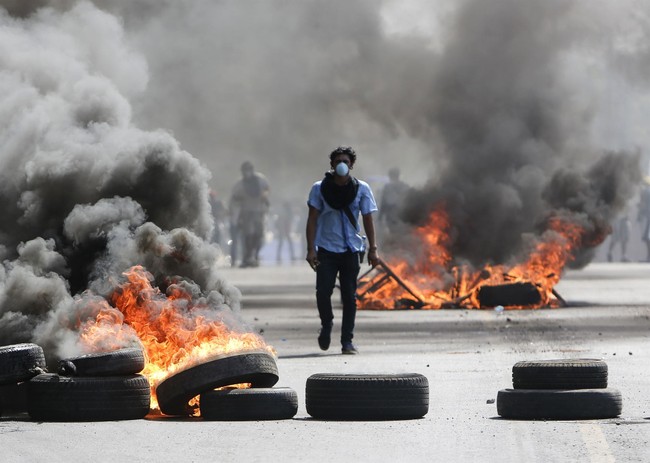
In mid-April of 2018, the regime announced some changes to taxes and social security, including a 5% cut to pensions and an increase in income taxes. Unrest was already on the rise in Nicaragua. The opposition had been growing in recent years, but earlier that month, a fire broke out in the highly protected Indio Maíz Biological Reserve. The government's response was inadequate, and people were furious. So, things were already heated when the financial hits were announced. Thousands of Nicaraguans took to the streets in Managua and a handful of other cities to protest — many were senior citizens and high school and university students.
But here's the thing: You don't actually get to go out in the streets and protest "no kings" in Nicaragua, where you have a man who literally behaves like a king, only worse.
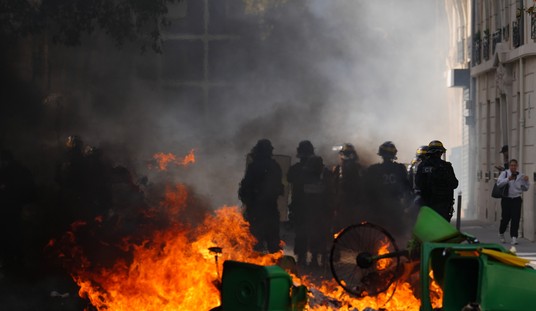
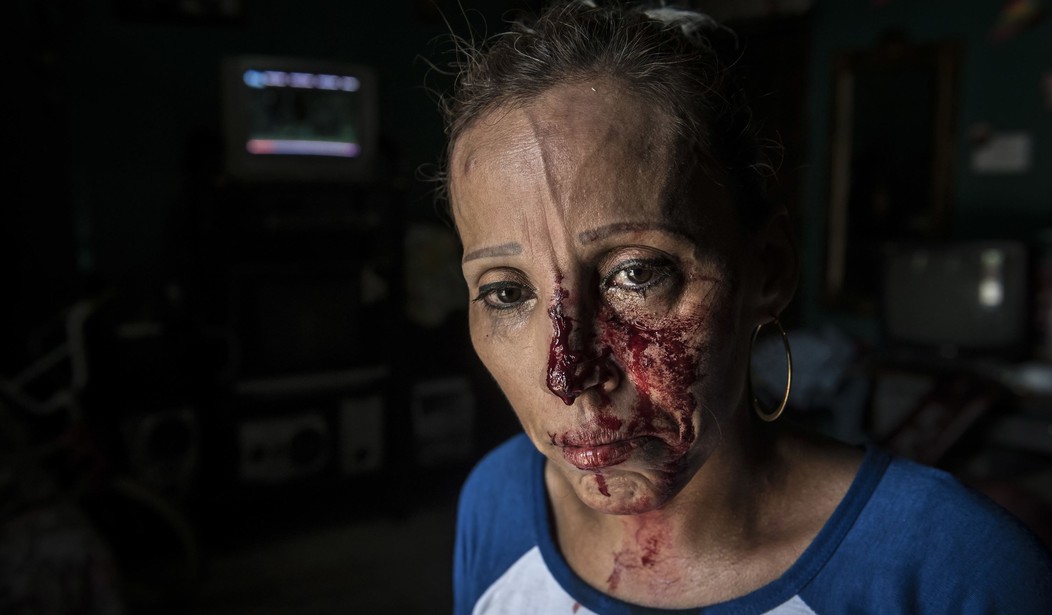
The regime mocked the protesters, referred to them as "aggressors," and turned its forces on them. National police and armed parapolice groups, like the Sandinista Youth, responded with roadblocks, barricades, snipers, and live ammunition. Numerous protesters were shot in the head, neck, and chest, proving an intent to kill, according to human rights organizations like Amnesty International. Those who were wounded were denied medical care. International groups were not allowed to investigate, and independent journalists were censored.
The first known casualty of the repression was Richard Pavón. He was only 17 years old. Another one of the first to die was 15-year-old Álvaro Conrado. He was denied medical care. This is his casket:
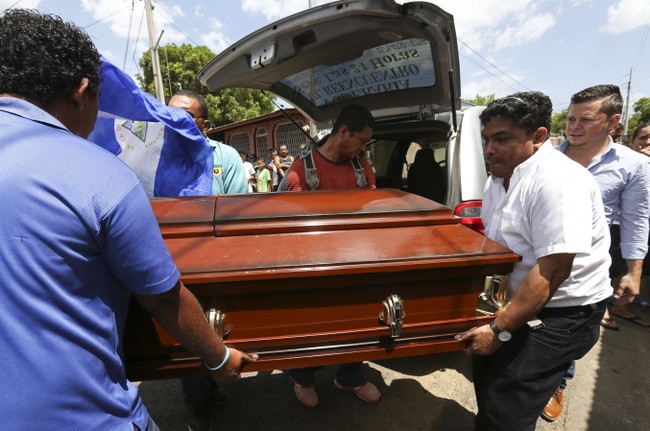
Over the next few months, over 325 people were murdered (some say many more than that, but that's the State Department's estimate), hundreds were detained, and thousands were wounded. Over 52,000 were exiled to other countries by December. In the years that followed, hundreds of thousands more fled.
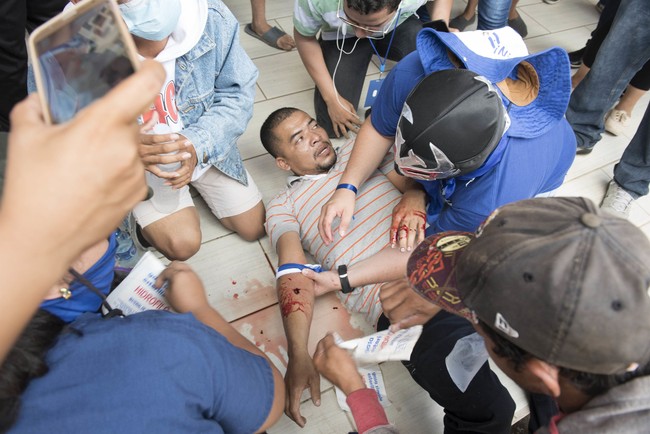
Here's more from the State Department on the regime's response:
Beginning in August the Ortega government instituted a policy of “exile, jail, or death” for anyone perceived as opposition, amended terrorism laws to include prodemocracy activities, and used the justice system to characterize civil society actors as terrorists, assassins, and coup-mongers.
Human rights deteriorated markedly during the year. Issues included reports of unlawful or arbitrary killings committed by the government or its agents; forced disappearance by parapolice forces; torture; physical abuse, including rape, by government officials; and arbitrary arrest and detention. There were harsh and life-threatening prison conditions; political prisoners; arbitrary and unlawful interference with privacy; arrests of journalists, censorship, site blocking, and criminal libel; and substantial interference with the rights of peaceful assembly and freedom of association, including attacks on the Roman Catholic Church and Church officials.
So, why sanction Luis Roberto Cañas Novoa? He's the regime's guy who oversees national police, prisons, internal security, and much of the repressive apparatus. He's a high-level official who's been an essential part of the regime for at least a decade. UN documents suggest he "relayed orders affecting the release of opponents, nonprofit organizations and freedom of movement, and linked him to the reported discriminatory treatment of political prisoners and expulsions carried out with police coordination."
The Trump Administration continues to hold the Murillo-Ortega dictatorship accountable for brutal human rights violations against Nicaraguans. I’m designating Nicaraguan Vice Minister of the Interior Luis Roberto Cañas Novoa for his role in human rights violations.
— Secretary Marco Rubio (@SecRubio) April 18, 2026
A lot of people are also asking: why do it now, if all of this occurred eight years ago? Well, this isn't the first strike and probably won't be the last. It doesn't get much media attention, but the Trump administration is quietly ramping up pressure on the Ortega-Murillo regime, dropping numerous sanctions in just 2026 alone.
We've been watching the dismantling of the dictatorship in Venezuela over the last few months. It appears that we're about to watch the dismantling of the one in Cuba. Many of you ask me: what about Nicaragua? That's why I often call it the "forgotten dictatorship" because it doesn't get the attention the other two do, even though it's so bad that it's often compared to North Korea.
While I don't know if Trump and Rubio have any specific plans for the country beyond this type of pressure, I know our current foreign policy is to do everything we can to stand up to socialism and tyranny within the Western Hemisphere to keep our region safe and our adversaries at bay. Without a diplomatic relationship with Venezuela and Cuba, the Ortega-Murillo regime is largely isolated in our region, and as the people who were brave enough to stand up and try to fight six years ago watch the liberation of other countries, they may very well feel empowered to do it again, knowing the United States is on their side.
We'll see what happens, but all I can say is that we're living through a fascinating moment in world history.
Related: The Forgotten Dictatorship: Ortega-Murillo's War on Faith