
One of the most common questions from y'all when I write about Latin America is "What about Nicaragua"?
Well, first of all, when I do write about Nicaragua — and I have occasionally — most of you don't seem as interested, and I am paid partially on the performance of my articles, so there's that. But there's also the fact that Nicaragua doesn't exactly lend itself to being a hot topic for the media.
For starters, it's not as sexy internationally as Venezuela with its oil, or Cuba with its decades of accumulation of revolution and Cold War-era geopolitical headlines. It's smaller, less populated, and its economic decline hasn't been as dramatic as its two amigos in Latin America. Plus, it doesn't have the same type of cohesive exile communities that the Cuban and Venezuelan people have created in the United States and beyond. Those folks bring a lot of attention to their homelands — that's actually how I get a great deal of my information.
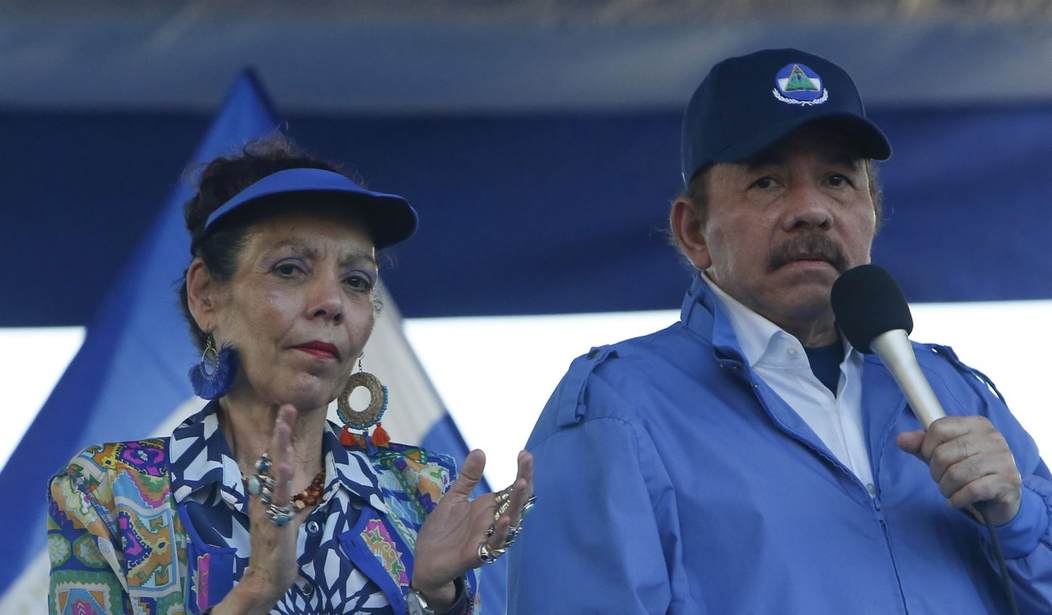
There's also the fact that the Daniel Ortega-Rosario Murillo regime runs a tight ship. There's a reason many people call it the "Tropical North Korea." The police state prevents a lot information from getting out, thanks to constant surveillance, informers, and self-censorship. There is virtually no independent media inside the country — all journalists fled, and many who report on their home country still do so without a byline.
Here's something from The Economist from February:
Even by the standards of Latin American autocracies, it feels tense in Managua, the capital. Any political talk is hushed for fear that informers may be hovering. Television stations spout propaganda, religion or bland entertainment. Church sermons are hollow. Rubbish lines the road, the smell of its incineration hanging in the air. 'This is a ship sinking more every year because there is no change—just [the regime's] twisted ideas,' says a resident. In 2025 the United Nations estimated that nearly a fifth of the population was hungry. The regime expelled UN representatives in response.
One way it does this is by cracking down on religion.
I've written a little bit about this before, especially last year, and I think my colleague Catherine Salgado did too, but things have gotten worse since 2025. Just this week, Christian Solidarity Worldwide (CSW) released a report called "No Respite: Another Year of Increasing Repression in Nicaragua," which found "the government has increasingly imposed measures on religious leaders requiring them to make weekly reports to local police stations and seek permission from the authorities for a range of activities, amid continued, egregious and widespread violations of freedom of religion or belief (FoRB)."
It states that FoRB cases were up to 309 from 2024's 222. Here's more:
Most cases involved multiple FoRB violations and many affected large numbers of people, with the report also emphasising that a significant percentage of violations likely goes unreported due to the climate of fear created by the government of Daniel Ortega and his wife Rosario Murillo.
In addition to the increased imposition of so-called ‘precautionary measures’ on religious leaders, the report details how the government has continued to prohibit public religious activities, to monitor activities inside religious buildings, to arbitrarily detain religious leaders and members of religion or belief communities, and to forcibly cancel the legal status of hundreds of independent civil society organisations, including religious institutions.
Meanwhile, in an attempt to create an illusion of general respect for FoRB, the government co-opted some religious festivals and traditions, and exempted some groups aligned with and supportive of the government from prohibitions on religious activities in public.
The report contains specific stories of harassment of religious communities and individuals. For example, a Roman Catholic church held celebration for All Souls Day back in November. Uniformed riot police stationed themselves outside the building, while plainclothes officers went inside to monitor the information being shared via prayers and sermons. In May, three 16-year-old girls were arbitrarily arrested while walking to church for Mass "for spreading hatred and inciting violence."
"Religious leaders of all types reported regularly receiving verbal orders from security officers not to mention specific subjects including political prisoners, Israel, and the general situation in Nicaragua in any of their public discourse and not to use the combination of the colours blue and white (the colours of the Nicaraguan flag) in any decorations or other materials," the report says.
There are countless other stories of widows barred from mourning their husbands' graves at cemeteries, religious leaders beaten or detained as political prisoners, an entire denomination (the Association of Independent Fundamentalist Baptist) stripped of its legal status, and the restriction of Bibles and any type of religious books or literature from entering the country. I actually wrote about that back in December.
Related: When You Can't Bring Your Bible Over the Border
So, why is the regime so hyper-focused on religion? The simplest answer is that Ortega and his wife see it as a threat to their total authority. Ortega, in particular, has a long history of beefing with the Catholic Church that dates back to the 1970s. In the early 2000s, he had a bit of a change of heart and actually became Catholic himself, but any goodwill he had toward the church disappeared when, during the infamous anti-government protests of 2018, the church stood on the side of the protesters and offered them a safe haven and attempted mediation. Initially, the regime only went after the Catholics, but in recent years, it has increasingly gone after Protestants, as well.
This year's Semana Santa, or Holy Week. is living proof of all of this. If you've ever been in Latin America this time of year, you know that it's probably one of the biggest and most important celebrations of the year. Public parades, processions, and other events are held in every city, but in Nicaragua in 2026, the streets and sidewalks are quiet, as these events have largely been banned.
Actually, as I'm writing this, it's breaking on X that all Holy Week activities have been banned in Nicaragua, and Ortega has 14,000 "security agents" seeing to it that it happens.
Deputy Secretary of State Christopher Landau posted about it on X:
Semana Santa, or Holy Week, is a sacred time for families all over the world, including my own. Throughout Latin America, people gather on city streets to profess their faith and mark the Passion. But once again this year, the Ortega-Murillo dictatorship is denying the people of… pic.twitter.com/PIwLcz7FVH
— Christopher Landau (@DeputySecState) March 31, 2026
According to exiled Nicaraguan researcher Martha Patricia Molina, "authorities will prohibit 5,726 religious processions during Lent in 2026," across 409 parishes.
And that's just how the regime controls the church. Apply that to almost every other aspect of life, and that's Nicaragua.
So, when and how does it end? I have no idea. Venezuela was easy for me to predict. Cuba is somewhat easy. Nicaragua is more of a puzzle. But there are some potential indicators. Many smart people, including Venezuelan opposition leader and Nobel Peace Prize winner María Corina Machado, believe that if the Venezuelan regime falls (happening now) and the Cuban regime falls (happening soon), Nicaragua could and would be next.
While Nicaragua didn't rely on those regimes for much economically in recent years, it did diplomatically. Without them, it's extremely isolated in this part of the world, so that's one factor.
There's also what Machado calls the "momentum." If the people of Nicaragua, both inside and outside the country, watch this wave of change that has come to the Americas over the past year or two, and especially if they see the other big dictatorships falling, it's going to build morale and show that anything is possible at this moment in history. There could be a new uprising.
A liberated Venezuela and eventually Cuba would free up a lot of State Department bandwidth here in the United States, too, which could lead to more intensified targeting in the way of sanctions, trade restrictions, and general isolation. I mean, who knows? Given how things have gone, Donald Trump might just get bored one day and decide Nicaragua is next at this point. I'm just saying...
There's also the fact that Ortega is 80 years old. He's not going to be around forever, and rumor has it that he is in poor health and dealing with kidney failure and other conditions. The regime has attempted to prepare for the day he dies by consolidating power around his family. That's why his wife, Murillo, went from vice president to "co-president," and they changed the constitution to extend presidential terms and give the executive branch more power, among other things. She's 74. But between them, the couple has numerous children (the exact count isn't clear), most of whom are involved in the family dictatorship. One of their sons is said to be the likely heir to the throne when Murillo is gone... assuming they get to that point without disruption.