
A couple of weeks ago, I was doing some decluttering in my kitchen, and I ran across a bag of refrigerator magnets. These weren't just any old refrigerator magnets. They were magnets my mother and grandparents had accumulated over the years — the ones that adorned the refrigerators of my childhood.
The blue wooden cat that my mom made herself. The I Love Lucy one I'd brought her back from a trip to Los Angeles. The little green Christmas bear that looked like something plucked straight out of the 1980s. Half the paint has chipped away, but I remember playing with it as a child. The one with a little image of a fat guy and the phrase "do you really need it" that my grandmother hung, no doubt, to help her stay on one of the many diets she tried.
I started to put them back into the junk drawer where they'd somehow ended up, but then I stopped and asked myself why. Why am I keeping decades-old magnets that I will never use? So I pulled the bag out of the drawer and tossed it in the trash.
It sounds small, but it was the most liberating feeling.
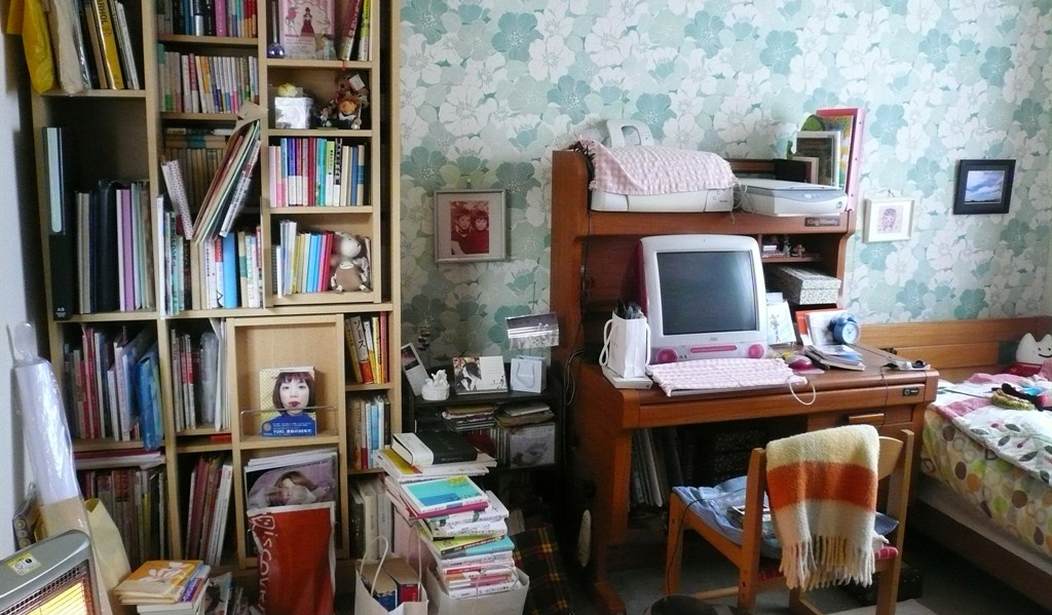
The thing is, I'm in the midst of a big undertaking — cleaning out generations of stuff. Multiple houses and a few storage buildings' worth. I've got a lot of my grandparents' stuff, as well as all my mom's stuff, which is a lot because she was a borderline hoarder. As a matter of fact, just before she died, she bought out my neighbor's estate sale — many truckloads worth of stuff — and I've got most of that to go through too.
I have a friend who is doing something similar, though not quite on as grand a scale. Her parents both died in recent years, and her sister/roommate just got married. She's downsizing into a smaller home and is left with generations of stuff. "I threw away everything... pictures, yearbooks," she told me last night.
Yearbooks? "You threw away yearbooks?" I responded. I was shocked. Shocked! But also a bit envious. I've got a yearbook from all 13 years of my public schooling, and I can't tell you when I last looked at one. They just sit on shelves or in boxes and add to my load whenever I move into a new home.
The idea of throwing mine away was downright thrilling. I'll probably never look at one again, and yet, I can't do it.
Apparently, there are two major psychological reasons behind why decluttering can be difficult. The first is our need for "safety, security, and stability," according to social scientist Dr. Frank Niles. He gives an example that I can relate to quite a bit. The old "what if I need this again in the future?" guilt trip.
You buy some little gadget, use it once, and then it just sits in your basement or in a closet for a decade. You refuse to get rid of it because if the need arises one day, you know you'll have it handy.
The second reason is nostalgia. An item might remind us of a different time in our lives — hello, refrigerator magnets from my childhood — and take us back to those days. Our brains are, apparently, hardwired to think that the past was always better than the present. I guess that's where the phrase "the good old days" comes from. Niles says that when we feel bad, looking back at pictures or other items that remind us of a fun trip or a particularly happy part of our childhood can make us feel good.
So how do we get past it? The blog Nourishing Minimalism suggests starting with baby steps. Instead of tackling your whole house or even a whole room, pick a drawer. And more importantly, don't start on another decluttering project until you finish that drawer. For more sentimental items, it suggests taking a picture but getting rid of the actual item. Or if you have several sentimental items, try to narrow them down to one or keep a single "maybe box" that you can revisit later when your mindset is better. It also suggests saving sentimental stuff for last when decluttering a large space.
Apartment Therapy also has some tips for changing your mindset. It suggests asking yourself a few questions when you're decluttering and feel like you aren't sure whether you can part with something:
- Can you preserve the memory in another way (like taking a photo)?
- Could someone else use it? A friend? A relative? Someone less fortunate? Would it make you happy to give it away?
- Is it stopping you from making new memories or having new experiences?
I really like number three a lot because it's something I can relate to. A few years ago, when I took my first trip to Costa Rica, I came home and found that it was much easier to get rid of things. Something about that first trip changed my mindset about owning so much stuff and living a simpler life. Plus, I often feel like all of this stuff I have, most of which didn't even belong to me in the first place, is kind of holding me back from living my life. How many times have I opted to spend my evenings cleaning when I could go do something else? I feel like I have a constant project sitting on my shoulders, and I don't want to live that way anymore. That's helped me get rid of a lot without regret.
Our brains may think of the past as better than the present much of the time, but if we can convince them that the future could be even better, it could make all of this even easier. That said, I'm still not ready to part with my yearbooks. Yet.