
Earlier this week, my colleague Catherine Salgado asked our readers not to forget about persecuted Christians around the world.
One of the many countries she mentioned was Nicaragua. When it comes to Latin American dictatorships, we talk a lot about Venezuela and Cuba lately, but Nicaragua, the third amigo of tyranny, doesn't usually come up in the conversation. While the other countries are making all the headlines, Nicaragua is quietly growing more repressive, and Christian persecution is a major aspect of that.
President Daniel Ortega and his wife, Vice President Rosario Murillo, began a big crackdown on Christianity, particularly the Catholic Church, in 2018 after anti-government protests erupted across the country. In a place where the government stopped protecting human rights to serve its own interests, religious leaders and their institutions sought to pick up the slack. In return, the regime begin arresting clergy and charging them with offenses such as "conspiracy" or "spreading false news." It also twists laws meant for combatting terrorism and money laundering and uses them arbitrarily to carry out this agenda.
Related: Do Not Forget Persecuted Christians This Christmas
In July 2024, Christopher Hernandez-Roy, a senior fellow and deputy director of the Americas Program at the Center for Strategic and International Studies (CSIS), testified before Congress about the deterioration of religious freedom in the Central American country. He said they "are having a profound effect on Nicaraguan society, and the persecution of members of the clergy of different faiths along with severe limits to the ability of the faithful to worship are only getting worse as the Ortega-Murillo dictatorship descends into totalitarianism."
In addition to arresting individual leaders, the regime has forced nuns and bishops to leave the country, shut down countless religious institutions, confiscated property belonging to those institutions, and banned many religious gatherings. According to Hernandez-Roy, "Ortega has come to view any unsanctioned assembly as a potential threat to his domination of Nicaraguan civil society." Here's more:
In 2023 and 2024, the regime banned processions in celebration of Catholic Holy Week, arresting those members of the clergy and lay people alike who dared to celebrate. Patron saint celebrations have been either banned or appropriated by the Government and masses held outside churches have also been prohibited. In late November and early December 2023, the regime began a systematic campaign of religious repression around Christmas celebrations. The dragnet swept up figures like Bishop Isidro Mora, who was arrested on December 20 after reportedly calling for prayers in support of Bishop Álvarez. On Christmas Eve, the government sentenced six former employees of the Catholic charity Caritas, to six years’ imprisonment on trumped-up money laundering charges.
In August 2024, the New York Times reported that "5,000 nonprofit organizations, including church groups, have been shut down in Nicaragua since 2018," including "1,500 civic and religious groups" in a single day last summer. The 1,500 in one day was notable due to the sheer size of the crackdown, but also because up until that point, most of the arrests had been related to the Catholic Church. This time, it included many evangelical groups. All together, depending on the source, about 90-95% of the Nicaraguan population is Christian. About half of the country's citizens, give or take, are Catholic, but its Protestant population is growing and is much larger than that of many other Latin American nations.
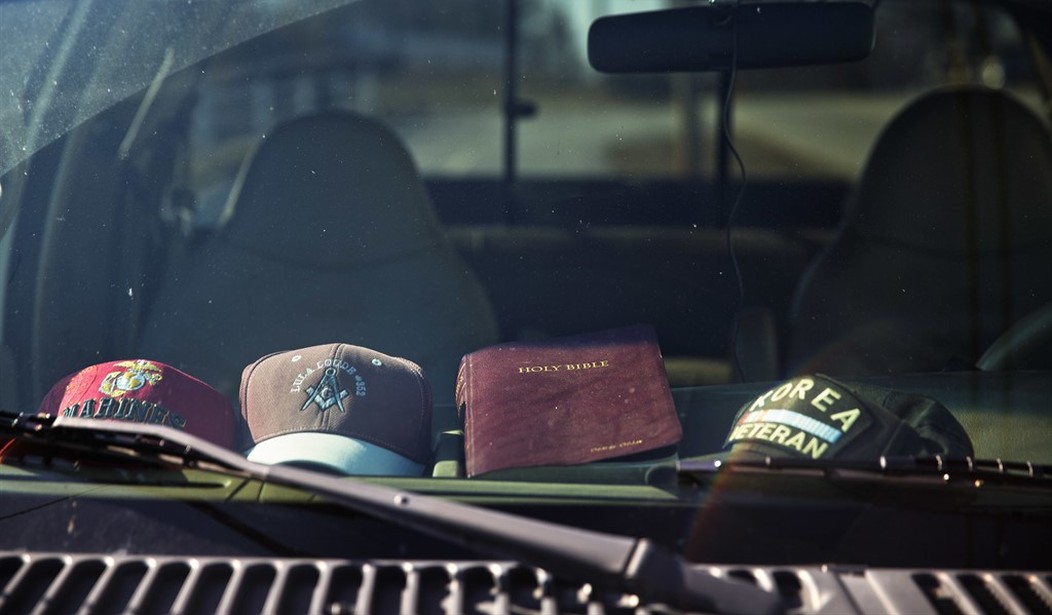
Even so, the regime's crackdown has escalated even further in 2025 — now you can't even take a Bible across the border.
According to Christian Solidarity Worldwide, notices have gone up at bus terminals in Costa Rica near the border, listing what you can't take into Nicaragua. In addition to items you might expect to see on the list, the notices now say that "drones or cameras, Bibles, newspapers, magazines or books of any kind" are prohibited.
"The Nicaraguan government's efforts to restrict the entry of Bibles, other books, newspapers and magazines into the country are deeply concerning given the current context of repression," Anna Lee Stangl, Christian Solidarity Worldwide's director of advocacy and team leader for the Americas, said in a statement. She added, "We urge the government of Nicaragua to lift this ban immediately and to cease its ongoing efforts to repress freedom of religion, belief and expression in the country."
I don't think the regime is going to listen, but Stangl also called on the international community to find "creative" ways to support Nicaraguans.
Recommended: If Venezuela Falls, Do Cuba and Nicaragua Go With It?
It's obvious that Nicolás Maduro is on his way out, and Venezuela will soon be free from tyranny. I have no doubt that Donald Trump and Marco Rubio will see to that. As I've written numerous times, due to Cuba's symbiotic relationship with Venezuela, there is a strong possibility that if Maduro falls, the current Miguel Díaz-Canel regime in Cuba will be the final remnant of Fidel Castro's legacy, and Cuba could also see a much brighter future ahead. Cuba's economy and infrastructure are already in shambles, and without Maduro's oil, that's likely to get even worse if you can imagine such a thing (though Mexico's narco-president, Claudia Sheinbaum, is doing everything in her power to prevent that at the moment, but that's an article for another day).
But there is the possibility that this could lead to the downfall of the Ortega-Murillo regime as well. Without Venezuela and Cuba, Nicaragua loses two of its most important diplomatic allies and becomes almost isolated in the region. I also believe that seeing so many countries vote their way out of leftist governments in recent years and seeing the fall of the regimes in Venezuela and Cuba could embolden the people of Nicaragua, who are just looking for a reason to rise up.
That's a lot of "ifs," but as Trump as his team seek to favor and court Latin America and the Caribbean over other parts of the world, it's not outside of the realm of possibility.
Public service annoucement: Having spent a lot of time in the region, I don't recommend actually trying to cross the border into Nicaragua, and neither does the State Department. The country is currently under a Level 3 travel warning, which means "reconsider travel," and it was just reissued on December 13 due to " due to arbitrary enforcement of laws, the risk of wrongful detention, and limited healthcare availability." The warning continues, suggesting the regime targets various groups for political purposes, including "religious and charity workers (including foreign missionaries)."