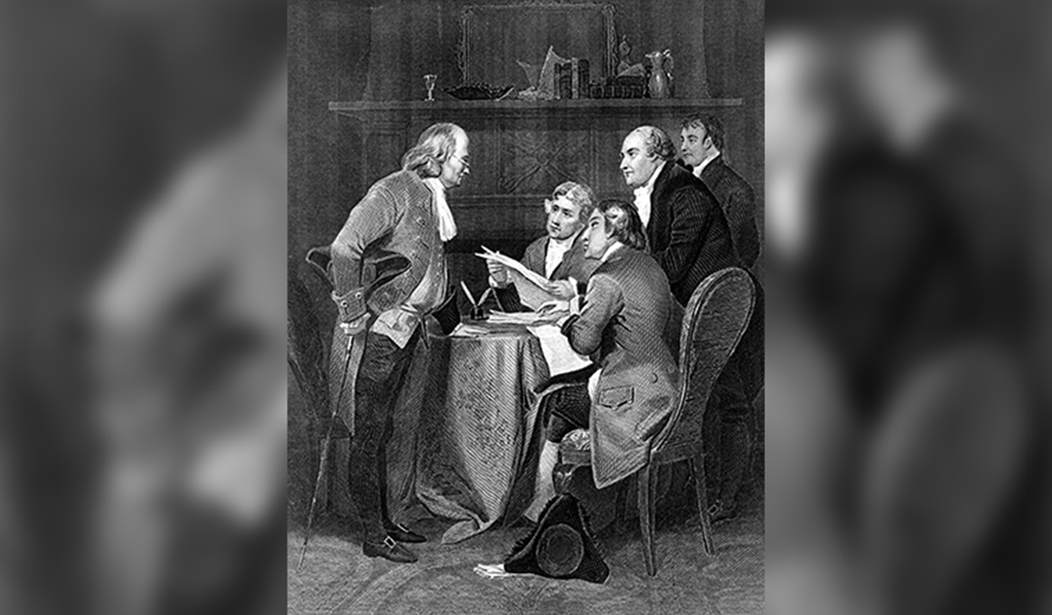

July 4, 2026, is not just the 250th anniversary of the Declaration of Independence; it is also the two-hundredth anniversary of the deaths of two of the foremost and most formidable of the Founding Fathers, Thomas Jefferson and John Adams. It is one of the many strange and striking details of history that two of these warriors for freedom, the best of friends at times and the worst of enemies at other times, would have died on the same day, and not just any day, but on the fiftieth anniversary of the founding of the nation they did so much to bring into being.
July 4, 1826, was a Tuesday. Long before there were any internal combustion engines or air conditioners to blame, Virginia was in the middle of a deadly heat wave, one that was so ferocious that it is generally considered to have contributed to the 83-year-old Jefferson’s declining health. Not long after asking “Is it the Fourth?,” the man who wrote the Declaration of Independence that bore the date July 4, 1776, died shortly before 1 p.m.
Jefferson’s old friend and rival, John Adams, who was himself 90 years old, was up in Quincy, Mass., where it was not all that much cooler. He was also in rapidly declining health, and finally passed away around 6:20 p.m., not long after saying, erroneously as it turned out, “Thomas Jefferson survives.”
They had been linked together for decades. Adams had organized a committee to write a Declaration of Independence; Jefferson was one of its members. Jefferson considered Adams to be the best man to write the Declaration, but Adams disagreed, telling his friend: “Reason first, you are a Virginian, and a Virginian ought to appear at the head of this business. Reason second, I am obnoxious, suspected, and unpopular. You are very much otherwise. Reason third, you can write ten times better than I can.”
Adams, as it turned out, was correct. Jefferson’s Declaration of Independence was not only a masterpiece of political writing, but it is full of phrases that stir the soul and remain in the memory — most notably the passage about how “all men are created equal and are endowed by their Creator with certain unalienable rights.” It seems unlikely that an Adams-penned Declaration would have been as rhetorically powerful, although it’s true that Adams played a significant role in the framing of the final document.
Yet over time, these two great friends grew estranged. Adams became the leader of a faction that advocated for a stronger federal government, while Jefferson warned against the dangers of centralization. They both ran for president in 1796, hoping to succeed George Washington; Adams won by three electoral votes, 71 to 68, and under the Constitution’s original rules, Jefferson, as the second-place finisher, became vice president.
The relationship between Old Joe Biden and Kamala Harris, or between JFK and LBJ, couldn’t have been more contentious. By 1800, they were bitter rivals and once again ran against each other. The 1800 campaign was hotly contested and stands out as notably acrimonious even now from the vantage point of two hundred more years of acrimonious campaigns.
In those days, the candidates themselves did not campaign, but others more than took up the slack. The Federalist Hartford Courant sounded the alarm about the consequences of electing the deist Jefferson president: “Murder, robbery, rape, adultery and incest will all be openly taught and practiced, the air will be rent with the cries of the distressed, the soil will be soaked with blood, and the nation black with crimes.” A Federalist leaflet invoked the bloody excesses of the French Revolution: “Can serious and reflecting men look about them and doubt that if Jefferson is elected, and the Jacobins get into authority, that those morals which protect our lives from the knife of the assassin—which guard the chastity of our wives and daughters from seduction and violence—defend our property from plunder and devastation, and shield our religion from contempt and profanation, will not be trampled upon and exploded?”
Related: Mamdani Gives 250th Anniversary Speech, and Boy, Does This Guy Hate America
Jefferson’s supporters gave this right back, calling Adams’s presidency “one continued tempest of malignant passions.” They claimed that he planned to marry off one of his sons to a daughter of British King George III and start an American monarchy. That was one of the milder charges; Adams’s wife Abigail lamented that during the 1800 campaign, enough “abuse and scandal” was published “to ruin and corrupt the minds and morals of the best people in the world.”
Years later, Jefferson and Adams, these two titans of American freedom, reconciled and resumed their correspondence, which still stands as the exchanges of two of the wisest and most insightful men who ever lived. Two hundred years after their deaths, we are still enjoying the fruits of their tireless labors for this nation.