





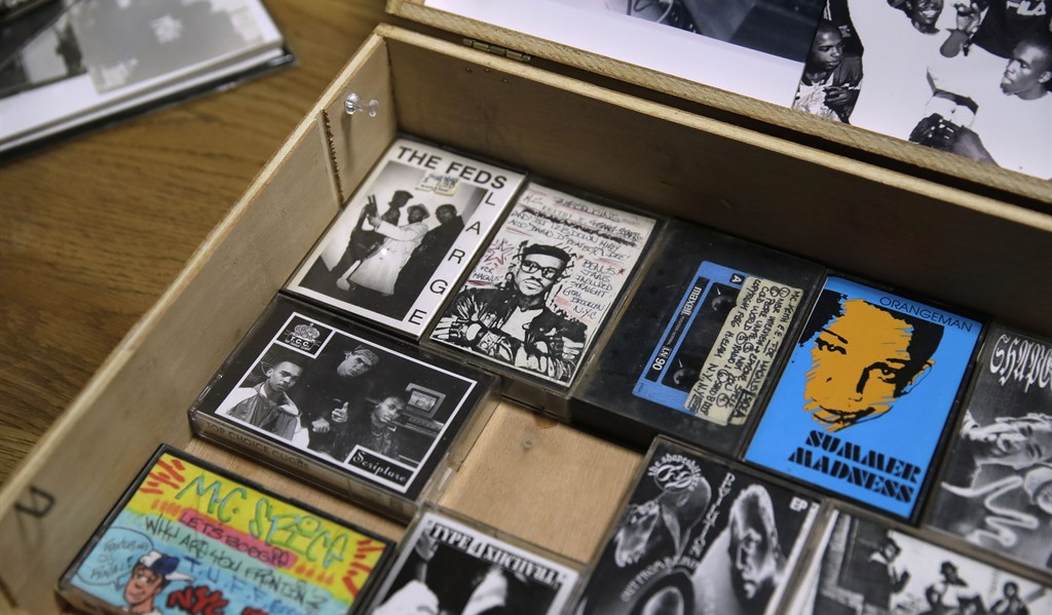
Hey, Gen Xers, another hallmark of our younger days is going away. Then again, most of us would be surprised to know that it was even still around at all.
We all remember the ads in magazines and Sunday papers: GET 7 RECORDS OR TAPES FOR A PENNY! There was a list of options for the records or tapes (later CDs) that you wanted, and all you had to do was attach a penny and send it in. If you were young enough, you probably missed the fact that you were signing up for a subscription service, and I bet most of us abandoned that subscription.
Truth be told, teenage Chris probably owed hundreds of dollars to Columbia House. There’s no telling how much money Columbia House thought it would rake in but didn’t.
But now, like that penny so many of us traded for records, tapes, and CDs, Columbia House will soon become a thing of the past. That’s right, it’s shutting down on Sept. 15.
“Mail-order music and media club Columbia House will stop accepting new orders after Sept. 15, 2026, ending a once-popular way for consumers to purchase media,” People magazine reports. “A message posted on the Columbia House website reads, ‘After 9/15/26, The Columbia House will no longer be accepting new orders. You can still purchase books with your credit card or credits as normal.’”
For Our VIPs: Forget the Interstate. Give Me Small Towns, Peach Pies, and Back Roads.
Thus ends a 71-year history. Cord Cutter News writes:
Columbia House traces its origins to 1955, when Columbia Records, then part of CBS, launched the Columbia Record Club as an experimental mail-order service. The goal was to reach rural and suburban customers who lacked easy access to record stores while also competing with other direct-marketing efforts outside the traditional music industry. Early members received promotional offers that included free or low-cost albums in exchange for committing to purchase a set number of additional titles at regular club prices. The model proved highly successful. Within a year the club had hundreds of thousands of members and sold millions of records. Operations quickly outgrew New York and shifted to a major distribution center in Terre Haute, Indiana, a location chosen for its rail access and proximity to Columbia’s own pressing plant.
Throughout the 1960s and 1970s the company expanded into new formats, including stereo records, reel-to-reel tapes, 8-track cartridges, and cassettes. By the early 1970s the umbrella brand Columbia House had been established to cover its various clubs. Membership surpassed three million by the mid-1970s. The 1980s and 1990s brought further growth with the rise of compact discs. At its peak in the mid-1990s, Columbia House claimed roughly sixteen million members and, together with its main rival BMG Music Service, accounted for a substantial portion of all CD sales in the United States. Annual revenue reached as high as 1.4 billion dollars.
Wait a minute, you’re probably thinking, It was still around? That’s because Columbia House shifted its model, adding videotapes, DVDs, and Blu-rays. Eventually, it shifted primarily to physical video. Today, Columbia House specializes in more obscure Blu-ray and DVD titles.
Streaming has changed the way people consume media, and while it’s convenient, it also puts us at the mercy of woke studios that may alter or even take down content that the cultural overlords deem offensive or outdated. With the de-emphasis on physical media, combined with the ubiquity of Walmart, Target, and Amazon for those who do buy physical media, Columbia House had little choice but to shut down.
More from Cord Cutter:
The shutdown closes a notable chapter in American consumer culture. For decades the familiar advertisements offering multiple albums for a penny or a dollar appeared in magazines, newspapers, and television. Families across the country built large collections through the mail-order system, and the company’s negative-option billing practices became a widely discussed feature of the membership model. While those practices drew criticism over the years, the core idea of convenient, discounted access to entertainment helped popularize recorded music and home video on a national scale.
It’s bittersweet, isn’t it? Maybe if we all took up a collection of what our younger selves owed Columbia House, we could keep it afloat.
If you remember Columbia House — and especially if you still feel a tiny bit guilty about those CDs you never paid for — you’re probably old enough to know that some things are worth supporting before they disappear. Independent conservative media is one of them. Join PJ Media VIP today and get 60% off with promo code FIGHT. You’ll get our best analysis, commentary, and VIP-only content while helping us keep doing what we do without answering to the cultural gatekeepers. Use promo code FIGHT and save 60%.


Join the Conversation
VIP members get the ability to comment on articles.