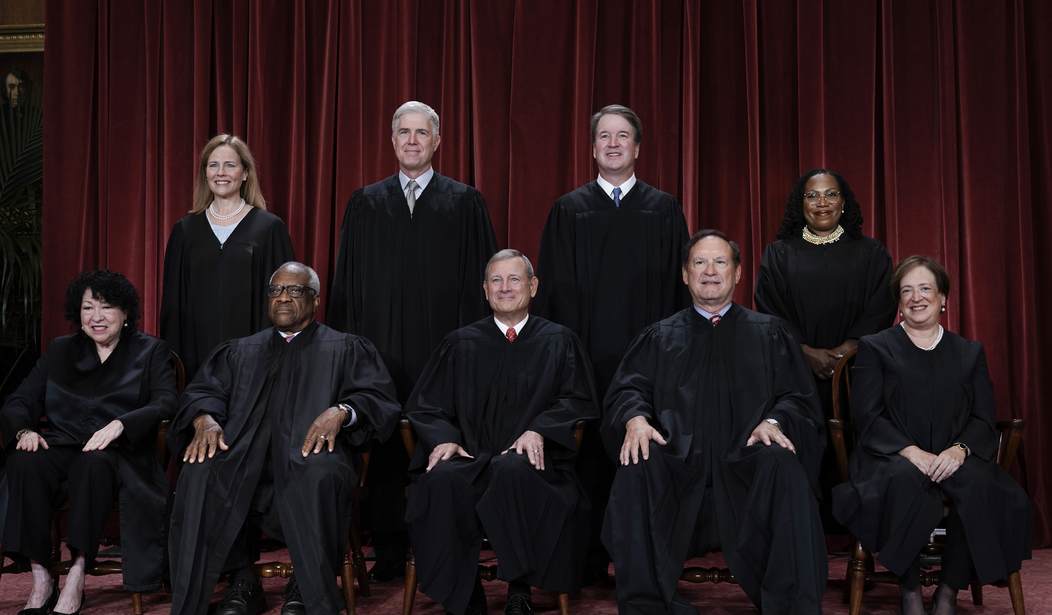

Ruth Bader Ginsburg's refusal to step down during Barack Obama's presidency became a cautionary tale for Democrats. The liberal icon hung on despite her advanced age and failing health, and then passed away weeks before the 2020 election. Trump wasted no time nominating Amy Coney Barrett, who was swiftly confirmed to fill the vacancy—much to the left's horror.
Now that Trump is back in the White House with a Republican Senate majority, some conservatives are no doubt thinking that the Supreme Court's older conservative justices should follow a different playbook. Specifically, should Justices Clarence Thomas and Samuel Alito retire while Trump can easily replace them with younger conservatives and lock in the court's conservative majority for decades?
The political logic behind the retirement push is obvious. Thomas is 77 and the oldest member of the high court. Alito is 75, making him the second-oldest. Thomas, appointed by President George H.W. Bush in 1991, has become one of the most influential conservative voices in Supreme Court history. Alito joined the bench in 2006 under President George W. Bush and has been a reliable conservative vote ever since.
Both justices have shown no public interest in stepping down. If either justice retired before the 2026 midterms, Trump could nominate replacements while Republicans still control the Senate. It's a strategic move that would mirror what Democrats tried—and failed—to do with Ginsburg.
Trump himself isn't buying it. In a recent interview with Politico, he shot down any suggestion that Thomas or Alito should step aside. "I hope they stay," Trump said. "'Cause I think they're fantastic."
Now, for what it’s worth, that’s the smart thing to say.
However, a source close to Alito told the Wall Street Journal in November 2024 that retirement wasn't on the table. "Despite what some people may think, this is a man who has never thought about this job from a political perspective," the source said. "The idea that he's going to retire for political considerations is not consistent with who he is."
ICYMI: Mamdani Is About to Cannibalize the Democratic Party
That sentiment may be admirable, but it's also risky. Democrats have already shown they're willing to pressure their own justices to retire strategically. In 2013, Barack Obama reportedly tried to convince Justice Ginsburg to retire. In 2022, liberal activists successfully pushed Justice Stephen Breyer to retire so Joe Biden could nominate Ketanji Brown Jackson. In 2023, similar pressure campaigns targeted Justice Sonia Sotomayor, who is 71 and has diabetes, urging her to step down while Biden was still president.
Here's the uncomfortable truth: conservatives might hate to see Thomas go, but the fate of the nation could depend on maintaining a conservative majority on the court. If Thomas or Alito were to pass away or retire during a future Democratic administration, the ideological balance could shift dramatically. The difference between a 6-3 conservative majority and a 5-4 or even 4-5 split isn't just numerical—it's existential for constitutional originalism.
I appreciate Trump's loyalty to Thomas and Alito. It’s understandable and even commendable. But the question isn't whether they're "fantastic"—it's whether the republic can afford to gamble on their health and longevity when the stakes are this high. The Ginsburg lesson cuts both ways. Her refusal to retire cost Democrats a Supreme Court seat and reshaped the court. If conservatives ignore that lesson, they might end up learning it the hard way.