


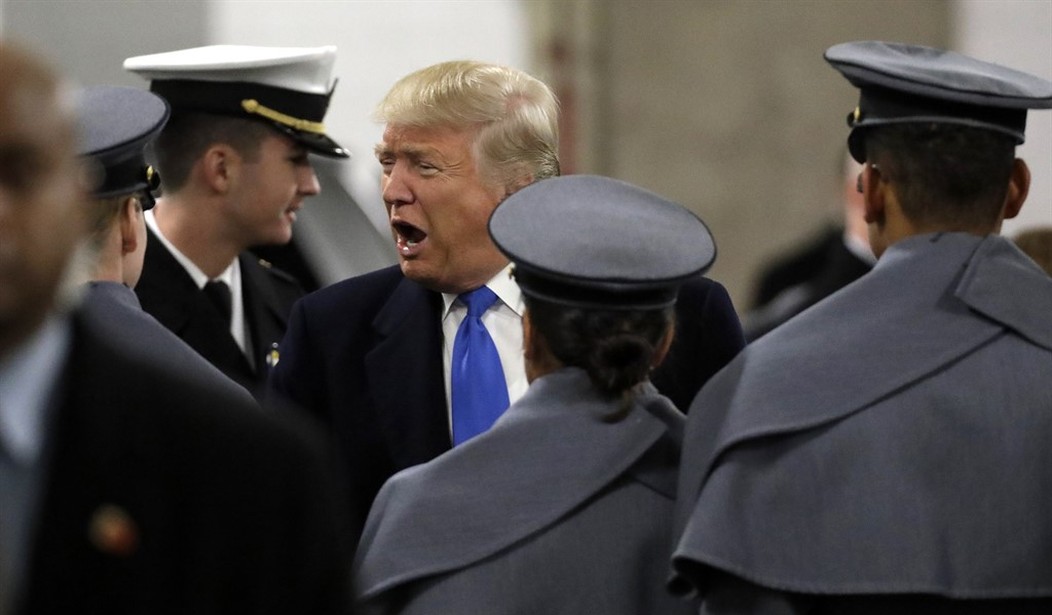
To pray or not to pray. Religion has sometimes been controversial at the United States military academies. In 1972, Attorney Warren Kaplan of the ACLU and Leo Pfeffer of the American Jewish Committee participated in a lawsuit involving students at West Point and Annapolis. The issue: ending academy regulations on chapel service attendance.
Arguing for Defense Secretary Melvin Laird were U.S. Attorneys Robert Hanlon and Thomas Flannery, John Adams for the military chaplains, and Joseph B. Friedman, of the Baptist Joint Committee on Public Affairs. The brawl was a classic church-and-state imbroglio.
Since 1821 at West Point, 1853 at Annapolis, and 1955 at the Air Force Academy, chapel attendance had been mandatory. Regulations for the United States Cadet Corps of the United States Military Academy were typical: “Attendance at Chapel is part of a cadet's training; no cadet is exempt. Each cadet must attend either the Cadet Chapel, Catholic Chapel, or Jewish Chapel service on each Sunday, according to announced schedules."
In recognition of the growing atheism in the cultural revolution of the 1960s, superintendents of the academies amended the policy in April 1969: "It is understood that intelligent provisions must be made for bona fide cases where attendance would be in conflict with sincerely held convictions of individual cadets or midshipmen."
“Thus, when the effect on the individual cadet is opposite to that intended, i.e., when he becomes incapable of observing, assimilating, or becoming involved with an understanding of the religious beliefs of men and finds himself turning away from an understanding of what their religious belief and value systems are, then he is relieved from the attendance requirement,” wrote District Judge Howard Corcoran in upholdidng the policy.
The ever-amazing District of Columbia Court of Appeals found that this broad regulation, which supports religious and non-religious practices equally, amounted to the establishment of a religion, as in "Congress shall make no law respecting an establishment of religion or prohibiting the free exercise thereof." Colonel Sylvanus Thayer, the father of the military academy at West Point and the one who began the policy, was likely not amused.
If this were a true established religion of the United States, would it have been called Judeo-Christian Atheism? Or today would it be Judeo-Christian-Islamic-Buddhist-Hindu Atheism? The Supreme Court punted on the case. This further chipped away at our national tradition of giving pride of place to religious practice for those in the line of fire. Anderson v. Laird became the governing law in this matter.
Well, religious instincts among the young cannot be so easily extinguished. Remember when Sen. Kamala Harris asked a judicial nominee, “If confirmed, do you intend to end your membership with this organization [the Knights of Columbus] to avoid any appearance of bias?" Never mind that President John Kennedy had been a member. This Catholic men’s association has 17,000 councils worldwide, including at military bases such as Camp Humphreys in South Korea. All the military academies have college K of C councils, including West Point and Annapolis.
This year at halftime, rather than kicking back and having a beer, which would never happen since cadets and midshipmen are not allowed to drink, something different happened.
Catholics love their rosary and their sports. These Knights of Columbus college councils, independent of their academies, sponsored the Second Annual Halftime Rosary for cadets and midshipmen during the 126th Army-Navy Game in Baltimore. Approximately 250 cadets and midshipmen joined Supreme Knight Patrick Kelly, Supreme Chaplain Archbishop William E. Lori, and The Most Reverend Timothy P. Broglio, J.C.D., Archbishop for the Military Services. A commemorative rosary coin was given to participants.
“The Knights of Columbus is again honored to join young Catholic men and women to pray the rosary during the Army-Navy football game, which draws us closer to Jesus Christ, our Holy Mother, and our Catholic faith,” said Supreme Knight Kelly. “These cadets and midshipmen are the best and brightest young adults our nation has to offer. As a retired naval officer, and as someone who joined our organization as a college knight, I am proud of their selfless sacrifice to our nation, and their witness to their Catholic faith.”
Related: Indiana Football’s 'Hoosiers' Moment Finally Arrived
Lawsuits aside, all service academies retain in some form the foundational basis for duty, honor, and country, which is faith in God. That is the ultimate basis of our common humanity and duty to each other. Otherwise, we are just serving our own self-determined interests and goals, whether they be career, fame, wealth, or vanity.
Godspeed, Navy, Marines, Army, Air Force, Coast Guard, and Space Force!
Join PJ Media VIP today and get 74% off with promo code MERRY74. Join now to support this news site, go ad-free, and comment as you see fit.




Join the conversation as a VIP Member