







Morning, everybody. Today's Saturday, Sept. 5, 2026 — hope your holiday weekend's off to a good start.
My calendar says it's Play Outside Day, Cheese Pizza Day, Be Late For Something Day, Hummingbird Day, Tailgating Day, the Day of Charity, World Samosa Day, and International Bacon Day. So here's your Saturday assignment: donate to a good cause, then head outside — late, naturally, since that's on theme, too — for a tailgate spread of samosas, bacon, and cheese pizza, and keep an eye out for hummingbirds while you're at it.
Today in History:
1698: Peter the Great imposes a tax on bearded men across Russia.
1774: The first Continental Congress convenes at Carpenter's Hall in Philadelphia.
1793: The Reign of Terror begins in France, as the National Convention moves to crush counterrevolutionary activity.
1836: Sam Houston is elected president of the Republic of Texas.
1847: Outlaw Jesse James is born in Clay County, Missouri.
1882: Roughly 10,000 workers march in New York City's first Labor Day parade.
1905: The Treaty of Portsmouth ends the Russo-Japanese War.
1957: Jack Kerouac's novel On the Road hits bookshelves for the first time.
1960: Cassius Clay wins Olympic gold in the light heavyweight division in Rome, launching his professional career; he will later change his name to Muhammad Ali.
1972: Palestinian militants storm the Israeli delegation's quarters at the Munich Olympics, beginning a hostage crisis that ends with the deaths of 11 Israelis and a police officer.
1977: NASA launches the Voyager 1 probe, now the farthest human-made object in space.
1986: A ship carrying millions of pounds of incinerated garbage sets sail from Philadelphia, kicking off a two-year voyage to find somewhere willing to take it.
Birthdays Today include: Freddie Mercury, singer and songwriter (Queen); Bob Newhart, comedian and actor (The Bob Newhart Show, Elf); Michael Keaton, actor (Beetlejuice, Batman); Raquel Welch, actress (One Million Years B.C.); William Devane, actor (24, Knots Landing); Al Stewart, singer-songwriter ("Year of the Cat," "Time Passages").
If today's your birthday too, happy birthday from all of us here at PJ Media!
By the way, I spoke yesterday of the five different tornadoes that were confirmed here in New York State. Well, there were two more reported as confirmed before sundown yesterday. One of which was at the opposite end of the State Park I live next door to. As I understand it, parts of the park are closed for the season as they do repairs.
* * *
One question that's come up a lot around the fate of Murdering Mom Lindsay Clancy is this: What's the real difference between her getting convicted of murder and getting shipped off to a "secure" mental facility instead?
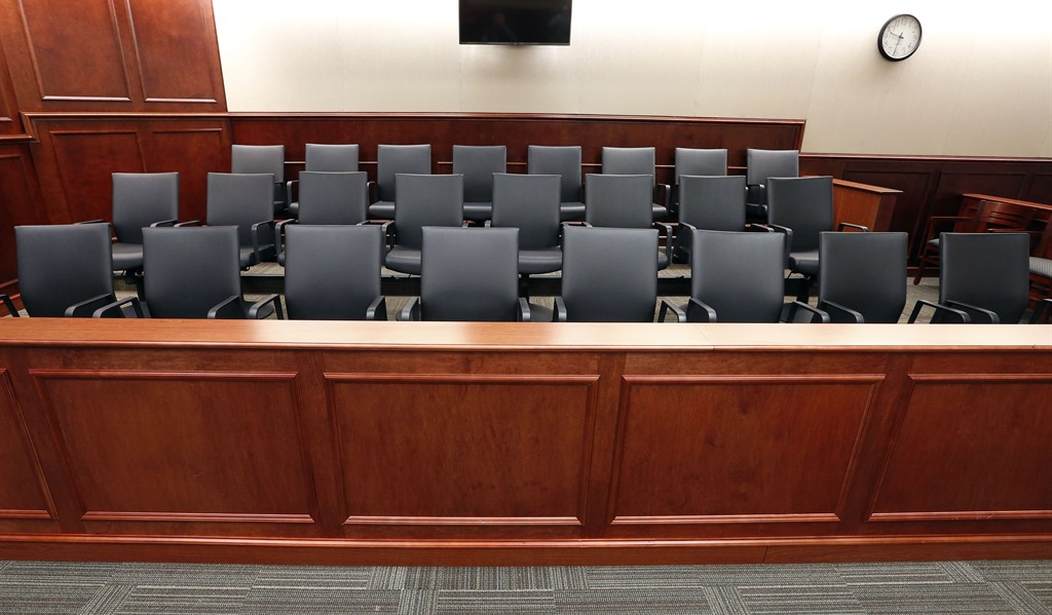
That question just got more urgent, not less. As of Friday, we don't even know which of those two outcomes Clancy is headed toward. A Plymouth county jury spent seven days and more than 36 hours deadlocked — a lone holdout who apparently recognized the dangers that result from an “insanity” plea, among 12 jurors — before Judge William Sullivan declared a mistrial after Massachusetts' highest court declined to intervene. Clancy is back at Tewksbury State Hospital under psychiatric custody, and Sullivan has already floated retrying the case later this fall, with a status conference set for September 29. So we get to revisit this whole question again, likely before the year's out.
Which is exactly why it's worth asking now what "not guilty by reason of insanity" actually tends to mean in practice, because it isn't what most people assume. I refer you to an article in The Post Millennial the other day:
The Fairfax County Commonwealth's Attorney's Office has agreed to the conditional release of a man accused of murder, continuing a pattern of releasing individuals charged with violent crimes who were found not guilty by reason of insanity.
…
Alexander Jahelka was accused of fatally stabbing his 66-year-old father in 2021. He was found not guilty by reason of insanity and committed to a mental health institution.
Judge Dipti Pidikiti-Smith held a July 16 hearing on Jahelka's request for release. The Commonwealth's Attorney's Office agreed with a recommendation that he be released from custody.
Under the terms of his release, Jahelka was ordered to live in his apartment and work up to 40 hours per week. He is prohibited from leaving Virginia and must submit to random testing, according to Fox 5 DC.
The decision came just 10 days after Abdulloi Toshpulodzoda, another man accused of murder who had been found not guilty by reason of insanity, left the same mental health facility on an unescorted weekend pass and boarded a one-way flight out of the country.
And Jahelka and Toshpulodzoda aren't isolated cases, either. (Try typing those names quickly, three times… one of the dangers of being an op-ed writer these days, I guess).
According to the latest Intel I can find, Toshpulodzoda is in Tajikistan as this is written.
That same Post Millennial report flags a third person, one Robert Jablonski, who aimed a crossbow at police officers in 2022 — attempted murder of a cop, in plain English — and was found not guilty by reason of insanity in 2024. One Fairfax County judge decided he shouldn't be released. A different judge overruled that a year later and granted his conditional release anyway, with Commonwealth's Attorney Steve Descano's office signing off again. Descano markets himself online as a reform-minded prosecutor who insists public safety and prosecutorial leniency aren't in tension. Ask the Jahelka and Jablonski families how that theory's holding up.
As for Toshpulodzoda, he didn't need a judge to sign anything — he walked out on an approved weekend pass and had a one-way ticket out of the country before anyone noticed he was gone. Virginia Gov. Abigail Spanberger's office says it wants answers on how a man denied release as recently as June somehow had a valid passport and a flight booked within days of getting a few unsupervised hours. I'd like those answers, too. I'm not holding my breath, particularly given Spanberger’s far left-leaning record since attaining office. I rather suspect she’s just looking for cover, not answers.
So there's your answer, and it's about as succinct as it gets: the "difference" between prison and a psychiatric commitment, in practice, increasingly comes down to how many news cycles pass before somebody with a rubber stamp lets you walk.
Seems to me part of the problem is the definition of insanity itself, and that's not me being cute — it's baked into the law. Massachusetts doesn't even use the word "insanity" in court anymore. The controlling standard comes from a 1967 case, Commonwealth v. McHoul, and it asks whether a defendant lacked the "substantial capacity" to either understand their conduct was wrong, or to control their own actions. Notice the word "or." A defendant doesn't have to have been so far gone that he or she thought what he or she did was both hunky and dory; the defendant only has to convince a jury that he or she couldn't stop himself or herself from doing it anyway. That's a considerably lower bar than most people picture when they hear "insanity defense," and it's broader than what plenty of other states use today.
There's a reason for that gap. Congress passed the Insanity Defense Reform Act in 1984, after John Hinckley Jr. successfully used an insanity defense for shooting Ronald Reagan, and states responded by tightening their own standards. Many dropped the "couldn't control myself" language entirely, leaving only the "didn't know it was wrong" prong, precisely because the broader version was too easy to argue and too hard for prosecutors to knock down. Massachusetts never made that change. It's still running the old model.
And it gets better: Massachusetts is unusual in putting the burden on prosecutors to prove a defendant was sane, rather than requiring the defense to prove insanity, as most states do. Which means the Commonwealth isn't just trying to prove Clancy killed her children — everyone, including her own attorney, agrees she did that. It's trying to perform something that by the very definition, impossible… prove a negative about what was happening inside her head, beyond a reasonable doubt, against a defense team whose entire job is manufacturing that doubt. Nobody should be shocked that jury spent seven days and 36 hours going in circles. That's what the Commonwealth signed up for the moment it accepted the burden.
None of this settles whether Clancy belongs in a hospital bed or a prison cell — that's a separate, genuinely hard question. But it tells you the standard itself was built almost 60 years ago to make a finding of criminal responsibility harder to reach than most people assume, and nobody in Boston has revisited it since. If the definition is doing that much of the work, maybe the definition is the first thing worth putting on trial.
Now before you start tuning up, I’ll remind you of what I said a bit over two weeks ago: Compassion for Lindsay Clancy is entirely reasonable. The system failed her. And it certainly failed those now-dead kids. No question. But does compassion for the mother, of itself, mean that we as a society shouldn’t be responding with the appropriate penalties, particularly given the obvious risks to society? Does what we see going on in another deep-blue district give us any indication of what happens to the mother following an insanity verdict? I suggest that horrid conclusion is impossible to avoid.
And you know, I can't help but think of Buddy Ryan on Night Court — played by John Astin, the original Gomez Addams — delivering that classic line after every one of his outlandish hospital stories: "But I'm feeling much better now!" It was a punchline precisely because everybody in the room, including Buddy, knew it was a punchline. Nobody actually believed the guy was cured. That was the joke.
Except that's more or less the operating theory behind every one of these release hearings. A psychiatrist testifies the patient has responded well to treatment, a judge signs off, a commonwealth's attorney's office declines to object, and out the door somebody goes — sometimes straight onto a one-way flight, as we've already established. Or kills again, regardless of where he or she ends up. And that is a distinct possibility for Lindsay Clancy.
The system is functionally asking us to take "I'm feeling much better now" as a rigorous clinical finding instead of the setup to a joke, and then acting stunned when it doesn't hold. Buddy Ryan, to his credit, never stabbed his father or aimed a crossbow at a cop. He just told stories at Thanksgiving. The real-world version of that bit doesn't come with a laugh track, and the people living next door to wherever people like these land don't get to appreciate the punchline.
It seems reasonable to ask if the people arranging for this kind of legal chicanery are themselves sane, but that leads us right back to the legal definition, doesn't it? (Arrrghhh!)
Thought for the Day: A system that mistakes "better" for "safe" keeps learning the difference the hard way.
VIP members: Your turn. Feel free to speak up, because your voice matters.
Take care, gang. See you here tomorrow.
Editor’s Note: Every single day, here at PJ Media, we stand up and FIGHT, FIGHT, FIGHT against the radical Left and deliver the conservative reporting our readers deserve.
Help us continue to tell the truth about the Trump administration and its successes. Join PJ Media VIP and use promo code FIGHT to receive 60% off your membership.



Join the Conversation
VIP members get the ability to comment on articles.