





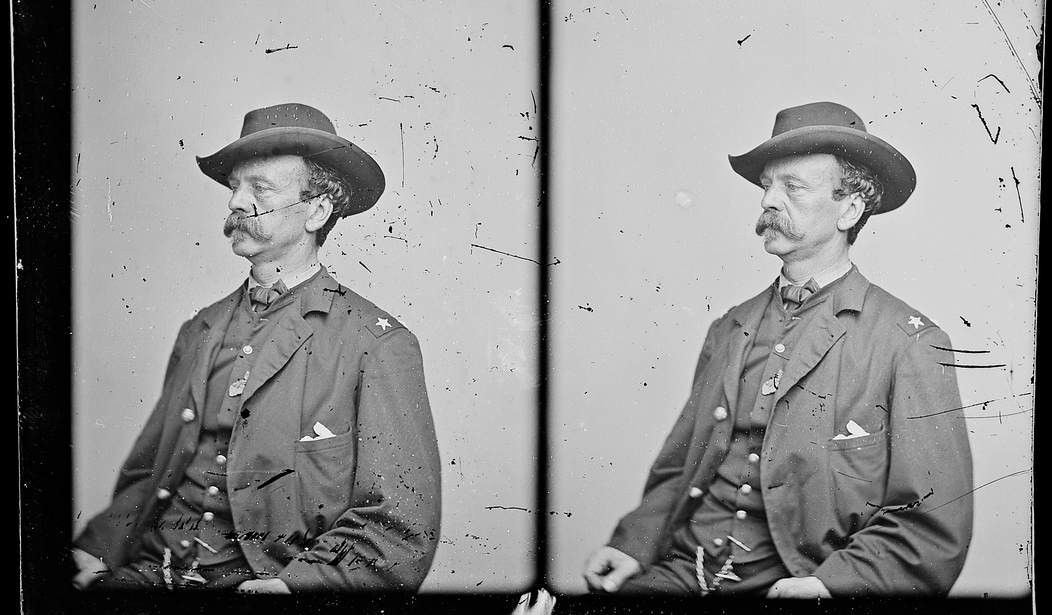
On Feb. 27, 1859, Rep. Daniel Sickles, a New York Democrat, saw Philip Barton Key near Lafayette Square in Washington and went after him with guns. Key was the U.S. attorney for the District of Columbia, the son of Francis Scott Key, and the man having an affair with Sickles' wife, Teresa.
Minutes later, Key was dying within sight of the White House.
Sickles had learned the details through an anonymous letter and became convinced the affair was real. When he spotted Key that Sunday afternoon, Sickles armed himself with multiple pistols, confronted him, and fired repeatedly, and one shot struck Key in the chest at close range.
Sickles then surrendered and admitted what he had done.
From the U.S. House of Representatives History site:
Sickles was a partisan Democrat who supported legislation that benefited Southerners in an attempt to strengthen unity between northern and southern Democrats. In February 1859, Congressman Sickles made national headlines when he murdered Philip Barton Key (son of Francis Scott Key) and almost immediately admitted his guilt. Key and Sickles’s wife, Teresa, had an affair and frequently rendezvoused in Lafayette Square in Washington, D.C., where Sickles gunned down Key in broad daylight. The case made legal history because it was the first successful use of the temporary insanity defense in the United States.
Nothing about the case looked mysterious. A congressman had killed a man in daylight; witnesses saw it, and the killer confessed. Sickles later put his intent bluntly: "Of course I intended to kill him. He deserved it."
Then came the lawyers.
Sickles assembled a formidable defense team that included Edwin Stanton, who would later serve as Abraham Lincoln's secretary of war. The trial opened April 4, 1859, and the defense argued that discovering his wife's adultery had driven Sickles into a temporary state of insanity.
From the Library of Congress:
Sickles confronted Teresa and forced her to make a handwritten confession to the affair in his presence, stating, “I did what is usual for a wicked woman to do.” The confession was later published. Teresa’s confirmation only made Sickles inconsolable with sorrow. As his friends, Samuel Butterworth and George Woolridge, met in Sickles’ library to discuss what to do about the situation, Sickles noticed Key signaling from the street with his handkerchief. Butterworth agreed to venture out and see if Key had rented a room in a club located across from the Sickles’ home in Lafayette Park and quickly encountered Key. They greeted one another, and then an enraged Sickles came upon them. Sickles yelled, “Key, you scoundrel! You have dishonored my house – you must die!”
Armed with two derringers and a five shot revolver, Sickles fired upon Key, but only grazed him. Key reached into his own coat for a means of defense, but found only opera glasses. Key wrestled with Sickles, and Sickles dropped his gun. Freeing himself from Key’s grip, Sickles produced another gun, and Key began to stumble backwards, crying, “Don’t shoot me, don’t murder me!” Sickles fired, striking Key in the groin. Key fell, and Sickles drove a point-blank shot into Key’s chest. Finally, Sickles put a gun to Key’s head and pulled the trigger, but the gun misfired. A group of men arrived on the scene, and Sickles was led away by Butterworth while Key lay dying.
Key quickly died and Sickles confessed to shooting him. It would seem Sickles would almost certainly be convicted of murder, but he was defended by a team of prominent lawyers, including the future Secretary of War, Edwin Stanton. The defense successfully argued that Sickles was in a state of temporary insanity. After his acquittal, Sickles continued to enjoy a prominent place in Washington society and retained the public’s sympathy until he did something that was considered truly unforgivable; he forgave Teresa.
Prosecutors pointed to preparation; Sickles had heavily armed himself and gone looking for Key.
The courtroom became a national spectacle. Defense lawyers spoke about adultery, honor, mental collapse, and a destroyed marriage. Witnesses described Sickles as emotionally shattered; he wept in court, and jurors wept, too. Public sympathy swung heavily toward the congressman, and even President James Buchanan expressed support.
After roughly 20 days of trial, the jury needed only about 30 minutes: Sickles was acquitted. The courtroom erupted in applause, and crowds accompanied him away from the courthouse. America had just seen the first successful use of temporary insanity as a defense to murder.
The story grew stranger. Sickles reconciled with Teresa, and some people who had cheered his acquittal turned on him. Mark Twain later mocked the growing use of insanity claims. Sickles became a Union major general, lost his right leg at Gettysburg, and lived until 1914.
His legal legacy lasted longer.
The insanity defense itself predated Sickles. The English M'Naghten rule of 1843 had already focused on whether a defendant could understand an act or know right from wrong.
Sickles opened another door by persuading an American jury that insanity could be temporary and tied to a specific killing.
More than a century later, John Hinckley's acquittal after shooting President Ronald Reagan led Congress to tighten the federal insanity defense in 1984.
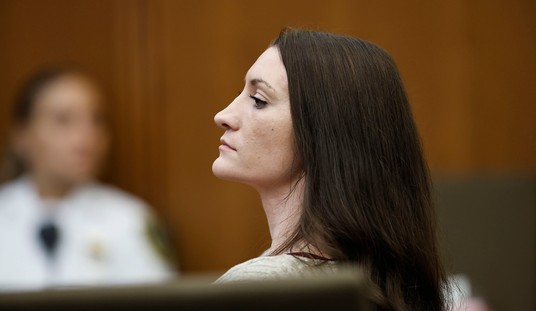
Now Lindsay Clancy's trial in Massachusetts brings the old question back in a very different form. Her defense rested Friday after presenting expert testimony that postpartum psychosis left her unable to understand or control what she was doing when she killed her three children.
Prosecutors answered with a forensic psychiatrist who said she suffered from depression but could understand right from wrong.
Massachusetts calls the issue "lack of criminal responsibility." Once raised, the Commonwealth must prove beyond a reasonable doubt that Clancy had substantial capacity to appreciate the wrongfulness of her conduct and to conform her conduct to the law.
My PJ Media teammates have already examined Clancy's psychiatric treatment, the public reaction around the trial, and the three children whose names can disappear beneath arguments about medicine and culpability.
Read More: For Cora, Dawson, and Callan
Sickles's jury faced its question in 1859 without modern psychiatry, diagnostic tools, or generations of case law, while Clancy's jury has all of them.
Yet ordinary jurors still face the same hard task: deciding when mental illness becomes legal non-responsibility.
Daniel Sickles walked out of court a free man. More than 167 years later, 12 jurors in Massachusetts will decide where that line now belongs.
History has a funny habit of showing up in today’s headlines. PJ Media VIP gives you more columns that dig past the daily noise and into the facts, history, and arguments shaping America: Use promo code FIGHT and save 60% on your VIP membership.


Join the Conversation
VIP members get the ability to comment on articles.