


Eighty-six years ago today, German bombers and fighters struck British shipping in the English Channel. Britain had lost its main ally, abandoned military equipment at Dunkirk, and watched Adolf Hitler's armies dominate most of Western Europe.
An invasion no longer seemed impossible; it seemed close.
The Battle of Britain officially began on July 10, 1940, and continued through October 31. Germany needed to destroy Royal Air Force Fighter Command and gain control of the skies before attempting Operation Sea Lion, Hitler's planned invasion of southern England. From the Royal Air Force Museum:
Serious planning work began for Operation Seelöwe (Sealion), in July 1940, following Britain’s rejection of Hitler’s final offer of a negotiated peace settlement. Hitler wanted an immediate invasion to prevent the British army recovering from its defeat in France. All this was to be completed by 10 August 1940. The assembly of a large invasion fleet of barges, tugs, trawlers and merchant ships was begun at Calais and Rotterdam.
In August, Göering launched the Luftwaffe’s campaign to destroy the RAF and win control of English Channel and the air over southern England. This would enable the German navy to provide the invasion fleet with the maximum protection. Once reinforcements had been landed the advance northwards was to begin but London would have been bypassed until resistance in the rest of Britain had collapsed.
Several postponements took place through into September on the grounds that the essential conditions did not exist. The Luftwaffe’s failure to achieve air supremacy in the Battle of Britain forced Hitler to postpone Operation Sealion indefinitely. The operation was never formally cancelled.
No one knows whether Sealion would have succeeded or not had it been launched. Without air supremacy and command of the sea the project could not go ahead; if both had been achieved then it may not have even been necessary.
Britain's fighter pilots met the Luftwaffe in Hurricanes and Spitfires, often flying many missions a day. Some were barely out of school. Exhaustion followed them into the cockpit, while death waited above the clouds.
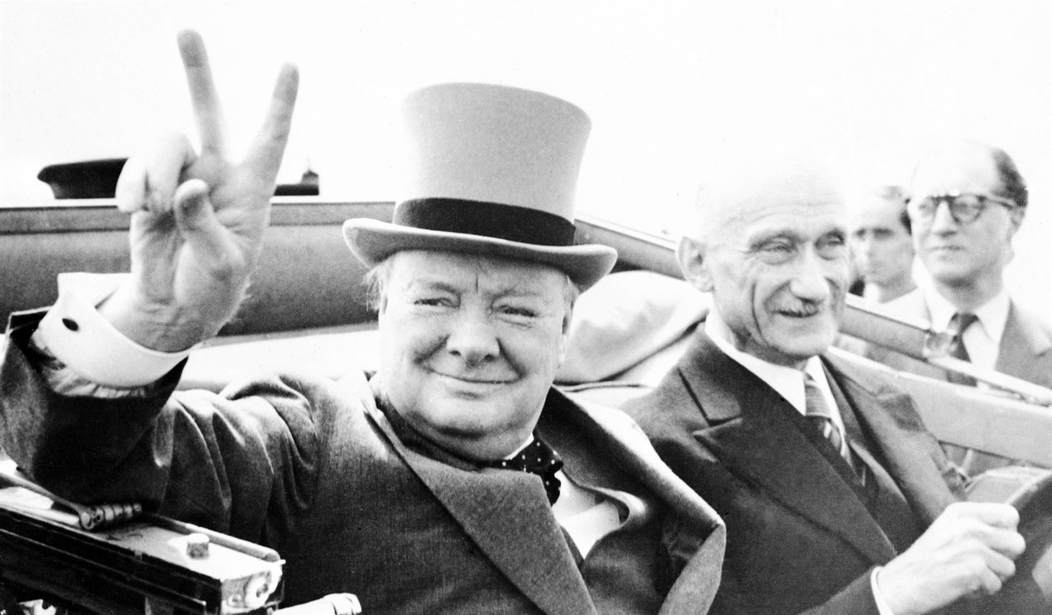
Their courage became the public face of the battle, and rightly so. Winston Churchill later said that never had so many owed so much to so few.
We have before us an ordeal of the most grievous kind. We have before us many, many long months of struggle and of suffering. You ask, what is our policy? I will say: It is to wage war, by sea, land and air, with all our might and with all the strength that God can give us; to wage war against a monstrous tyranny never surpassed in the dark, lamentable catalogue of human crime. That is our policy. You ask, what is our aim? I can answer in one word: It is victory, victory at all costs, victory in spite of all terror, victory, however long and hard the road may be; for without victory, there is no survival. Let that be realised; no survival for the British Empire, no survival for all that the British Empire has stood for, no survival for the urge and impulse of the ages, that mankind will move forward towards its goal. But I take up my task with buoyancy and hope. I feel sure that our cause will not be suffered to fail among men. At this time I feel entitled to claim the aid of all, and I say, "Come then, let us go forward together with our united strength."
Still, the few couldn't have remained airborne without an entire nation fighting beneath them.
Air Chief Marshal Hugh Dowding built an air-defense network that joined radar stations, observers, command centers, airfields, and fighter squadrons. From the Imperial War Museums.
The British developed an air defence network that would give them a critical advantage in the Battle of Britain. The Dowding System – named for Fighter Command’s Commander-in-Chief Sir Hugh Dowding – brought together technology such as radar, ground defences and fighter aircraft into a unified system of defence.
The RAF organised the defence of Britain into four geographical areas, called ‘Groups’, which were further divided into sectors. The main fighter airfield in each sector – the ‘Sector Station’ – was equipped with an operations room from which the fighters were directed into combat.
Radar gave early warning of Luftwaffe raids, which were also tracked by the Observer Corps. Information on incoming raids was passed to the Filter Room at Fighter Command Headquarters at Bentley Priory. Once the direction of the raid was clearly established, the information was sent to the relevant Group’s headquarters. From there it was sent to the Sector Stations, which would ‘scramble’ fighters into action. The Sector Stations received updated information as it became available and further directed airborne fighters by radio. The operations rooms also directed other elements of the defence network, including anti-aircraft guns, searchlights and barrage balloons.
The Dowding System could process huge amounts of information in a short period of time. It allowed Fighter Command to manage its valuable – and relatively limited – resources, making sure they were not wasted.
Air Vice-Marshal Keith Park directed the defense of southeastern England, deciding when and where his limited aircraft would meet incoming raids.
Britain's system allowed commanders to detect German formations and send fighters where they were needed instead of wasting fuel on endless patrols.
Ground crews repaired battered aircraft, refueled fighters, loaded ammunition, and sent pilots back into combat. Factory workers replaced losses quickly enough to keep Fighter Command alive, while radar operators watched their screens, and Observer Corps volunteers tracked aircraft after they crossed the coast.
Drivers, telephone operators, nurses, firefighters, and rescue workers each carried part of the burden.
The battle also belonged to people who had already lost their homelands. Pilots from Poland, Czechoslovakia, Canada, New Zealand, Australia, France, Belgium, and the United States, and other nations, fought beside British airmen. Nearly 3,000 Allied pilots took part, and over 500 came from outside the United Kingdom.
Britain's political leaders also formed a coalition government that included Conservatives, Labour members, and Liberals. They still argued, as free people do, but national survival came before ordinary party warfare.
Churchill gave the nation words worthy of the hour, while millions of people gave those words weight through work, sacrifice, and endurance.
Hitler failed to destroy Fighter Command. The Luftwaffe suffered heavy losses, Britain remained unconquered, and the planned invasion never came. From the Imperial War Museums.
During the Battle of Britain, the Luftwaffe was dealt an almost lethal blow from which it never fully recovered.
Although Fighter Command suffered heavy losses and was often outnumbered during actual engagements, the British outproduced the Germans and maintained a level of aircraft production that helped them withstand their losses.
The Luftwaffe, with its lack of heavy bombers and failure to fully identify critically important targets, never inflicted strategically significant damage. It suffered from constant supply problems, largely as a result of underachievement in aircraft production.
Germany’s failure to defeat the RAF and secure control of the skies over southern England made invasion all but impossible. British victory in the Battle of Britain was decisive, but ultimately defensive in nature – in avoiding defeat, Britain secured one of its most significant victories of the Second World War. It was able to stay in the war and lived to fight another day.
Victory didn't end the bombing or win the war in 1940, but it denied Nazi Germany the triumph it needed.
The lesson reaches beyond the pilots whose names deserve remembrance. Britain survived because people with different jobs, backgrounds, politics, and nationalities understood what stood before them.
Evil had crossed Europe by finding frightened governments and divided nations. Over Britain, it met a country that had chosen to stand together.
The few flew into history, while a nation helped carry them there.
The courage that saved Britain deserves to be remembered, and the battles shaping our own future deserve clear reporting. Join PJ Media VIP and save 60% with promo code FIGHT.







Join the conversation as a VIP Member