





Soviet forces lifted the Berlin Blockade on this date in 1949, ending an 11-month attempt to isolate West Berlin and force the Western Allies out.
Soviet Union Premier Joseph Stalin shut land access down on June 24, 1948, cutting rail, road, and water routes into the city, gambling on the simple and brutal dare: I'll starve the city, break its will, and make the West retreat without firing a shot.
The crisis grew out of the wreckage of World War 2. Germany had been divided into American, British, French, and Soviet occupation zones. Berlin received the same treatment even though the city sat deep inside the Soviet zone.
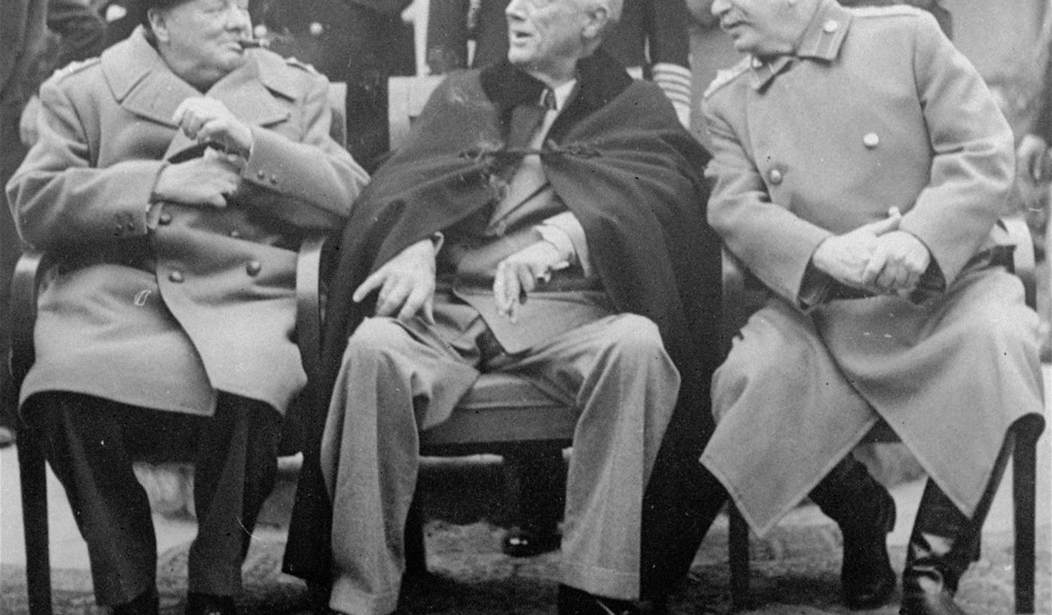
At Yalta, U.S. President Franklin D. Roosevelt, British Prime Minister Winston Churchill, and Soviet Premier Joseph Stalin discussed the postwar world.
Later, at Potsdam, U.S. President Harry S. Truman, Stalin, Churchill, and later British Prime Minister Clement Attlee dealt with defeated Germany's future. Europe hadn't healed yet; it had been stitched together under pressure, and the seams started pulling out almost immediately.
The Truman Library painted a bleak, yet accurate, backdrop of the events leading up to the blockade.
One of the most brutal conflicts in recent history, World War II devastated 113 countries from six continents. Beginning in 1939, the Allied forces — primarily Britain, Russia and the USA — sought to stop Nazi Germany in its conquest for European domination. In the six years that followed, Adolf Hitler’s Nazi party devastated Europe and wreaked violence against many social minority groups. By 1945, Western Europe had been ravaged, an entire race of people had come close to extinction and the dynamic of power in several affected countries had been forever changed. Hitler committed suicide in May 1945, and the Nazi regime collapsed. Japan surrendered in August. Even after peace was declared, the world felt the political and economic repercussions for decades.
Following the war, a defeated Germany was divided into four sections, each of which was to be occupied by one of the Allied Powers. The Soviet Union took control of the eastern part of Germany, while France, Great Britain and the United States took control of the western part. The German capital of Berlin was also divided into four sections, even though Berlin itself was in the middle of the Soviet-controlled part of Germany. Although they had been allies during the war, the United States and the Soviet Union clashed philosophically on many issues. The superpowers disagreed about how to rebuild Germany, and tensions quickly rose, resulting in what later came to be known as the Cold War. Fearing that the Soviets would try to extend their communist philosophy to other countries, the United States adopted a policy of “containment,” which involved rebuilding war-torn Europe and promoting democracies to halt the spread of communism. In March 1948, Britain, France and the United States decided to combine their sections of Berlin into one unified West Berlin, angering the Soviets further. In June 1948 the Soviet Union, whose territory fully surrounded the capital, cut off all ground traffic into and out of West Berlin in an attempt to force the Allies to abandon the city. The blockade of Berlin had begun.
Stalin's army had already overrun much of Eastern Europe, and Moscow soon turned Poland, Hungary, Romania, Bulgaria, and others into obedient communist satellite states. West Berlin became an island of freedom inside Soviet-controlled territory. The Western Allies introduced a new currency in their zones in 1948, and Stalin answered by sealing the city off.
His message was clear enough: leave Berlin or watch its people suffer.
Truman refused to abandon the city. The United States and Britain began flying food, coal, medicine, and other supplies into West Berlin from airbases in western Germany. General Lucius D. Clay, the U.S. military governor in Germany, pushed hard to hold the line.
Uncle Joe never considered the newly formed United States Air Force.
The Soviet Union began a blockade of Berlin on June 24, 1948, in an attempt to humiliate the Western powers that were helping Germany rebuild following the end of World War II. By denying the divided city access to food or supplies, the Soviets hoped the U.S., Britain, and France would leave and the Soviet Union could have Berlin completely under its control.
The Soviet Union plot hadn’t factored on the U.S. Air Force spoiling their show of might. Maj. Gen. Curtis E. LeMay, U.S. Air Forces in Europe commander at the time, demonstrated the feasibility of a larger airlift campaign to supply Berlin with needed supplies. On June 21, USAFE carried six tons into Berlin. The next day, USAFE aircrews carried 156.42 tons. When the Berlin Airlift officially kicked off, USAFE was ready. On June 26, 1948, the Berlin Airlift began.
Over the next 15 months, more than 50,000 Airmen from the newly independent USAF would accomplish a humanitarian mission on a scale never before undertaken. Their job was to keep the people of Berlin alive – and to do it exclusively through airpower.
Lieutenant General William H. Tunner later took charge of airlift operations and turned a desperate emergency into a disciplined machine. Planes arrived around the clock; at peak pace, aircraft landed at Tempelhof Airport about every 45 seconds, while other summaries describe flights landing in Berlin roughly every minute. Either way, Stalin learned that Western logistics could move faster than Soviet intimidation.
The numbers stagger the mind: allied aircraft flew over 278,000 relief missions and delivered more than 2.3 million tons of supplies. Coal made up much of the cargo because Berlin needed heat and power as much as food.
Pilots flew through bad weather, exhaustion, and tight corridors, knowing one mistake could kill them or trigger something larger.
Freedom survived because men kept showing up, loading planes, flying routes, unloading cargo, and doing it all over again.
Every day.
Air Force pilots like Gail Halvorsen kept a human face to the airlift, dropping candy as he flew overhead. Operation Vittles, as PBS's American Experience recounted, dropped tons of joy over the skies of Berlin.
As a United States Air Force pilot flying supplies into Berlin during the Soviet blockade, Gail Halvorsen conjured a special idea for lifting the spirits of children of West Berlin. He delivered packages of gum and candy by attaching them to small parachutes, and dropping them from his C-47 to the children who gathered to watch from the airfield below. The deliveries earned Halvorsen the nicknames the "Chocolate Pilot" and "Uncle Wiggly Wings." His packages offered hope to the children of the besieged city of Berlin whose young lives had been plagued by war.
The candy deliveries rallied the support of communities and school children in the United States. Since the Berlin Airlift, known as "Operation Vittles," had its stateside headquarters at Westover Air Force base in Chicopee, Massachusetts, officials established the headquarters of "Operation Little Vittles" in the same town.
Wilfred B. Thivierge, secretary to mayor Edward O. Bourbeau, the adult guide of Chicopee school children, reported that the 11,000 yards of cloth promised by the Budd Mfg. Co., of Philadelphia, has arrived. It is a high grade Irish linen, all cut to handkerchief size. To the surprise of the mayor's secretary, it is actually that many engineering tracings that are obsolete. Because the cloth is still in its starched form, it will be laundered by the Holgate Laundry of Fairview without charge. "If the Russians find any they will think we are sending them industrial secrets," Thivierge said, "for the black water proof ink drawings probably won't wash out."
From the Life Saver Corp. at Port Chester, N.Y., has come 1200 rolls of life savers, and the Springfield Turnverin Society has added 800 chocolate bars. But in spite of the large number of gifts, it was reported that the supply of candy is now falling short of the needs of Lt. Halverson and his comrades of the Airlift.
Thivierge said that he has begun to receive requests for instructions on how to assist from numerous church groups throughout the country and the task of keeping abreast of the correspondence is increasingly hard Besides several coast to coast broadcasts of the "Little Vittles" undertaking, many of the radio entertainers are beginning to pick up the idea and include mention of it in their script.
"We need more cash to meet air freight costs and we need more candy," Thivierge said.
Stalin finally lifted the blockade at one minute after midnight on May 12, 1949. He hadn’t pushed the West out. He had exposed the Soviet system’s cruelty and revealed the West’s capacity for endurance. The crisis helped lead to the creation of NATO, hardened the division between West Germany and East Germany, and set the pattern for more than 40 years of Cold War confrontation in Europe. Berlin remained a living argument until the Wall fell in 1989.
The Berlin Airlift still speaks because it joined moral clarity with practical competence. Free nations didn't simply denounce Soviet control; they flew through it, delivering coal by the ton, food by the crate, and hope by parachute.
Stalin tried to make the West kneel. The West answered with pilots, mechanics, cargo crews, and nerve.
On May 12, 1949, the blockade ended, and the sky over Berlin belonged to freedom.
The Berlin Airlift reminds us what strength looks like when free people refuse to fold. PJ Media keeps telling those stories clearly, without the stale fog of academic excuse-making or political cowardice. Join PJ Media VIP today and get 60% off with promo code FIGHT.
Join the Conversation
VIP members get the ability to comment on articles.