
The United States didn't enter the late 1800s with guaranteed industrial greatness. Promise filled the country, but that promise still needed to sweat.
Factories spread across the Northeast and Midwest, railroads tied markets together, steel mills roared, and workers poured into cities where raw strength became national output.
After the Civil War, older industries grew while petroleum refining, steel manufacturing, and electrical power pushed America into a new age. By 1913, the United States produced about one-third of the world's industrial output, more than Great Britain, France, and Germany combined.
America didn't inherit industrial power; Americans built it.
World War I forced the young industrial giant to prove itself under pressure. President Woodrow Wilson created the War Industries Board in 1917 to coordinate raw materials, factory output, and war contracts after early mobilization stumbled.
Bernard M. Baruch, a financier and public official, became chairman in 1918 and pushed American industry toward wartime urgency. The board never worked like magic, and some production arrived too late, but the United States learned a hard lesson about national coordination, military demand, and factory speed.
Europe's old empires had armies, while America brought an industrial base that could grow stronger while the fighting raged.
World War II turned American manufacturing into something larger than national success. Detroit, Pittsburgh, Cleveland, Milwaukee, and thousands of smaller places became part of a vast arsenal. Workers built ships, tanks, rifles, trucks, engines, radios, and aircraft in numbers enemies couldn't come close to matching.
Douglas Aircraft Company built the C-54 Skymaster, a rugged transport plane that later helped save West Berlin from the Soviet blockade. American factories didn't only help win battles; they created tools that could rescue a city when the shooting stopped.
The Berlin Airlift proved the point with the kind of moral clarity no speech could match. In 1948, Soviet dictator Joseph Stalin blocked road, rail, and canal routes into West Berlin. General Lucius D. Clay, military governor of the U.S. occupation zone in Germany, backed an airlift that fed and fueled over 2 million people.
American and British crews flew more than 277,000 missions and delivered about 2.3 million tons of supplies. Coal, flour, medicine, milk, and hope arrived by air, one landing after another.
Freedom survived because pilots flew, mechanics worked, and factories had built the planes and supplies.
America reaches its 250th birthday with a manufacturing record worth defending and a warning worth hearing.
Our country still leads in aerospace, defense technology, advanced materials, software-driven systems, and precision manufacturing. Fresh demand for defense technology, space systems, munitions, and next-generation capabilities has pushed companies to reposition and expand.
Yet weakness remains. Advanced weapons stockpiles might take years to refill, and complex supply chains still leave the country exposed to unorthodox threats. The old American machine remains powerful, but power needs infrastructure, skilled workers, reliable energy, and leaders who understand production as a national duty.
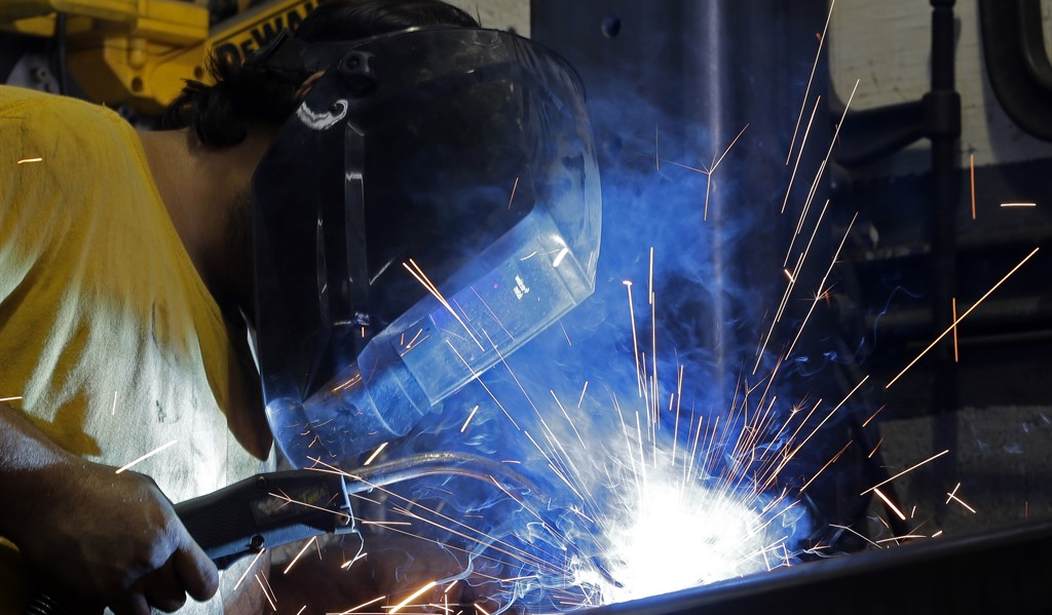
The economy has mixed signs, and pretending otherwise insults the workers who know better. Some plants thrive, while others struggle against regulation, energy costs, foreign dependence, and shortages of trained labor.
Still, the longer story deserves pride!
America moved from uncertain industrial promise to the workshop that armed allies, rescued Berlin, protected sea lanes, and supplied weapons no enemy could ignore. The men and women at the machines rarely get marble statues, but their work has carried freedom across oceans and through crisis after crisis.
At 250, America doesn't need empty birthday talk; it requires memory. A nation that forgets how it became strong eventually asks weaker countries to do the hard work for it.
American manufacturing has saved lives, strengthened allies, and held tyranny back when words failed.
The machinery still runs, but the question for the next century is whether America has the will to keep it running.
In 2023, I would've said we've lost the will, but President Donald Trump is changing the mentality prior administrations brought, and he's dragging the left, mainstream media, and everybody back to reality.
America, we've worked our butts off for 250 years, and regardless of what the harpies on the left say, we're not finished yet.