





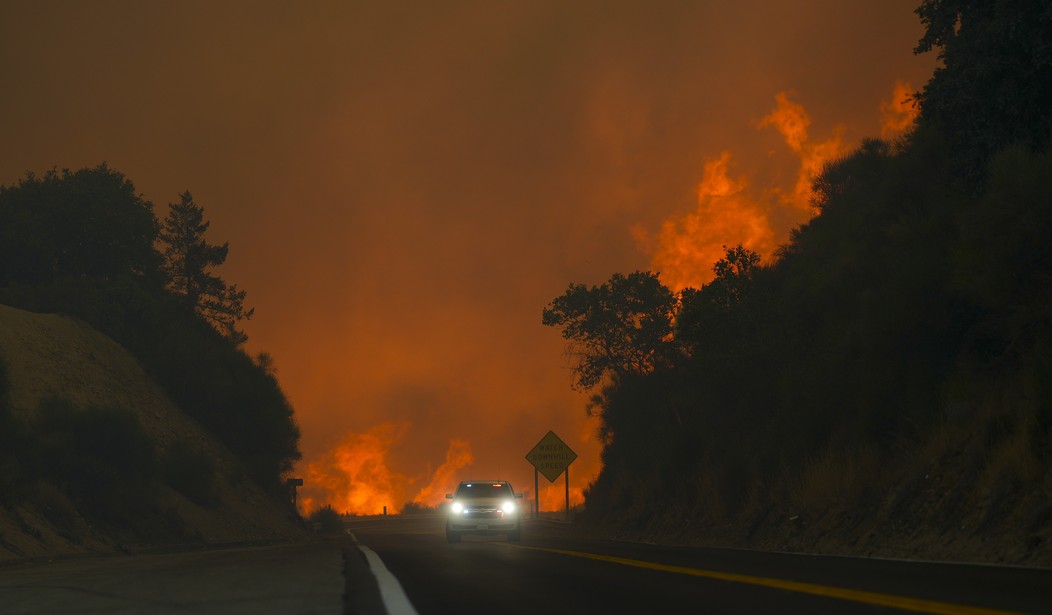
If you haven't burned to a crisp or choked to death already in this year's record-breaking global wildfires, give it a minute — at least to hear the media report it.
Let me show you a few red-hot headlines, assuming your computer hasn't melted and that you can still read through the smoke and falling ash:
- Wildfires expose millions in the Midwest and Northeast to dangerous smoke.
- Smoke Floating Far From Canada's Wildfires Will Darken Skies Again on Thursday.
- Wildfires Close Popular National Forest Area in Minnesota.
- Train crew in Canada 'encased' by intense flames amid wildfires.
- Chicago’s Air Quality Among Worst In The World As Wildfire Smoke Hits.
Looks pretty bad, doesn't it? Well, it is, and we haven't even gotten to my home state of Colorado. We knew months ago that this summer's wildfires were going to be worse than usual, because we had a warm, dry winter that left us with little snowpack and turned much of the state into virtual kindling.
We didn't even have to wait for summer, believe it or not.
We didn't even have to wait for spring — more than a thousand acres burned up in Morgan and Weld counties back in February.
It's bad, sure, but here's the thing: It also isn't unusual, even with the so-called "increasingly early" starts to the Colorado wildfire season, and all that smoke blowing across the Northeast and the Upper Midwest from our charcoal-enhanced friends in Canada.
Bjorn Lomborg — aka The Skeptical Environmentalist — noted on X today that "Halfway through 2026, the world has burned at record-low levels."
Record-low levels — where are the screaming headlines for that?
"Every continent is below average, and Africa, Americas, and Europe are at record lows," Lomborg noted, adding that the "Media only shows when stuff is burning, leaving us badly informed on climate change."
You can check Lomborg's data for yourself right here.
There's an element of "nobody reports when a plane lands safely," too. But still, some context from the mainstream media would be as welcome as it would be unexpected.
Since you know that's not gonna happen, let me tell you the brief tale of how the American Southwest accidentally screwed itself on water planning, and then how Colorado and California screwed themselves on purpose.
When the western states negotiated the 1922 Colorado River Compact, nobody yet knew that the region was in one of the wetter multi-decadal "pluvial" stretches. That's the fancy way of saying it rained more than usual for a long time. Scientists measured 16–17 million acre-feet per year at Lee’s Ferry and called it good.
So planners allocated 7.5 million acre-feet to the upper and lower basins of the Colorado River (plus Mexico), unaware that the region would by 1990 or so begin reverting to the mean of just 13-15 million acre-feet. When the occasional drought hits, things are worse.
That's a lot of "missing" rainfall to account for, but we never built enough dams and reservoirs to compensate for it.
California just knocked down four dams, in fact. Because reasons.
Compound that with increasingly negligent forest management in California and Colorado, and you have a hot mess on your hands — no climate change required.
That's what the mainstream media won't tell you, but I will.
Recommended: Here's What's Riding on Thursday's Starship Flight Test
Need more context? We got plenty more.
PJ Media VIP members get tons of exclusive goodies, including podcasts and video live chats with your favorite writers. You can support alternative conservative news and save 60% with promo code FIGHT.



Join the Conversation
VIP members get the ability to comment on articles.