





Political commentator Scott Jennings gave the Iran debate a much-needed dose of plain English after he received a briefing from a senior Trump administration official.
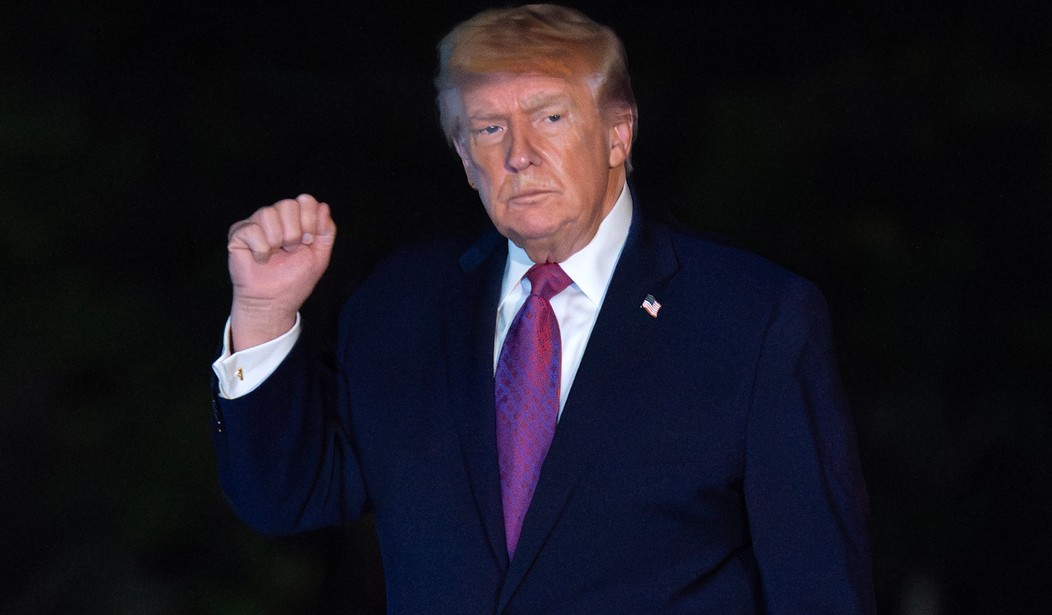
Jennings' central point was simple: President Donald Trump used force when force became necessary, then paused further strikes when diplomacy had a chance to save lives.
Trump's critics have spent years calling him reckless, impulsive, and incapable of restraint. Now he's showing patience, and many of those same voices still can't bring themselves to admit what sits in front of them.
Trump has said talks with Iran remain active, but he has also warned his team not to rush into a weak agreement. The U.S. blockade tied to the Strait of Hormuz remains in place until an agreement gets reached, certified, and signed.
🚨After receiving a briefing from a Senior TRUMP Administration Official on the status of the Iran negotiations (someone in the know & not just speculating), I can tell you the following:
— Scott Jennings (@ScottJenningsKY) May 24, 2026
-USA IS NOT GIVING IRANIANS MONEY FOR NOTHING. All speculation and propaganda to the…
The emerging framework centers on opening the strait, extending the ceasefire, addressing Iran's enriched uranium, and keeping pressure on Tehran until final terms exist on paper. Secretary of State Marco Rubio said significant progress has been made, but final progress hasn't arrived yet.
Jennings framed the moment around restraint, not weakness. Trump isn't giving Iran a free pass, nor is he pretending Tehran suddenly became trustworthy; he's testing whether Iran will accept terms that reduce the chance of a wider war while protecting American interests.
The alternative comes from the old familiar crowd: keep bombing, escalating, and calling every pause surrender before anybody has seen the final language.
Sen. Lindsey Graham (R-S.C.) has pushed a harder line on Iran, including attacks on Iranian energy sites and the total elimination of Tehran's enrichment program.
If a deal is struck to end the Iranian conflict because it is believed that the Strait of Hormuz cannot be protected from Iranian terrorism and Iran still possesses the capability to destroy major Gulf oil infrastructure, then Iran will be perceived as being a dominate force…
— Lindsey Graham (@LindseyGrahamSC) May 23, 2026
Sens. Ted Cruz (R-Texas), Roger Wicker (R-Miss.), and Thom Tillis (R-N.C.) have also warned against a deal they fear could empower Iran or repeat the failures of the Obama nuclear agreement. Sen. Rand Paul (R-Ky.) has urged patience and defended the effort to pursue a peaceful outcome.
Those divisions show exactly why Jennings' update landed with force: Trump is getting hit from all sides while trying to avoid another long war.
The criticism would make more sense if Trump had abandoned leverage.
He hasn't.
The blockade remains, U.S. forces remain positioned, and Iran still faces pressure over its nuclear program. Trump has repeatedly said that Iran can't have a nuclear weapon, and Rubio has defended the administration's stance against claims that Washington is drifting toward another bad deal. The president seems to be using pressure as a bridge to negotiation, not as a substitute for judgment.
To give you an idea of how excitedly the left has jumped on a “catastrophic” Iranian situation, Simon Tisdale, writing at The Guardian, displays far too much projection.
Having started something he cannot finish, the US president, egged on by Israel’s warmonger-in-chief, Benjamin Netanyahu, has boxed himself into a corner. Either he resumes the illegal bombing of Iran on an even bigger scale, brazenly threatening war crimes in hopes of forcing surrender; or else he accepts a negotiated compromise that falls embarrassingly short of his initial aims, including eliminating Iran’s nuclear programme, and leaves an angry, more hardline, strategically strengthened regime in power.
Neither choice is attractive – or tenable – for Trump. He and his fanatical sidekick, Pete Hegseth, should know by now that bombing cannot blow away Iran’s defiance and resilience. It is not even militarily effective: 70% of Iran’s missile stockpile reportedly remains intact. In any case, Trump’s threats to break the ceasefire, like his aborted Project Freedom in the strait of Hormuz, are opposed by Gulf states fearful of more retaliatory attacks, by Washington’s allies, Israel excepted – and by most US voters.
A peace deal, with add-ons, that is broadly in line with Barack Obama’s 2015 nuclear pact with Tehran, which Trump foolishly wrecked and is now the most Iran seems willing to offer, would rightly be counted an abject Trump failure. It would represent a landmark US strategic defeat with significant implications for the global contest with China and Russia. And any deal that left the regime charging transit fees in the strait of Hormuz would be utterly humiliating. No amount of spin could conceal such a presidency-defining calamity.
Obviously, there's a strongly worded memo for lefties to refer to because writing at MSN, Jackie Calmes lambastes Trump's decision to abrogate President Barack Hussein Obama's 2015 Iran nuclear agreement, the Joint Comprehensive Plan of Action. Calmes doesn't bother with anything resembling a reasonable description of the Trump administration.
By his humiliating failure to bring Iran to heel, nearly three months after starting a war that he said would last weeks at most, Trump has brought new, more positive attention to what he again this week derided as “Barack Hussein Obama’s Iran nuclear deal.” (The emphasis on “Hussein” is Trump’s, always.)
The president, along with his Republican cheerleaders, counts his first-term abrogation of the 2015 Iran nuclear agreement, the Joint Comprehensive Plan of Action, as a signature achievement. This week, yet again, he falsely claimed that had he not done so, Iran would have a nuclear weapon. In fact, his action in 2018 taking the United States out of the multinational deal subsequently led to Iran’s rebuilding of its nuclear program, the emboldening of the Iranian hard-liners now in power and the Middle East morass in which the United States is now mired.
That quagmire has left Trump seeming desperate for a deal — almost certainly a worse deal than the one Obama struck. Call it JCPOA Lite.
If he were able to get Iran’s sign-off on the sort of detailed, restrictive agreement that Obama and other world leaders won 11 years ago, he’d be trumpeting himself as the world’s greatest dealmaker. (He does that anyway, but his record proves otherwise.) Instead, by his own failure to date, Trump has invited reconsideration of the very agreement he decried as the “worst deal ever” on his march to election and reelection.
Jennings' point deserves attention because it cuts through the theater. Trump's critics demanded maturity, patience, and caution. After he showed all three, they moved the goalposts and found new reasons to complain. Some wanted more bombs; others wanted to blame him before the ink dried.
Meanwhile, the president appears focused on fewer dead Americans, fewer dead civilians, safer shipping, and an Iran policy that doesn't begin with panic or end with another generation of U.S. troops stuck in the region.
Trump can't win with people who made up their verdict before the evidence arrived. Jennings gave people a clearer read: the administration sees a chance to turn military leverage into a negotiated result, and Trump isn't rushing simply to quiet critics.
Sometimes, real leadership means striking hard, then refusing to let momentum become appetite. If the deal fails, Trump can tighten pressure again. If the deal works, lives get spared, shipping lanes reopen, and Iran faces limits without dragging America into another endless fight.
Readers who want more straightforward analysis without the legacy-media fog can become VIP subscribers. Use promo code FIGHT for 60% off and get full access.


Join the Conversation
VIP members get the ability to comment on articles.