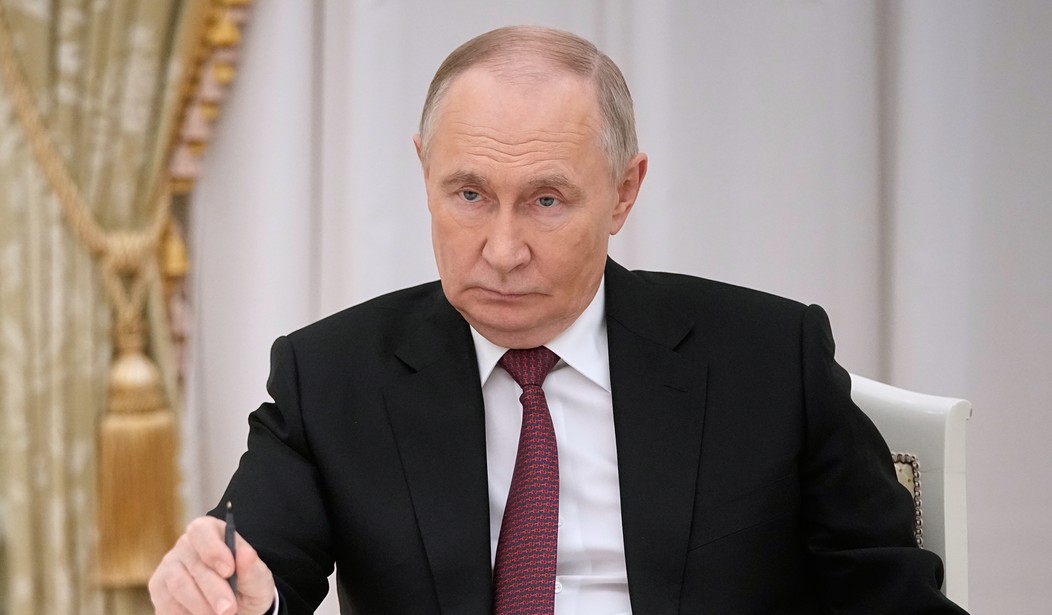

The Kremlin is cracking down on the internet because uncontrolled information threatens President Vladimir Putin’s wartime system. Since Russia’s full-scale invasion of Ukraine, Moscow has tried to limit outside news, silence antiwar voices, weaken foreign platforms, block VPNs, and push Russians toward services the state can monitor more easily. From Freedom House:
Internet freedom in Russia hit a new low as authorities ramped up efforts to isolate the population from the global internet. Throughout the coverage period, efforts to test the sovereign internet led to internet outages; authorities also began throttling the internet in May 2025, with some officials saying the restrictions were necessary amid the threat of drone strikes from Ukraine. (The Russian military had launched an illegal full-scale invasion of Ukraine in 2022.) Roskomnadzor, the state communications regulator, continued to block critical news websites and targeted end-to-end encrypted messaging applications and some of the remaining foreign platforms that hosted user-generated content. Government agencies went to extensive lengths to surveil those who criticized the government online. Courts have also ordered the imprisonment of users who criticized the Ukraine invasion, and the government more broadly.
Roskomnadzor, Russia’s state communications regulator, and Maksut Shadayev, Russia’s minister of digital development, communications, and mass media, have helped drive a policy built around digital isolation. The old Soviet habit never fully died; leaders who fear bad news usually start by attacking the people who can still spread it.
Putin’s government doesn’t just want fewer Western apps. It wants fewer independent facts moving through Russian homes, businesses, barracks, and phones. From Forbes:
Vladmir Putin has a problem. Despite the almost $3 billion spent on television propaganda, Putin is not as popular in Russia as he would like to be. Over four years after Russia’s invasion, the war in Ukraine continues to grind on. Aiming for total control over the Donbas, which experts are increasingly saying will take years, Russia launched a massive attack on Kiev using its powerful hypersonic Oreshnik missile. Ukrainian President Volodymyr Zelensky reported that his country’s air defences intercepted 549 of the drones and 55 missiles in one of Russia’s biggest attacks since the war started.
Maybe this is a distraction for Putin’s poll number problems. Autocracies often invest in their own polling as a propaganda tool to demonstrate legitimacy. But even Russia’s own state-run public opinion research center and public opinion foundation recorded that Putin’s approval rating fell from 74% in February to 65.6% in April, with trust declining 7 points to 71% in the same period. While these would be considered sky-high ratings in a democracy, these are the lowest levels recorded since the start of the 2022 war with Ukraine. A change in methodology to door-to-door interviews, led to an uptick in approval by only one point.
Moscow also wants Russians using MAX, the state-backed messenger tied to VK, instead of Telegram, WhatsApp, YouTube, and foreign tools the Kremlin can’t fully control. From Reuters:
"MAX is an accessible alternative, a developing messenger, a national messenger, and it is available on the market for citizens as an alternative," said Peskov.
Critics say MAX is a surveillance tool. Russian authorities deny this.
The move against WhatsApp, Russia's most popular messenger, is the culmination of six months of pressure on the U.S. company.
It reflects a wider push by the Russian authorities at a time of war to create and control a "sovereign" communications infrastructure in which foreign-owned tech companies submit to local laws or disappear.
Meta had already been designated as an extremist organisation inside Russia, and WhatsApp complained about what it said was an attempt to fully block its service.
"Trying to isolate over 100 million users from private and secure communication is a backwards step and can only lead to less safety for people in Russia," it said in a statement.
Some domain names associated with WhatsApp disappeared from Russia's national register of domain names, meaning devices inside Russia stopped receiving its IP addresses from the app and could be accessed only by using a virtual private network (VPN).
Once a government decides private communication looks dangerous, convenience becomes bait. Officials frame the crackdown around terrorism, security, data protection, and national sovereignty, but the practical goal looks simpler: force more Russian online life into channels the state can watch, pressure, throttle, or shut down when fear rises inside the regime.
The policy keeps producing the one result every control-minded ruler hates: resistance with a pulse. Russian officials have bullied their way across the country’s online life, yet ordinary Russians keep finding new doors through the wall. The Kremlin wanted a quieter public square. Instead, it turned daily communication into a test of patience.
Daily life hasn’t obeyed the plan. When mobile internet drops unexpectedly, commerce takes the first punch. Customers struggle to finish payments, ride-hailing services become unreliable, online maps freeze, and banking apps stumble at the worst possible moments. Small business owners lose sales because the regime decided national strength looks like forcing workers and families to guess whether their phones will function. Officials can call the policy security, but Russians stuck under the mess feel the cost in ordinary moments.
The VPN fight exposes the weakness in the Kremlin’s approach. Roskomnadzor confirmed in February 2026 that it had blocked 469 VPN services, and the government has moved against major VPN protocols used to bypass censorship. A blocked tool doesn’t always produce obedience, though. Often, it produces a search for a better tool. Russians who once had no interest in digital evasion now learn workarounds because the state made normal communication slow, annoying, and unreliable.
The MAX campaign brings another problem. A state-backed app meant to replace foreign platforms won’t inspire confidence among Russians who already expect surveillance. Cybersecurity concerns around MAX include claims over logging, VPN detection, and broad access to user data. Russian officials deny the worst allegations, but credibility can’t be ordered into existence. A government known for censorship can’t easily sell its own messenger app as harmless convenience.
Even pro-war voices have found reasons to complain. Russian military circles rely heavily on Telegram for battlefield updates, propaganda, logistics, and communication from the front. Cutting or slowing those channels can damage the same information networks the Kremlin’s supporters use to defend the war in Ukraine. Kremlin spokesman Dmitry Peskov has framed restrictions around Russian law and public safety, but the explanations keep shifting whenever the disruption becomes too obvious to ignore.
Putin built much of his rule on the promise of order. His internet crackdown now delivers irritation instead. Every outage reminds Russians that the state can reach into their phones, wallets, workdays, and family conversations. Every workaround teaches another lesson: the wall has gaps. Fear can silence many voices, but frustration has a stubborn memory. The Kremlin wanted digital obedience. It may end up training millions of Russians to become more suspicious, more inventive, and less willing to believe every official excuse.