





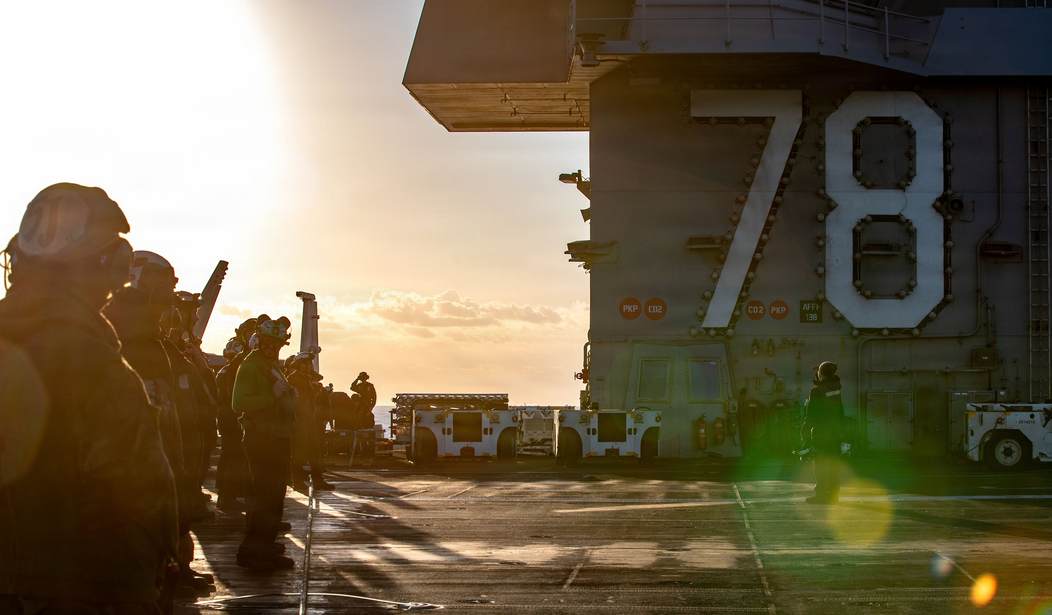
The war in Iran connects directly to a much larger struggle involving Russia and China. President Donald Trump ordered Operation Epic Fury after years of growing tension across the Middle East.
As the military actions keep unfolding in Iran, it exposes a deeper contest centered on energy alliances and economic survival among major powers.
While the battle escalates, the Iranian leadership has started signaling a limited desire to reduce tensions. Iranian President Masoud Pezeshkian released a suggestion that Tehran could reduce attacks against Gulf states if those governments refuse American operations against Iran.
Other Iranian officials issued statements apologizing to several regional governments after missile and drone activity crossed into neighboring airspace, while Pezeshkian rejected President Donald Trump's demand for unconditional surrender, and insisted Iran would defend itself if the military strikes continue.
Tehran's position reflects a government seeking to contain damage, while protecting the oil revenues and alliances that keep the lights on in Iran.
Related: Iran Signals De-Escalation, But Only on Its Terms
Those energy networks explain why the conflict extends well beyond Iran's borders. Oil revenue supports the military ambitions and economic stability of several governments aligned against American influence.
If those energy channels are disrupted or flat-out destroyed, the pressure placed on that network is exposed, revealing the relationship holding it together.
Action in Venezuela brought those relationships into a much sharper focus when U.S. forces arrested former Venezuelan President Nicolás Maduro during the raid in Caracas that seemingly had no problem defeating Chinese-supplied air defenses.
Maduro now faces detention in New York while Venezuelan officials work with American authorities to stabilize the country's energy sector. His arrest removed a critical figure in an oil pipeline that helped China and Russia bypass sanctions for years.
Political legitimacy exists. In the 2024 elections, Venezuelans voted overwhelmingly for opposition leader Edmundo González—a result that the Maduro regime rejected by clinging to power. Maintaining Delcy Rodríguez, a close Maduro ally, as president indefinitely would not only undermine the clearly expressed will of the Venezuelan people but also likely prevent the reestablishment of the rule of law that will be essential for Venezuela’s rebuilding. Threatening force to keep the Rodríguez government in line may work in the short term, but it is not a sustainable strategy for courting the kinds of long-term investment that Venezuela will need to truly rebuild.
A credible stabilization will require much more than investments from a few U.S. companies. Venezuela’s economy contracted roughly 80 percent over the last decade, the largest peacetime collapse recorded in modern history. Basic infrastructure—electricity grids, water systems, transportation networks—is severely deteriorated. A workable stabilization effort, therefore, requires scale, starting with an International Monetary Fund-anchored package of over $50 billion over 18-24 months, combining balance-of-payments support, fiscal financing, and debt restructuring, as well as parallel World Bank and Inter-American Development Bank programs. This must be paired with large-scale immediate humanitarian assistance for the nearly 8 million Venezuelans in acute need.
China relied heavily on Venezuelan crude during Maduro's rule; its refineries imported about 4% to 5% of its oil from Venezuela through flexible payment arrangements and discounted contracts. Those shipments helped sustain China's manufacturing base and fuel the rapid expansion of its naval and air forces.
Russia used Venezuelan crude differently: Russian companies blended Venezuelan oil with their own shipments to disguise sanctioned exports and maintain revenue streams that support their side of the Ukrainian war.
A consortium of Western powers also enforces the Ural Price Cap, which was dropped to about $44 per barrel last month. Named for the Ural Mountains, the price cap is meant to keep Russian oil below free-market rates.
This newly emboldened Western targeting of the so-called "gray market" of shadow-fleet oil indicates potential problems for nations that rely on it, such as China and Cuba.
China reportedly relies heavily on Iran for oil that would otherwise be sanctioned. At the same time, Russia could see further belt-tightening that could adversely affect the cash flow needed to continue its war in Ukraine.
Maduro's arrest disrupted those arrangements almost overnight. Acting Venezuelan President Delcy Rodríguez began working with American officials to reopen oil and mining sectors to Western investment. Energy markets immediately started adjusting, as Venezuela explored export routes that aren't designed around the purchases from China.
A valuable staging point that Russian firms used, involving shipments of mixed sanctioned crude, was lost. Losing Venezuelan cooperation complicates Moscow's ability to maintain wartime energy income.
The visit is part of a U.S. push to open Venezuela to American investment, especially in oil, gas , and mining, as the Trump administration tries to exert more control over the country following a January U.S. raid that captured President Nicolas Maduro. It is the second visit by a U.S. cabinet secretary since the ouster of Maduro, who courted the likes of China and Russia as allies.
In public, Trump has heaped praise on Rodriguez for cooperating with the U.S. and, on Wednesday, hailed her again, saying she is "doing a great job" and that oil is beginning to flow from the country. Rodriguez thanked Trump in her joint remarks alongside [Interior Secretary Doug] Burgum at the Miraflores presidential palace after their meeting.
Despite the public support, behind the scenes, the Trump administration has been applying pressure to achieve its objectives. U.S. officials are threatening a legal case against Rodriguez that could include corruption and money laundering charges, Reuters reported Tuesday, citing four people familiar with the matter, and Washington is also pushing her to arrest or detain several former high-level party officials it may want extradited.
Iran controls another critical link in the global oil system: The Strait of Hormuz is one of the most important energy corridors worldwide. It's a route heavily relied upon for Chinese imports, with roughly 40% to 45% of China's imported oil passing through the narrow waterway. Military strikes targeting Iranian leadership and take traffic places that are part of a high-pressure corridor under extreme pressure. A prolonged disruption would immediately strain Chinese energy supplies and industrial output.
"Iran exploits financial systems to sell illicit oil, launder the proceeds, procure components for its nuclear and conventional weapons programs, and support its terrorist proxies," added Treasury Secretary Scott Bessent.
"Treasury will continue to put maximum pressure on Iran to target the regime’s weapons capabilities and support for terrorism, which it has prioritized over the lives of the Iranian people," Bessent said.
OFAC then listed a dozen ships it confirmed were "shadow fleet" vessels under sanction.
"Instead of allocating this revenue for the benefit of the Iranian people, the regime ultimately siphons it off to fund regional terrorist proxies, weapons programs, and repressive security services, rather than the basic economic needs the Iranian people have repeatedly and courageously demanded," the Treasury said.
Russia and China built strong partnerships across several regions to counter American influence. Russian President Vladimir Putin and Chinese President Xi Jinping expanded military cooperation, intelligence sharing, and technology transfers over the past decade.
Iran became a critical partner inside that infrastructure; Iranian factories produced Shahed drones that Russian forces have used in Ukraine, with Russian advisers sharing targeting information and missile technology with Iranian military units operating near American positions in the Middle East.
China has supported Iran through energy purchases and military upgrades, using Chinese companies to buy large volumes of Iranian oil despite sanctions, and helping improve radar and air defense systems around major Iranian facilities. Oil exports remain one of Tehran's critical sources of revenue, helping finance military programs and regional proxy forces.
Though Beijing is the largest buyer of Iranian oil, China’s strategic importance to China is far more limited than many may assume. Military cooperation between the two has remained constrained, and those with several Gulf states eclipse trade and investment flows, as Beijing seeks to maintain balanced ties across the Middle East.
China “sees no benefit in heightening tension with the US over Iran,” said William Yang, senior analyst at Belgium-based think tank International Crisis Group.
“It still attaches greater importance to maintaining the trade truce and overall stability in the bilateral relationship with the US, so it will not want to jeopardize the positive momentum that it has built with the Trump administration over the last year.”
Regional partners reinforce that alliance network. Syrian President Bashar al-Assad continues hosting Russian naval forces along the Mediterranean coast, providing Moscow with an important foothold in the region.
Houthi forces in Yemen allow both Russian and Chinese vessels to safely pass through sections of the Red Sea while attacking other shipping traffic.
North Korean leader Kim Jong Un has also provided fighters and weapons supporting Russian operations in Ukraine.
Taking Venezuelan oil access while threatening Iranian exports strikes directly at the financial base supporting those partnerships. China consumes enormous amounts of imported energy to sustain its industry and military modernization.
Russia depends heavily on oil revenue to fund overseas military operations and stabilize its domestic economy.
Losing sanctioned supply channels forces both governments to seek alternative energy sources, all at a higher cost.
Ukrainian President Volodymyr Zelensky benefits from any reduction in Russia's logistical support system, primarily energy revenue. Lower oil income limits Moscow's ability to sustain long military campaigns, while energy disruptions also muddy the waters for China's strategic planning as it prepares for longterm competition across Asia and the Pacific.
Russia and China publicly condemn American operations, but remain cautious about confrontation. Leaders in Moscow and Beijing understand the dangers of escalating into a wider war while their economies depend on stable energy flows and global trade routes.
Strategic hesitation reveals the limits of alliances formed around convenience rather than full military commitment.
Enter the Laws of Unintended Consequences. The Iranian war reaches far beyond a single battlefield. Oil shipments, sanctions networks, and energy alliances shape the real stakes. The disruptions of those flows weaken the economic foundations supporting Russia and China, while shifting leverage toward Washington and its partners.
Energy remains one of the most powerful forces shaping global conflict. Oil supplies influence military planning, economic stability, and geopolitical leverage across multiple continents.
The results of events in Venezuela and Iran show just how fast that balance shifts when key supply routes come under pressure.
While you're reading this, I'm getting fitted with a loose-fitting tinfoil hat.
Imagine a teeter-totter in a playground, a long steel plank of wood balanced on a fulcrum. Push down on one side, causing the other side to rise. Move the fulcrum slightly, and the entire balance of the lever changes.
Iran often sits in that pivot point between Russia and China: Moscow leans on Tehran for military cooperation, including drones used in Ukraine and intelligence coordination in the Middle East.
Beijing leans on Iran for something just as critical: energy. China buys large amounts of Iranian oil, often discounted and routed through shipping networks designed to avoid sanctions. Those purchases keep factories running and ships moving across the Pacific.
Pressure on that pivot changes everything. Disrupt Iranian oil exports, and Beijing suddenly feels the strain. Break Tehran's military cooperation, and Moscow loses a valuable battlefield partner. The relationship linking Iran, Russia, and China works less like a traditional alliance, and more like a lever balanced on a single point.
Move the fulcrum, and the leverage disappears.
If that happens, then my tinfoil hat tightens around my granite head.
Support independent analysis that digs into the deeper forces shaping world events. PJ Media VIP membership currently offers a 60% discount when readers use the promo code FIGHT at checkout. Join today!

Join the Conversation
VIP members get the ability to comment on articles.