





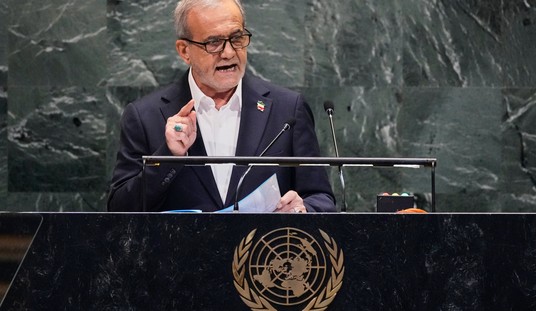
Described as a message of restraint to neighboring Gulf states, Iran’s President Masoud Pezeshkian delivered an apology for recent strikes, and signaled that Iran would halt attacks on those countries if no hostile action originated from their territory.
The condition came with clarity: Tehran wouldn't accept broader demands for surrender or sweeping concessions, a message that marked the first notable rhetorical shift since Operation Epic Fury intensified, but stopped well short of capitulation.
Since taking office, the reformist leader has presented himself with an almost constant air of regret, issuing multiple public apologies during his tenure – for the sharp deterioration of the national economy, the killing of thousands of protesters during demonstrations, and the persistent inefficiencies of his own government.
Now he’s apologizing on behalf of Iran’s armed forces, saying they “acted on their own authority and did what was necessary to defend our homeland with dignity and strength,” a recurring message from some Iranian leaders justifying the heavy targeting of cities across the Gulf Arab states.
Pezeshkian framed his outreach as regional stabilization, arguing that Gulf Cooperation Council states shouldn't serve as launch points for strikes against Iran, and that, if they remained outside active military operations, Iran would reciprocate.
The statement sought to separate regional actors from Washington and Jerusalem, even as Tehran continued to resist external pressure. President Donald Trump has demanded what he calls unconditional surrender from Iran's leadership. The White House has maintained that sustained pressure remains necessary to prevent further escalation.
There's little ambiguity in Trump's position: the administration expects compliance, not calibrated bargaining.
Tehran's move reads less like retreat and more like repositioning, as the leadership appears to be drawing a line between regional containment and broader strategic retreat. Pezeshkian’s language offered a path to limit the theater of conflict, while preserving Iran's leverage and posture at home.
Entering Stage Left is Russia.
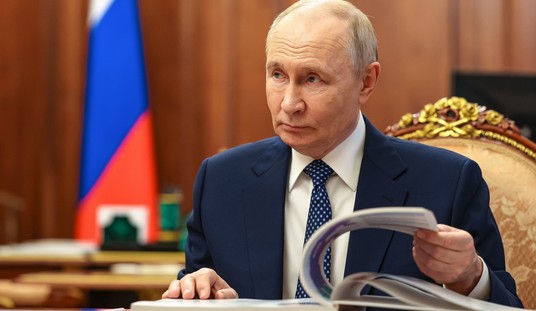
Russian Vladimir Putin held a call urging an immediate halt to hostilities and pushed for negotiations, hoping to prevent spillover that could widen instability across energy markets and security corridors.
In a phone call late on Friday with Iranian President Masoud Pezeshkian, Putin expressed his deep condolences over the killing of Iranian Supreme Leader Ayatollah Ali Khamenei, members of Khamenei's family, Iranian political and military leaders, and "numerous civilians".
"Vladimir Putin reaffirmed Russia's principled stance in favour of an immediate cessation of hostilities, the rejection of force as a method to solve any issues surrounding Iran or arising in the Middle East, and a swift return to the path of diplomatic resolution," the Kremlin said.
The timing of the "demand" matters; drones and missiles have disrupted air traffic, rattled oil markets, and heightened military readiness across several countries.
Iran's overture aims to carve out breathing room without conceding its core objectives. Pezeshkian offered a conditional pause, not a policy reversal.
We're now looking at calculations: accepting Iran's conditions could reduce the immediate risk, but it may also strain alignment with the United States.
Rejecting it risks further strikes because the proposal shifts responsibility outward. Tehran signaled restraint, but only within the parameters it defined.
Iran's internal politics also shape the message. Gulf leaders now face calculation. Accepting Iran’s condition could reduce immediate risk, yet it may also strain alignment with the United States.
Iran's internal politics also need to balance domestic expectations with external realities. Hardline factions within Iran resist perceived weakness, while economic strain from sanctions and Operation Epic Fury pressure the government to avoid deeper isolation.
President Trump's posture uses a different calculus: Washington treated incremental gestures from Tehran with skepticism. The administration keeps deterrence, while Trump says de-escalation must include verifiable change, not rhetorical signals.
Trump has likened the situation in Iran to the US raid on Venezuela earlier this year, in which he removed the country's leader from power and publicly backed a successor.
On Friday, Kremlin spokesman Dmitry Peskov said that Russia remained in dialogue with Iran's leadership, but he declined to say whether the two countries were continuing military cooperation.
Asked about the claim of Russia helping Iran, US Defence Secretary Pete Hegseth said in an interview with CBS's 60 Minutes programme that Trump is "well aware of who's talking to whom".
As the war enters its second week, it has expanded across the Middle East after Iran-backed Hezbollah launched attacks against Israel, which prompted the Israeli government to launch strikes against Lebanon on Monday.
Pezeshkian's message creates space for diplomatic maneuver without surrendering ideological ground, offering neighbors protection in exchange for neutrality. It doesn't concede American demands or recognize Israeli military objectives; it narrows the frame rather than closing the dispute.
Whether the signal evolves into a sustained reduction depends on follow-through. Words alone won't stabilize the region, and actions must be aligned. Regional governments will test Iran's sincerity by watching what happens next.
Iran blinked, but it didn't bow.
Use promo code FIGHT to receive 60% off your membership today.
Join the Conversation
VIP members get the ability to comment on articles.